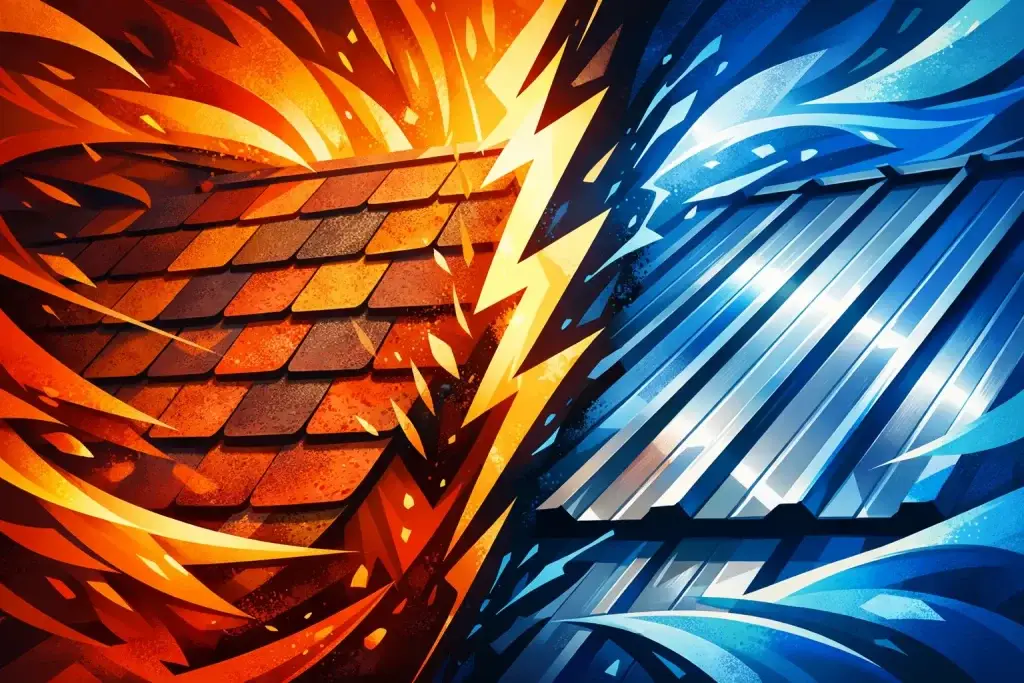
A roof in South Mississippi does not get an easy life. It takes heat, humidity, driving rain, salt air, and the kind of storms that test every weak spot fast. That is why the shingle roof vs metal roof question matters so much – not just for curb appeal, but for repair costs, insurance concerns, energy performance, and how long you can reasonably expect the system to last.
If you are replacing an aging roof or planning ahead before storm season, the right choice depends on your budget, your property type, and how long you want the roof to work before major replacement becomes part of the conversation again. Both systems can perform well when they are installed correctly. The better option is the one that fits your goals, not the one with the loudest sales pitch.
Shingle roof vs metal roof for Gulf Coast properties
For many homeowners, shingles are the familiar choice. They are common, cost-effective, and available in a wide range of colors and styles. If you need a solid roof replacement without stretching the budget too far, architectural shingles often make sense. They also work well on many residential properties where appearance, affordability, and straightforward installation matter most.
Metal roofing plays a different game. It usually costs more upfront, but it can offer a longer service life, strong wind resistance, lower maintenance needs, and better performance in harsh weather. On the Gulf Coast, that matters. Commercial owners, long-term homeowners, and property managers often look at metal because they are thinking beyond the initial invoice. They want durability, fewer repeat issues, and a roof system that can hold up under serious exposure.
The main point is simple. Shingles are often the better short- to mid-range budget option. Metal is often the better long-range value option. That does not mean one is always right and the other is always wrong.
Upfront cost versus long-term value
This is where most decisions start.
A shingle roof usually has a lower initial cost than a metal roof. For many homeowners, that alone makes the decision easier. If your roof is failing now, you have an insurance timeline to manage, or you are trying to improve a property without taking on a major capital expense, shingles can be the practical answer.
Metal roofing typically requires a higher investment upfront. Materials cost more, and installation can be more specialized. But price alone does not tell the whole story. If a metal roof lasts significantly longer and needs fewer repairs over time, the math can shift in its favor. That is especially true for owners planning to keep a home or commercial building for many years.
A cheaper roof is not always the less expensive roof. That distinction matters.
Lifespan and maintenance expectations
Shingle roofs generally offer a respectable lifespan when the materials are good and the installation is done right. But in coastal and storm-prone conditions, wear can show up faster than many property owners expect. Heat can age shingles. Wind can lift them. Heavy rain can expose small installation or flashing problems before the roof is very old.
Metal roofs are known for longevity. They resist many of the issues that shorten the life of traditional roofing systems, and they do not rely on individual tabs that can loosen or break away in high winds. That can make a big difference in maintenance planning.
Still, metal is not maintenance-free. Fasteners, seams, flashing details, and penetrations all need proper attention. A poorly installed metal roof can cause plenty of headaches. The same is true for shingles. The system is only as good as the workmanship behind it.
Storm resistance and weather performance
In this region, weather is not a side issue. It is the issue.
When customers ask about shingle roof vs metal roof, they are often really asking which one stands up better to wind-driven rain, tropical weather, and sudden storm damage. In many cases, metal has the edge. It is typically more resistant to high winds, sheds water efficiently, and holds up well under extreme conditions when designed and installed properly.
That said, premium shingle systems can still perform very well. Modern architectural shingles can offer improved wind ratings and solid protection for residential use. For many homes, that level of performance is enough, especially when paired with proper underlayment, ventilation, flashing, and regular inspections.
The bigger issue is not just the field of the roof. It is the details. Valleys, chimneys, pipe boots, edge metal, transitions, and drainage all matter. A strong material with weak installation details can fail faster than a simpler system done correctly.
Energy efficiency and comfort
Metal roofing often gets attention for energy efficiency, and in a hot climate, that is fair. Certain metal systems reflect more solar heat, which can help reduce attic heat buildup and lower cooling demand. For commercial buildings and some homes, that can be a meaningful advantage.
Shingles can also perform well, especially when the attic is properly insulated and ventilated. In many cases, homeowners overestimate the energy gap between roof materials and underestimate the role of insulation, ventilation, and air sealing. If your attic is underperforming, replacing the roof alone may not solve the problem.
This is where practical planning matters. If energy savings are a top priority, the roof should be part of a larger system that includes ventilation and insulation improvements, not a stand-alone fix.
Appearance, style, and property type
Shingles remain popular partly because they fit the look of many neighborhoods. They offer familiar curb appeal, broad color options, and a style that works on everything from starter homes to higher-end residences. If you are concerned about matching nearby homes or keeping a traditional look, shingles are often the easier fit.
Metal roofs can look sharp and clean, but they make more of a statement. On some homes, that is a plus. On others, it may not suit the architecture as naturally. For commercial buildings, shops, storage facilities, multifamily properties, and mixed-use structures, metal often feels right at home.
The best-looking roof is the one that fits the building. A roofing decision should improve the property, not fight against it.
Shingle roof vs metal roof for repairs and future planning
One area people overlook is what happens after installation.
Shingle repairs are usually familiar and relatively simple for most roofing contractors. If a section is damaged, targeted repair may be possible depending on the age and condition of the roof. That can help when storm damage is localized.
Metal roofs can be very durable, but repairs may require more system-specific knowledge. Matching panels, coatings, profiles, and attachment methods can be more involved. On the other hand, if the roof is less likely to take frequent damage in the first place, that can offset the complexity.
For commercial properties, future planning matters even more. If you are managing a facility, apartment complex, retail center, or institutional building, think in terms of lifecycle cost and maintenance strategy. In some cases, a metal roof or even a roof coating restoration plan may make more sense than another standard replacement cycle. A contractor with experience in both replacement and restoration can give you a more honest recommendation.
When shingles make more sense
Shingles are often the better choice when budget is the top concern, the property is residential, and you want a reliable roofing system with a lower initial cost. They also make sense when the home style calls for a more traditional appearance or when the ownership timeline is shorter.
For many families, a quality shingle roof hits the right balance. It protects the home, looks good, and keeps the project affordable. There is nothing second-rate about that when the installation is done right and the materials are solid.
When metal makes more sense
Metal is often the smarter choice when you are thinking long-term, want stronger weather resistance, or manage a property where durability and lower maintenance carry more weight than upfront cost. It can also be a strong fit for owners who want improved energy performance and a roof system built for hard exposure.
That is why many commercial owners and long-term homeowners in places like Biloxi take metal seriously. They are not just buying a roof for this year. They are trying to avoid repeat problems five, ten, or fifteen years down the road.
A good contractor should not push one option every time. They should look at the age of the structure, your budget, local weather exposure, and your long-range plans. At Expert Roofing, that practical approach matters because the right answer for a home in one neighborhood may be completely different from the right answer for a hotel, shop, or apartment building nearby.
If you are weighing shingles against metal, stop looking for a one-size-fits-all winner. Get clear on what you need the roof to do, what you can afford now, and what problems you want to avoid later. That is usually where the right decision shows up.