
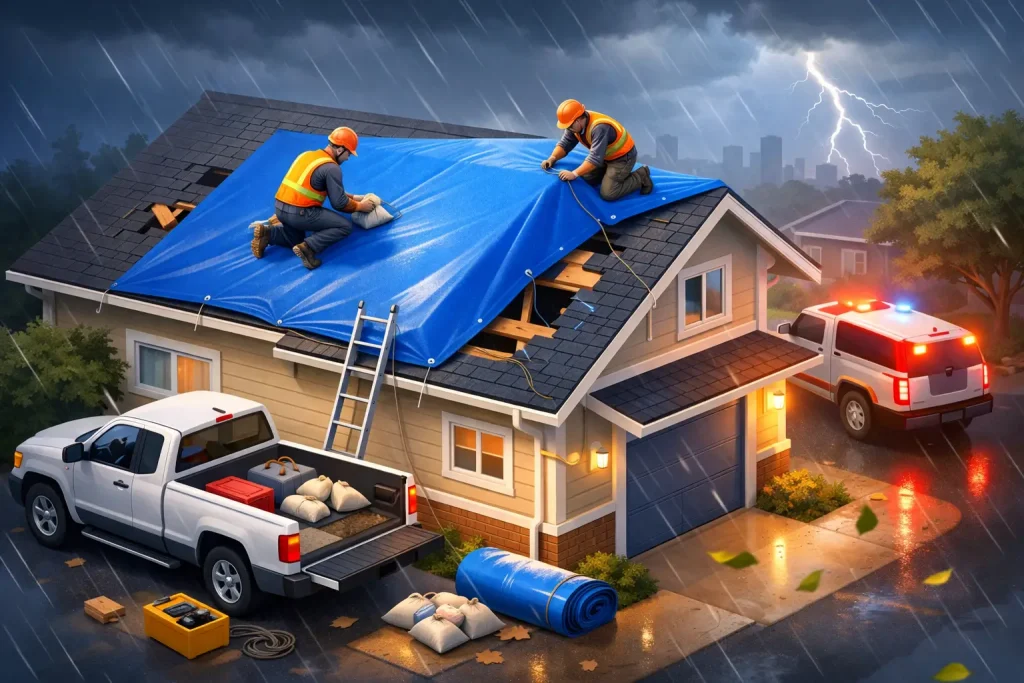
When a storm tears off shingles at 2 a.m. or a tree limb punches through the decking, waiting until morning can turn a roof problem into a full property loss. Wiggins emergency roof tarping is the first move that buys you time, protects what is still sound, and helps stop water from spreading into insulation, ceilings, walls, inventory, and electrical systems.
On the Gulf Coast, that temporary protection matters more than many property owners realize. One hard rain after wind damage can soak decking, stain drywall, short out fixtures, and push a manageable repair into a much larger insurance claim. A properly installed tarp is not the final repair, but it is often the difference between limited damage and a long, expensive cleanup.
Why Wiggins emergency roof tarping matters right away
The biggest mistake after storm damage is thinking the roof can wait a few days. It depends on the extent of the opening, but even small exposed areas can let in far more water than expected. Wind-driven rain does not need a large hole. It finds lifted shingles, torn flashing, punctures, ridge damage, and weak seams around vents and penetrations.
That risk is even higher on older roofs and low-slope systems. If the underlayment is already worn or the flat roof membrane has started to age, storm damage can open up multiple leak paths at once. Water may show up in one room while entering from a completely different section of the roof.
Emergency tarping is about damage control. It helps protect flooring, furniture, equipment, stock, ceiling tiles, insulation, and framing while the roof is inspected and a real repair plan is put together. For homeowners, that may mean keeping a bedroom or living room from taking on more water. For commercial buildings, it may mean keeping a tenant space operational or preventing a leak from spreading across offices, hallways, or retail space.
What a proper emergency tarp should actually do
A tarp thrown loosely over a damaged area is not enough. Real emergency roof tarping needs to cover the compromised section fully, extend past the damage area, and be secured in a way that stands up to wind until permanent repairs can begin. If it is installed poorly, it can flap loose, trap water, or create new points of failure.
A good temporary tarp should shed water away from the opening, reduce movement in high winds, and protect the roof deck underneath. On some roofs, that means covering a concentrated impact zone. On others, especially after broader wind damage, it may require securing a much larger section to keep water from getting under surrounding materials.
This is where experience matters. A shingle roof with missing tabs needs a different approach than a metal roof with lifted panels or a flat commercial roof with membrane damage. The goal is the same in every case – stop the exposure fast without making the eventual repair harder or more expensive.
When to call for emergency tarping
Some roof failures are obvious. Others are easy to underestimate. If you see missing shingles in the yard, active dripping, sagging ceiling drywall, exposed decking, storm debris on the roof, or interior water stains that appeared suddenly after a storm, it is time to act.
Commercial properties should move even faster when the building has rooftop equipment, parapet issues, drainage backups, or long runs of low-slope roofing. Water can travel under the membrane, soak insulation, and spread well beyond the visible leak area. Hotels, schools, apartment buildings, offices, and warehouses can all take on hidden damage quickly if the opening is left exposed.
There are also situations where tarping may still be smart even if the leak seems minor. If storms are forecast again before a repair crew can complete permanent work, temporary protection can keep the problem from growing. The extra step is often cheaper than dealing with added drywall, insulation, paint, flooring, and mold-related cleanup later.
What to expect from the service
A dependable emergency response should start with a fast assessment of the damaged area and the surrounding roof sections. The visible hole is not always the full story. Wind may have loosened materials nearby, and a tarp that only covers the most obvious opening may miss the sections that fail next.
From there, the damaged area should be covered with materials sized for the conditions, not whatever happened to be on the truck. Secure installation matters. So does safety. Storm-damaged roofs can be slick, unstable, and littered with debris, which is one reason this is not a good DIY job for most property owners.
After the tarp is in place, the next step is planning the permanent solution. Sometimes that is a focused repair. Sometimes the damage reveals a larger issue, like rotten decking, failing flashing, or an older roof that was already near the end of its service life. In commercial settings, temporary tarping may lead into patching, coating, waterproofing, or a more complete restoration plan depending on the roof system and condition.
Wiggins emergency roof tarping for homes and businesses
Residential and commercial roofs do not fail the same way, so the response should not be one-size-fits-all. A homeowner may be dealing with a section of torn shingles over a living room after a wind event. A property manager may be trying to limit leaks across several units. A facility manager may need to stabilize a low-slope roof long enough to protect operations and prepare for a broader repair scope.
That is why broad roofing capability matters. A contractor who only thinks in terms of simple shingle replacement may miss what is really happening on a coated roof, a metal system, or a commercial flat roof. In South Mississippi, storm response needs to account for more than one roof type because many owners manage mixed portfolios and aging building stock.
For some buildings, the long-term answer after emergency tarping may be straightforward replacement. For others, especially low-slope or leak-prone roofs, restoration through coatings and waterproofing can make more financial sense. It depends on the substrate, the amount of wet insulation, the age of the system, and whether the roof structure is still a good candidate for restoration.
Why speed matters, but follow-through matters more
Fast response is valuable, but emergency service only helps if it leads to a real solution. Property owners do not need a tarp and a promise. They need someone who can handle the next step, whether that means insurance documentation, repair work, replacement planning, or a restoration proposal that matches the condition of the roof.
That is where local experience pays off. Crews that work in this region understand how Gulf Coast weather stresses shingles, flashing, penetrations, metal fasteners, and flat roof seams. They also understand the urgency after a storm, especially when more rain is on the way or when a business cannot afford ongoing disruption.
Expert Roofing serves property owners who need that kind of practical response. The job is not just to cover a hole. It is to protect the structure now, identify what failed, and move quickly toward the right permanent fix at a fair price.
What property owners should do before help arrives
If the roof has been damaged, the first priority is safety. Stay out of rooms with sagging ceilings, active electrical risk, or severe water intrusion. Move valuables, electronics, paperwork, and furniture away from leak areas if it can be done safely. Take photos of visible damage inside and outside from the ground when possible, because documentation can help with insurance and repair planning.
Do not climb onto a storm-damaged roof unless you have the equipment and training to do it safely. Wet shingles, punctured decking, loose metal, and hidden soft spots create real fall hazards. A bad temporary fix can also make professional repair more difficult.
If water is entering fast, using buckets and tarps indoors can help reduce immediate damage until the roof is covered. But the real goal is getting exterior protection in place as soon as possible, followed by a full inspection.
Storm damage never shows up at a convenient time, and roof leaks rarely stay small for long. If your home, office, rental property, or commercial building has been exposed, the smartest move is simple – get it covered fast, get it inspected properly, and keep a temporary problem from becoming a much bigger one.