
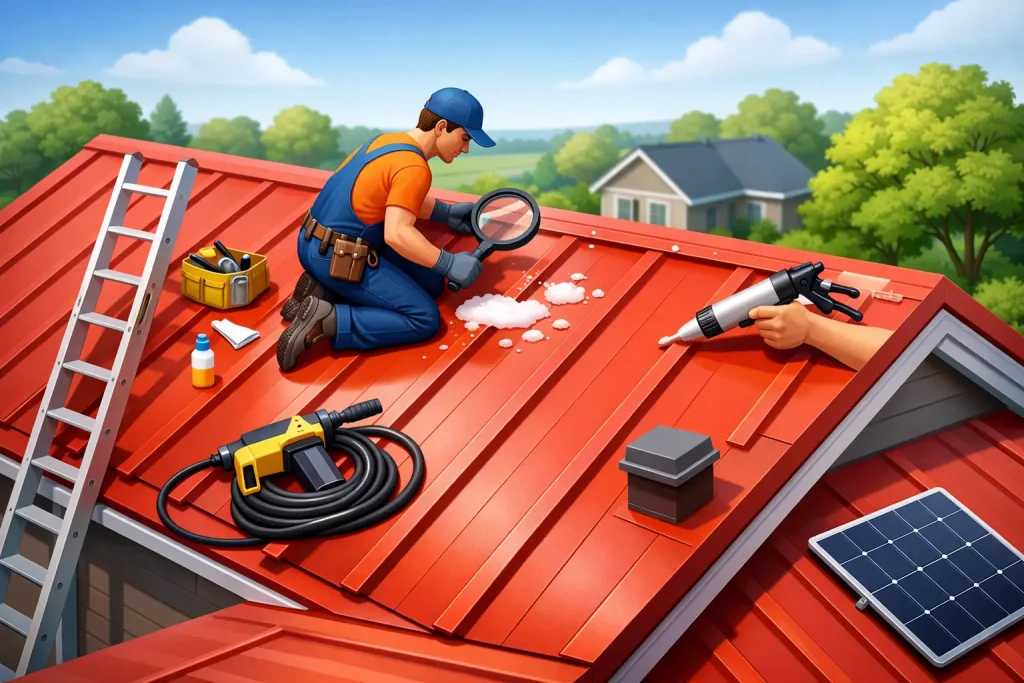
A metal roof can take a beating on the Gulf Coast – hard sun, salt air, driving rain, and storm debris all work against it. If you want to know how to maintain a metal roof without cutting its lifespan short, the answer is simple: stay ahead of small problems before they turn into leaks, rust, or structural damage.
Metal roofing is one of the toughest systems you can put on a home or commercial building, but it is not maintenance-free. Owners sometimes hear “metal lasts for decades” and assume they can ignore it. That is usually when fastener issues, failed sealant, ponding around details, and surface damage start to pile up.
How to maintain a metal roof year after year
The best maintenance plan is built around routine inspections, basic cleaning, and quick repairs. You do not need to overcomplicate it, but you do need to be consistent. For most properties, checking the roof twice a year is a good baseline. In South Mississippi, it also makes sense to inspect after major storms, especially if your building took wind-driven rain or tree debris.
Start with a visual inspection from the ground when possible. Look for panels that appear lifted, bent, or out of alignment. Check for fallen branches, backed-up gutters, and anything unusual around roof edges or penetrations. If you can safely access the roof, take a closer look at seams, flashing, fasteners, sealant lines, and any areas where water tends to sit longer.
A lot of metal roof problems start at the details, not the wide-open field of panels. Skylights, vent pipes, curbs, HVAC units, transitions, and edge metal are all common trouble spots. If sealant is cracking or pulling away, or if flashing looks loose, that is worth addressing before the next heavy rain.
Keep the roof clean, but do it carefully
Cleaning is one of the most overlooked parts of metal roof maintenance. Dirt by itself is not always a major issue, but trapped leaves, pine straw, branches, and other debris can hold moisture against the roof surface. Over time, that can stain finishes, wear coatings, and create corrosion around scratches or exposed metal.
A gentle wash with water and a manufacturer-approved cleaner is usually the safest approach. Harsh chemicals, abrasive pads, and pressure washing at the wrong angle can damage protective finishes or force water into seams. That is where good intentions can create expensive problems.
Pay special attention to valleys, behind chimneys, around rooftop equipment, and anywhere debris naturally collects. Gutters and downspouts matter too. If they are clogged, water can back up onto the roof edge and work its way into places it does not belong.
For commercial buildings, maintenance crews sometimes focus on drains and forget the roof surface itself. That is a mistake. A clean roof is easier to inspect, easier to monitor, and less likely to hide early warning signs.
Watch for scratches, coating wear, and surface rust
Most metal roofs are protected by painted or coated finishes designed to resist corrosion and UV damage. Once that protective layer gets compromised, the roof becomes more vulnerable. A small scratch from storm debris, foot traffic, or dropped tools may not look serious, but it can become the starting point for rust.
Surface rust does not always mean the roof is failing. In many cases, it can be cleaned, treated, and sealed before it spreads. The key is catching it early. If rust is widespread, especially around seams or fasteners, the repair approach may need to be more involved. That could mean spot repairs, panel replacement, or a roof coating system if the roof is otherwise a good candidate.
This is one of those areas where it depends on the roof type and age. A newer standing seam system is different from an older exposed-fastener panel roof. The maintenance needs are not exactly the same, and neither is the repair strategy.
Fasteners and seams deserve close attention
If your metal roof has exposed fasteners, those screws need regular checking. Expansion and contraction, strong wind, and normal aging can cause fasteners to loosen over time. The rubber washers on those screws can also dry out, crack, or compress, which opens the door for water intrusion.
A backed-out screw is a small part with a big job. Ignore enough of them, and leaks are only a matter of time. Replacing isolated bad fasteners is usually straightforward. Replacing them with the wrong type, overtightening them, or driving them crooked is not. That is why roof maintenance should not be treated like general handyman work.
Seams matter just as much. On standing seam roofs, clips, locks, and transitions need to stay secure. On older systems, movement over time can stress the joints. If you see separation, waviness that was not there before, or recurring leak activity near seams, have it inspected by a roofing professional who knows metal systems.
Do not ignore sealants around penetrations
Sealant is often the first thing to fail on an aging metal roof, especially under intense sun and weather swings. Around vent boots, curbs, flashing laps, and wall transitions, deteriorated sealant can let water sneak in long before you see stains inside.
This is not an area for guesswork. Smearing new caulk over old failing material rarely fixes the actual problem. The surface has to be cleaned, the correct sealant has to be used, and the surrounding detail has to be checked for movement or deterioration. Otherwise, you are buying a little time at best.
Foot traffic can shorten roof life
Metal roofs are durable, but they can still be damaged by careless foot traffic. Service techs working on HVAC units, electricians, and other trades may not know where to step or how the roof system handles weight. Dents, loosened seams, scuffed finishes, and punctured accessories are all common after unrelated service visits.
If your building has regular rooftop traffic, protect the roof by limiting access and making sure anyone up there understands how to move across the system. On some commercial roofs, designated walk pads or traffic paths make sense. On homes, the safest move is often to keep people off the roof unless there is a real reason to be there.
Storm season changes the maintenance schedule
On the Mississippi Gulf Coast, storm exposure changes how to maintain a metal roof. A roof that looked fine in spring can take a hit in one summer storm. Wind can loosen trim, flying debris can damage panels, and wind-driven rain can find weak points around flashing and penetrations.
After severe weather, inspect the roof as soon as conditions are safe. Look for dents, displaced components, punctures, loose fasteners, and debris impact. Also check ceilings and attic spaces for subtle water entry. Sometimes storm damage shows up inside before it is obvious on the roof.
Salt air can also speed up corrosion near the coast, especially where finishes are damaged or maintenance has been delayed. That does not mean metal roofing is a bad choice in this region. It means regular care matters more.
When a repair is enough and when it is not
Not every issue calls for a roof replacement. In fact, many metal roofs can be kept in service for years with the right repairs and maintenance. Replacing fasteners, repairing flashing, resealing penetrations, addressing isolated rust, or applying a coating system can be the right move when the roof still has solid structure.
But there is a line. If leaks are widespread, panels are failing in multiple areas, corrosion is advanced, or past repairs have turned the roof into a patchwork of short-term fixes, it may be more cost-effective to restore or replace it properly. Cheap temporary work tends to get expensive fast.
That is where a professional inspection pays off. An experienced contractor can tell you whether your roof needs minor maintenance, targeted repair, a restoration coating, or a larger renovation plan. For property owners trying to control long-term costs, that kind of straight answer matters.
A maintenance plan saves money
The biggest mistake with metal roofing is waiting for an interior leak before taking action. By then, the repair may involve insulation, decking, framing, ceilings, or tenant disruption along with the roof itself. Routine maintenance costs less because it catches the issue at the surface.
For homeowners, that means fewer surprise repairs and better roof life. For commercial owners and facility managers, it means less operational risk, fewer emergency calls, and more control over budgeting. If your property has an older metal roof, scheduled inspections are not an extra expense. They are basic protection.
If you are unsure what condition your roof is really in, get it inspected by a contractor who understands both traditional repairs and restoration options. A local company like Expert Roofing can help property owners in South Mississippi sort out what is urgent, what can wait, and what will actually hold up in this climate.
A metal roof will usually tell you when it needs attention. The trick is listening early, not after the water is already inside.