
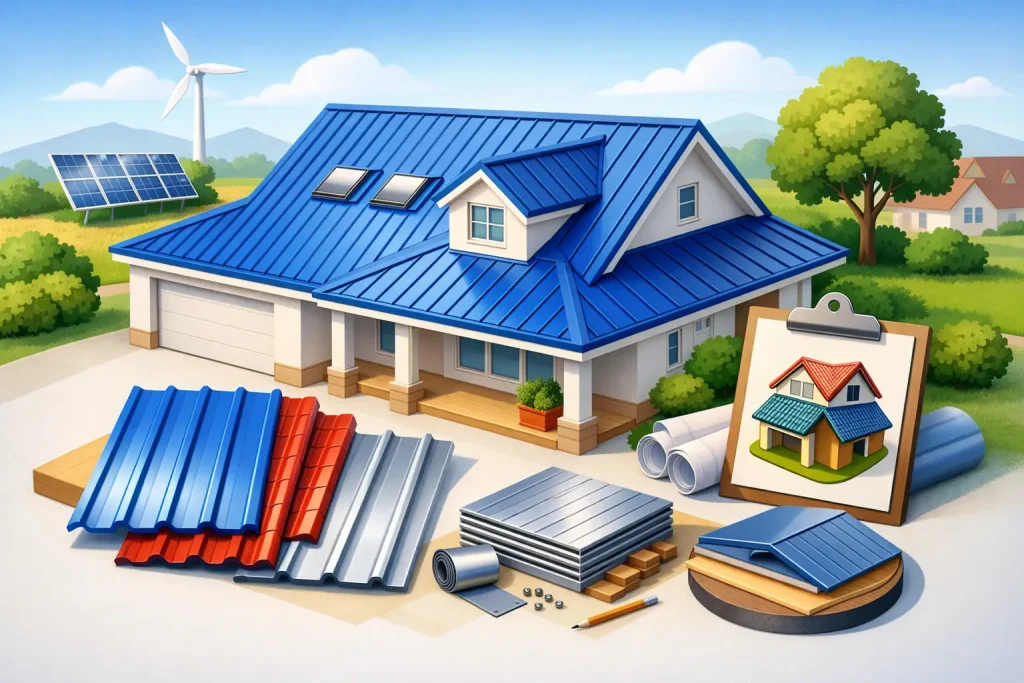
A metal roof usually gets serious attention right after a storm, right after a leak, or right after a homeowner gets tired of replacing shingles sooner than expected. This homeowner guide to metal roofs is built for that moment – when you want straight answers about cost, durability, noise, maintenance, and whether metal actually makes sense for your house.
Along the Mississippi Gulf Coast, roofing decisions are not just about curb appeal. They are about wind, salt air, heavy rain, heat, humidity, and how much trouble you want to deal with over the next 20 to 50 years. Metal roofing has a strong reputation for a reason, but it is not the right fit for every home, every budget, or every roof structure.
Why homeowners keep looking at metal roofs
Most homeowners start with one simple question: will a metal roof last longer than shingles? In many cases, yes. A properly installed metal roof can outlast a standard asphalt shingle roof by a wide margin. That longer service life is a big reason people choose it, especially if they plan to stay in the home for years.
Metal also performs well in harsh weather. It sheds rain fast, stands up well to wind when installed correctly, and does not absorb moisture the way some other materials can. In a coastal climate, that matters. When your roof faces repeated storms and long humid seasons, durability is not a luxury. It is the whole job.
There is also the maintenance side. Homeowners often like metal because it is less likely to develop the same kind of widespread wear you see with aging shingles, such as granule loss, curling, and brittle tabs. That does not mean maintenance disappears. It means the maintenance tends to be different and, in many cases, more manageable.
A homeowner guide to metal roofs starts with the types
Not all metal roofs are the same, and that is where a lot of confusion begins. When homeowners hear “metal roof,” they may picture a shiny barn roof, but residential systems come in several styles.
Standing seam is one of the most popular premium options. It uses raised seams and concealed fasteners, which gives it a cleaner look and usually better long-term protection against leaks around exposed screws. It also tends to cost more, but many homeowners see that higher price as worth it for appearance and performance.
Corrugated and exposed-fastener panels are usually more budget-friendly. These systems can still perform well, but the exposed screws and washers may require more attention over time because those components take the weather directly. For some homes, especially where budget is a major factor, this style can still be a practical choice.
Metal shingles and stamped metal panels are another option. These are designed to mimic traditional shingles, slate, or tile while offering metal’s durability. They can be a good fit for homeowners who want the benefits of metal without the more industrial panel look.
The best choice depends on your budget, the style of your home, and how long you want the roof to last before major work is needed.
Cost: the part everyone asks about first
Metal roofs usually cost more upfront than asphalt shingles. There is no reason to sidestep that. Materials cost more, fabrication can be more specialized, and installation takes skill. If you are comparing bids side by side, the metal option will often come in noticeably higher.
What matters is how you measure value. If you are planning to sell soon, the higher upfront cost may not pencil out the same way it would for someone staying in the home long term. If your current priority is getting a sound roof at the lowest immediate cost, shingles may still be the practical move.
But if you are thinking in terms of lifecycle cost, metal starts to look stronger. A longer lifespan, fewer replacements, and better resistance to wind and weather can make the investment easier to justify. Financing can also change the decision. Plenty of homeowners choose metal because they would rather pay for one better roof than keep paying for another replacement later.
How metal roofs handle Gulf Coast weather
This is where metal earns a lot of its reputation. South Mississippi homes deal with punishing sun, heavy rains, high humidity, and severe storms. A quality metal roof system can be an excellent fit for this environment, especially when wind resistance and water shedding matter.
That said, material alone does not make a roof storm-ready. Installation details matter just as much as the panel itself. Underlayment, flashing, fastening pattern, trim work, and edge details all affect how the roof performs in rough weather. A poorly installed metal roof can fail just as surely as a poorly installed shingle roof.
Salt exposure is another local factor. Near the coast, finish quality matters. The coating on the metal should be suited to the environment, because corrosion resistance becomes more important the closer you are to salt air. This is one reason local experience counts. A roof system that works inland may need different recommendations near Biloxi, Ocean Springs, or Bay Saint Louis.
Are metal roofs loud when it rains?
This question comes up every time, and the short answer is not the way most people imagine. On a properly built residential roof assembly, metal is not usually the deafening drum some homeowners fear. Decking, underlayment, attic insulation, and ceiling structure all help control sound.
If a metal roof is installed over an open structure, like a barn or shed, rain noise is more obvious. On a house with solid decking and insulation, the sound difference is often much smaller than expected. Some homeowners even like the sound. Others barely notice a change.
Energy efficiency and comfort
Metal roofs can help with energy performance, especially if you choose a reflective finish designed to reduce heat absorption. In a hot climate, that can make a real difference in attic temperatures and cooling demand. It is not magic, and it will not fix poor insulation or ventilation, but it can contribute to a more efficient roof system.
This is where the whole house matters. If your attic insulation is weak or your ventilation is poor, changing roofing material alone will not solve comfort issues. The better approach is to look at the full system – roofing, ventilation, insulation, and moisture control. That kind of practical problem-solving usually saves more money than chasing one product claim after another.
Common concerns homeowners should take seriously
One concern is denting. Metal roofs can resist a lot, but some products are more dent-resistant than others. Hail, falling limbs, and storm debris can leave marks depending on the gauge of the metal and the panel profile. If appearance is a major concern, ask about thicker materials and profile options.
Another issue is expansion and contraction. Metal moves with temperature changes, so proper installation is critical. The system needs to be designed to allow for movement without creating stress points that lead to leaks or fastener problems.
Homeowners should also ask about repairs. Metal roofs are durable, but when damage does happen, repairs should be handled by a contractor who understands the specific system. Fixing metal is not always the same as patching shingles, and shortcuts usually show up later as leaks.
How to know if metal is right for your home
A homeowner guide to metal roofs would be incomplete without saying this plainly: metal is a great option, but not an automatic yes.
If you want the lowest upfront price, a basic shingle roof will often be the better match. If you plan to move soon, the long-term value of metal may not matter as much. If your home’s design calls for a certain look, you may prefer architectural shingles or another product.
But if you want long service life, strong storm performance, lower maintenance, and a roof that is built to handle tough weather year after year, metal deserves a serious look. It is especially appealing for homeowners who are tired of repeat roof problems and want a tougher system over their heads.
The best next step is not guessing from photos online. It is having the roof inspected, the structure evaluated, and the options explained in plain terms. A good contractor should tell you where metal makes sense, where it does not, and what you would really be paying for.
For homeowners in South Mississippi, that local judgment matters. Roofs here take a beating, and the right recommendation depends on your home, your budget, and how you want the roof to perform in the real world, not just on paper. Companies like Expert Roofing see that trade-off every day, and that is exactly the kind of experience you want when making a bigger roofing investment.
If you are considering metal, do not just ask whether it costs more. Ask whether it solves more. That is usually where the right roofing decision becomes clear.