
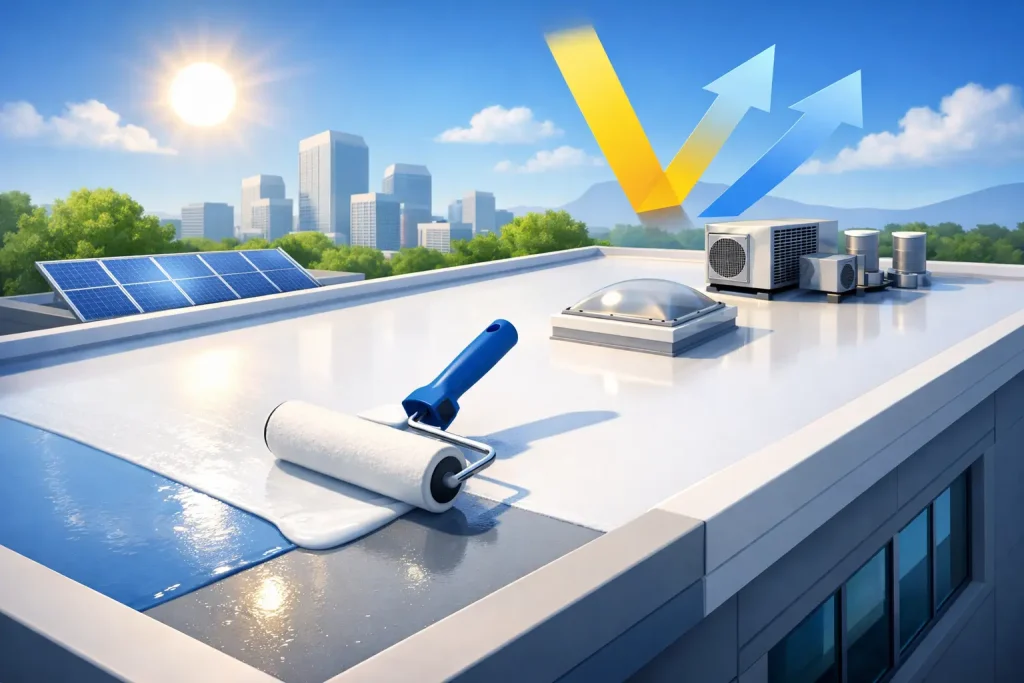
A roof that feels fine in March can become a heat trap by July. Along the Gulf Coast, that matters fast. The future of cool roof coatings is not some far-off idea for labs and trade shows. It is showing up now in how property owners cut heat gain, extend roof life, and avoid the cost of tearing off a roof too soon.
For homeowners, facility managers, and commercial owners, the question is no longer whether coatings can help. The real question is which coatings will keep performing after sun, salt air, storms, standing water, and years of expansion and contraction. That is where the next phase of this industry gets interesting.
What the future of cool roof coatings really looks like
The biggest shift is simple. Cool roof coatings are moving from basic reflective products to high-performance restoration systems. Years ago, many people thought of a coating as a white layer that helped bounce sunlight away. That is still part of the job, but the market is pushing for more than reflectivity alone.
Newer coating systems are expected to reflect heat, resist dirt pickup, handle ponding water better, bridge minor movement, and hold their performance longer in harsh climates. On a Gulf Coast roof, that combination matters. A product that starts bright white but loses reflectivity quickly under grime, algae, moisture, and weathering will not deliver the same value over time.
That is why the future is less about one headline feature and more about total system performance. Building owners are looking harder at lifecycle cost, maintenance intervals, warranty value, and whether a coating can restore a roof instead of forcing a replacement.
Performance is becoming more climate-specific
A cool roof in Arizona does not face the same abuse as a cool roof in South Mississippi. Heat is only one part of the story here. Humidity, wind-driven rain, storms, salt exposure in coastal areas, and frequent moisture all change what a coating needs to do.
That means future products will keep getting more specialized. You will see stronger emphasis on formulations designed for specific roof types and local weather patterns. Silicone, acrylic, polyurethane, and hybrid systems all have a place, but none of them is perfect for every building.
Silicone coatings, for example, are often attractive on low-slope roofs where ponding water is a regular issue. Acrylics can offer strong reflectivity and value in the right setting, but performance can depend heavily on roof design, drainage, and ongoing exposure. Polyurethane systems may offer toughness where impact resistance or traffic matters. The direction of the industry is clear – better matching of chemistry to roof conditions instead of treating all roofs the same.
For property owners, that is good news. It means better results when the roof is inspected properly and the coating system is chosen for the actual problem, not just the lowest bid.
Better prep and better data will separate good jobs from bad ones
One truth is not changing: coatings only work as well as the roof under them. The future of cool roof coatings will not be driven by product chemistry alone. It will also be shaped by better inspections, moisture detection, adhesion testing, and surface prep.
A coating can be an excellent investment on the right roof. It can also be the wrong move if the substrate is saturated, failing, or poorly attached. More contractors and manufacturers are relying on testing and documentation before recommending a system. That protects the customer and improves long-term performance.
This is especially important for aging commercial roofs. A shopping center, hotel, school, or industrial property may have repair history, patched areas, drainage issues, and different roof sections aging at different rates. In those situations, the future is not just about selling a coating. It is about using a coating as part of a restoration plan with repairs, reinforcement, waterproofing details, and maintenance built in.
Energy savings will stay important, but durability will drive decisions
Most people first hear about cool roof coatings through energy savings. That makes sense. Reflective surfaces can reduce roof temperatures and help reduce heat entering the building. On some properties, that can ease HVAC demand and improve comfort.
But the next wave of decision-making is more practical than promotional. Owners want to know if the coating will still be saving energy after years of exposure. They want to know how often it will need recoating, how it handles foot traffic around rooftop equipment, and whether it can help avoid a costly tear-off.
That is where durability becomes the deciding factor. A cheaper product that needs earlier repair or replacement may not be cheaper at all. A higher-performing system with solid prep and proper application may deliver stronger value over the life of the roof.
For homeowners, that can mean getting more years out of a weathered roof section or improving indoor comfort in hot months. For commercial buildings, it often means preserving capital, reducing disruption, and stretching the service life of large roof assets.
Sustainability is pushing restoration over replacement
There is another reason cool roof coatings are gaining ground. More owners want to avoid sending tons of roofing material to the landfill if the existing roof can still be restored.
That does not mean every old roof should be coated. Some roofs are too far gone and need replacement. But many roofs with age, leaks, and surface wear still have a viable structure underneath. In those cases, restoration can make a lot of sense.
The future of cool roof coatings lines up with that shift. More building owners are weighing the cost and disruption of full replacement against a restoration approach that can improve reflectivity, waterproofing, and service life with less demolition. For occupied buildings like hotels, apartment complexes, retail centers, and schools, that lower disruption can be a major advantage.
Smarter coatings are coming, but basics still win jobs
There is plenty of talk in the industry about advanced materials, improved solar reflectance retention, enhanced emissivity, and coatings engineered at a more precise level. Some of that will become more common, and some of it will stay niche for a while.
What will matter most to customers is less flashy. They want products that stay cleaner, resist weathering longer, and perform as promised under real conditions. They want coating systems that work with existing roof assemblies, not just in ideal test settings. They want fewer leaks, lower heat load, and a longer path before replacement.
So yes, the future includes innovation. But it also includes contractors doing the unglamorous work right – cleaning, repairing seams, reinforcing penetrations, addressing drainage concerns, and applying the proper mil thickness. On real roofs, those basics still decide whether the system succeeds.
What property owners should watch for now
If you are considering a cool roof coating, do not focus only on the sales sheet. Ask whether your roof is actually a candidate for restoration. Ask how the coating handles ponding water, UV exposure, and movement. Ask what prep work is included, what repairs are needed first, and how the warranty fits the condition of your roof.
It also helps to think long term. A coating is not just a product purchase. It is part of a roof management strategy. The best results come when the system is chosen around the roof’s age, slope, drainage, current damage, and your budget for future maintenance.
That is especially true in coastal Mississippi, where roofs take a beating from heat, humidity, storms, and salt-heavy air. A coating that performs well in a mild climate may not hold up the same way here. Local experience matters because climate-specific judgment matters.
Why the future is strong for both homes and commercial roofs
Cool roof coatings are often associated with commercial flat roofs, and that is still where they play a major role. But the future is broadening. More homeowners are paying attention to energy efficiency, roof restoration, and alternatives to full replacement where appropriate.
At the same time, commercial owners are under pressure to control operating costs and make capital improvements last longer. That puts coatings in a strong position. When used correctly, they can support both goals.
This is one reason companies like Expert Roofing have continued to put serious focus on coating and waterproofing systems rather than treating them like an add-on service. Property owners want options. Sometimes the right answer is replacement. Sometimes it is repair. Sometimes it is a restoration system that buys years of performance at a better price point.
The market is moving toward smarter decisions, not just newer products.
A good roof plan should fit your building, your budget, and your weather exposure. That is where cool roof coatings are headed – more targeted, more durable, and more useful for owners who want practical results instead of marketing claims. If your roof is aging, overheating, or leaking, the best next step is not guessing what trend comes next. It is getting a real inspection and finding out whether restoration can put your roof back to work.