
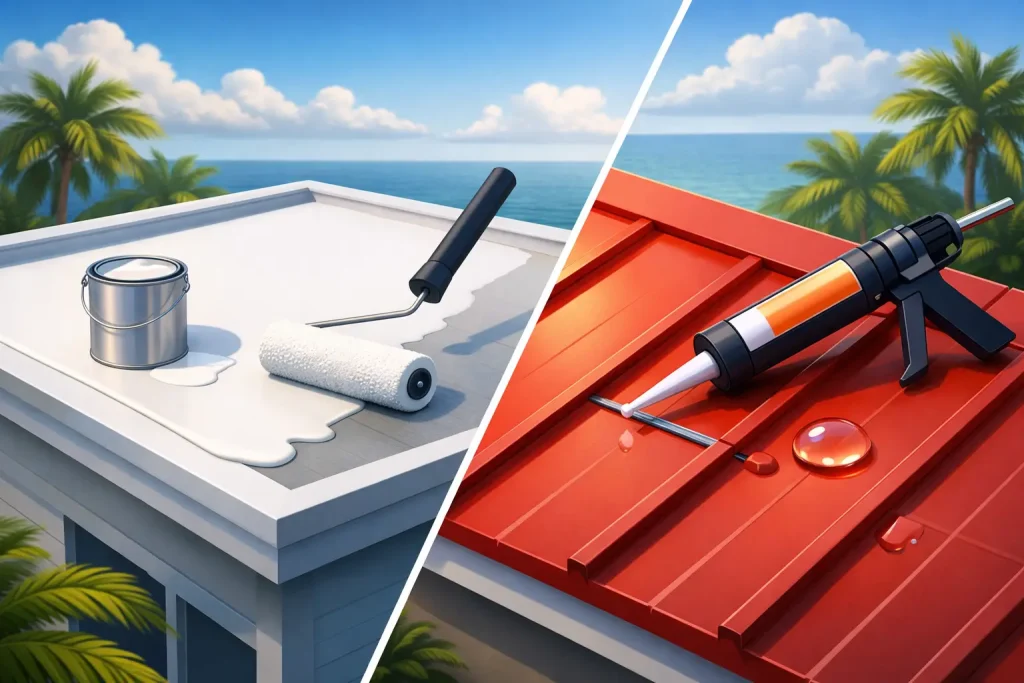
A Gulf Coast roof can look fine from the ground and still be one hard rain away from a leak. That is why the choice between roof coating vs roof sealant matters. One product can restore and protect a large roof surface. The other is designed to close specific gaps, cracks, and vulnerable details. Using the wrong one may slow a problem down, but it will not deliver the lasting protection your property needs.
For homeowners and commercial property managers in South Mississippi, the right answer depends on the roof type, the condition of the existing system, and where water is getting in. Heat, humidity, wind-driven rain, hurricanes, and standing water put every repair material to the test.
Roof Coating vs Roof Sealant: The Main Difference
A roof coating is a liquid-applied system that covers broad areas of a roof. Once installed correctly, it cures into a continuous protective membrane. Coatings are commonly used on low-slope commercial roofs, metal roofs, modified bitumen, and certain aging roof systems that are still structurally sound.
Roof sealant is a thicker material used at smaller, high-risk locations. It is applied around penetrations, fasteners, flashing, seams, vents, skylights, curbs, and repair areas. A sealant is built to adhere, flex, and keep water out at joints where roofing materials meet.
Think of it this way: a coating protects the field of the roof, while sealant protects the details. They often work together, but they do not do the same job.
When a Roof Coating Is the Better Investment
Roof coatings make sense when the existing roof has widespread weathering but has not reached the point of complete failure. A properly selected coating can extend the service life of an eligible roof, improve waterproofing, and reflect more sunlight away from the building.
That reflective benefit is a real consideration in Biloxi, Ocean Springs, Pascagoula, and throughout the Gulf Coast. Dark roof surfaces absorb heavy solar heat day after day. White or reflective coating systems can help reduce roof surface temperatures and may reduce the demand on a building’s cooling system. The actual energy savings depend on insulation, HVAC performance, roof design, and the type of building, so no contractor should promise the same result for every property.
Coatings are especially useful for commercial flat and low-slope roofs with aging membranes, worn surfaces, minor cracking, or fading protective layers. They can also be a practical restoration option for metal roofs with widespread surface deterioration, provided corrosion, loose fasteners, and failed seams are repaired first.
A coating is not simply paint. Professional roof coating systems require surface preparation, repairs, cleaning, dry conditions, and the correct mil thickness. Skipping those steps can lead to poor adhesion, trapped moisture, peeling, or premature failure. The cheapest coating quote is not always the least expensive choice once the roof needs to be redone.
What Roof Coatings Can Do
A quality coating system can create a monolithic surface over much of the roof, helping defend against sun exposure and water intrusion. Depending on the system and roof condition, it can also bridge small surface imperfections and support a longer maintenance cycle.
For large commercial buildings, this can be an attractive alternative to immediate tear-off. It may reduce disruption to tenants, keep more old roofing material out of the landfill, and allow owners to plan capital expenses more effectively. However, restoration only works when the existing substrate is dry, stable, and repairable.
When Roof Sealant Is the Right Fix
Roof sealant is the right tool when the problem is isolated. A leaking pipe boot, a lifted flashing edge, an open metal seam, exposed fastener, or cracked vent detail does not automatically call for a whole-roof coating project.
Sealants are also a necessary part of many larger roofing jobs. Before coating a roof, a contractor may seal seams, reinforce transitions, treat penetrations, and address flashing details. These areas move differently than the open roof field and often need extra attention to remain watertight.
For a homeowner with a shingle roof, sealant may be used during a targeted repair around flashing or a small damaged area. It is not a substitute for missing shingles, widespread granule loss, rotted decking, or storm damage across the roof. Applying a bead of sealant over a serious shingle problem may hide the symptom briefly while water continues working underneath.
The Limits of Sealant
Sealant is not intended to coat an entire roof or replace failed roofing material. It can crack, pull away, or break down when applied to a dirty surface, a wet area, or a joint with more movement than the product can handle.
It also has a service life. Gulf Coast heat and UV exposure are hard on caulk-like materials, especially on exposed metal details. A professional inspection should identify why the detail failed in the first place. If flashing is installed incorrectly, fasteners are backing out, or water is ponding in one area, adding more sealant alone is not a complete repair.
Which Option Works Best for Common Roof Problems?
A small leak around a roof penetration usually calls for repair work and compatible sealant, not a full coating. A low-slope roof with broad surface wear, minor cracking, and no saturated insulation may be a strong coating candidate. A metal roof with aging finish and many exposed seams may need both – detail sealing first, followed by a coating system designed for metal.
If you are dealing with ponding water, the answer gets more specific. Some coating systems can handle intermittent ponding better than others, but no coating should be treated as a cure for poor drainage. A roof that holds water after storms may need drains cleared, tapered insulation, structural corrections, or other drainage improvements before restoration.
For storm damage, first focus on stopping active water entry and documenting the condition. Emergency tarping may be necessary until permanent repairs can be made. After that, a roofing professional can determine whether repairs, a coating restoration, or replacement provides the best long-term value.
Questions to Ask Before Choosing a Product
Before approving either solution, ask whether the roof has wet insulation, deteriorated decking, loose materials, trapped moisture, or active leaks at multiple locations. Ask what preparation is included, how seams and penetrations will be treated, and what warranty applies to the completed system.
Commercial property owners should also ask about coating thickness, compatible primers, drainage conditions, and maintenance requirements. A coating system is only as dependable as the roof beneath it and the workmanship used to install it.
Homeowners should be cautious about quick-fix products sold as universal roof repair solutions. Roof materials are not interchangeable. A sealant that works around a metal flashing detail may not be right for asphalt shingles, TPO, modified bitumen, or an elastomeric coating system. Compatibility matters because the wrong material can fail early or interfere with a future repair.
Get the Roof Diagnosed Before You Spend
The practical choice is not always coating or sealant. Sometimes the roof needs a targeted repair. Sometimes a restoration system can buy years of dependable service. And sometimes replacement is the honest recommendation because the underlying roof has already failed.
Expert Roofing helps South Mississippi property owners sort out those options with straightforward inspections, roof repair, waterproofing, high-tech coating systems, and replacement services when needed. A free estimate gives you a clear starting point, and financing may help when a larger project cannot wait.
Do not let a small ceiling stain turn into damaged insulation, mold concerns, or a major interior repair. Have the roof checked while the decision is still yours to make, not one forced by the next Gulf Coast storm.