
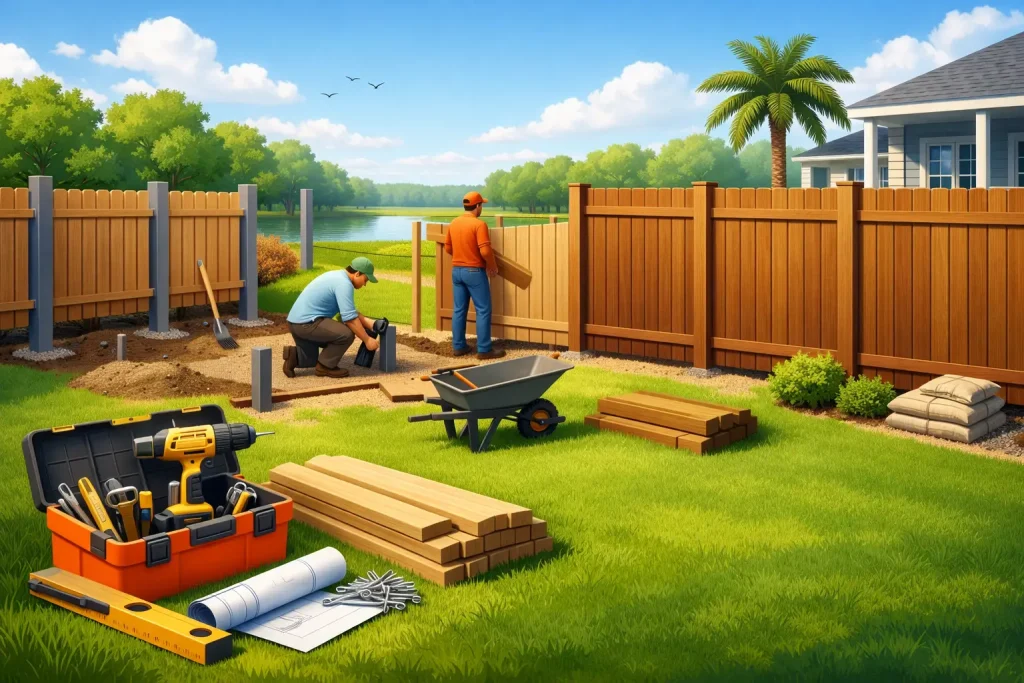
A privacy fence can turn an exposed backyard into usable space for kids, pets, cookouts, and quiet evenings. But privacy fence installation cost is not a one-price project. The total depends on how many linear feet you need, the material you choose, the condition of the property, and the details that make the fence work for your daily life.
For South Mississippi property owners, the right fence also has to stand up to hard rain, humidity, wind, and long stretches of summer heat. A low upfront price may look good on paper, but a poorly installed fence can start leaning, warping, or failing at the gate long before it should. A clear estimate helps you compare real value, not just the first number.
What Does Privacy Fence Installation Cost?
Most residential privacy fences are priced by the linear foot, not by the square foot. Linear footage measures the length around the area being enclosed. A 150-foot fence line is 150 linear feet whether the fence is 4 feet tall or 8 feet tall, although added height increases material, labor, and cost.
A basic professionally installed wood privacy fence commonly falls around $20 to $45 per linear foot, while vinyl privacy fencing often runs about $30 to $60 per linear foot. Premium composite materials, custom designs, difficult site conditions, and multiple gates can move the total higher. A smaller project may cost more per foot because mobilization, layout, gate work, and cleanup still require a full crew.
As a general planning example, a straightforward 150-linear-foot, 6-foot wood privacy fence may land in the $3,000 to $6,750 range. The same size in vinyl may fall around $4,500 to $9,000. Those are planning ranges, not promises. A site visit is the only dependable way to price posts, gates, access, slope, and local requirements correctly.
The Main Factors Behind Privacy Fence Installation Cost
Fence material and style
Pressure-treated pine remains a popular choice because it provides solid privacy at a practical price. It can be stained or sealed to fit the home, and individual boards can be replaced if damaged. The trade-off is maintenance. Gulf Coast moisture can be tough on wood, so it needs proper installation, drainage, and periodic care to stay straight and attractive.
Vinyl costs more at the start but requires less routine maintenance. It will not rot like wood, and it does not need staining. However, quality matters. Thin, low-grade vinyl can crack or become brittle over time, especially if installation shortcuts leave panels unsupported.
Composite fencing offers a more premium look and strong resistance to rot and insects, but it usually carries the highest material cost. Chain-link fencing with privacy slats can be an economical option for some properties, though it does not provide the same finished appearance or solid wind break as a true wood, vinyl, or composite privacy fence.
The design changes the price as well. A standard side-by-side board fence is usually more affordable than a board-on-board design, shadowbox style, cap-and-trim package, or custom horizontal fence. Decorative post tops, framed panels, stain, and upgraded fasteners are worthwhile options when they fit the budget, but they should be included in the quote from the beginning.
Height and total footage
A 6-foot fence is the common choice for backyard privacy. A taller fence uses longer posts, more boards or panels, and more concrete, which increases the installed price. Before planning for 8 feet, check local rules and homeowners association requirements. Some areas limit fence height or require placement away from certain property lines and intersections.
Length has an obvious effect, but corners and turns matter too. Every corner needs a stronger post assembly. A rectangular yard with two long runs is typically easier to fence than a yard with several offsets, angled boundaries, landscaping islands, or separate enclosures.
Gates are more than an opening
Gates are one of the most underestimated parts of a fence budget. A standard walk gate is useful for daily access, while a wider double gate may be necessary for lawn equipment, trailers, pool work, or future backyard projects. Wider gates require heavier framing, stronger hinges, reliable latches, and well-set posts to avoid sagging.
It is smart to think ahead here. Saving money by installing only a narrow gate can become expensive when a future patio, shed, pool, or drainage project requires equipment access. A contractor should ask how you use the property before finalizing gate locations and sizes.
Ground conditions and job access
South Mississippi yards are not all flat, dry, and easy to reach. Sloped ground, soft soil, drainage ditches, roots, old concrete, buried debris, and tight side-yard access can affect labor time and materials. Fence lines near trees may require careful layout to avoid cutting major roots or leaving gaps that defeat the purpose of a privacy fence.
Removing an old fence also adds to the price. Crews may need to pull old posts and concrete, haul off damaged panels, and prepare the line before new work starts. If the yard is wet or has drainage problems, addressing that issue before installation can protect the new fence from premature movement and rot.
What a Reliable Fence Estimate Should Include
A useful estimate should make it easy to see what you are paying for. It should identify the fence material, height, style, total linear footage, number and size of gates, post type, and whether old fence removal and disposal are included. It should also clarify whether staining, sealing, grading, permit fees, and cleanup are part of the scope.
Do not assume every quote includes the same construction details. One contractor may quote standard posts with minimal concrete, while another may specify deeper-set posts, better gate framing, and materials selected for wet coastal conditions. The lower number is not always the lower long-term cost.
Ask how posts will be set, what hardware will be used on gates, and how the crew handles changes in grade. If a fence is intended to contain pets, ask how bottom gaps will be managed. If it is near a pool, make sure the planned design meets applicable safety requirements before work begins.
Permits, Property Lines, and HOA Rules
Fence installation can move quickly once the layout is settled, but paperwork and boundary questions should not be ignored. Depending on the city, county, neighborhood, and project scope, a permit may be required. Homeowners associations may regulate fence height, material, color, placement, and whether the finished side must face outward.
The biggest mistake is building on an assumed property line. An existing old fence is not always on the true boundary. If there is any uncertainty, review a recent survey or have the line confirmed before posts are placed. Moving a completed fence after a boundary dispute costs far more than checking first.
Utility locating also matters. A fence crew should know about underground lines before digging post holes. Irrigation, drainage pipes, cable, electrical lines, and septic components can all affect where a fence can safely go.
Where to Spend and Where to Save
If the budget is tight, prioritize the parts of the fence that control strength and useful life: quality posts, proper depth, concrete where appropriate, solid gate framing, and professional layout. These are not the places to cut corners. A leaning fence or dragging gate becomes a recurring problem, not a bargain.
You may be able to save by choosing a straightforward style, limiting decorative upgrades, using one well-planned gate instead of several, or completing staining at a later date if the material allows it. Keep the fence design practical, but do not sacrifice access, drainage, or post stability to reduce the initial price.
A privacy fence should make the property more comfortable, more functional, and easier to enjoy. For homeowners in Biloxi and across South Mississippi, a free on-site estimate from an experienced exterior contractor is the fastest way to get a real number, review material options, and build a fence that is ready for Gulf Coast weather.