
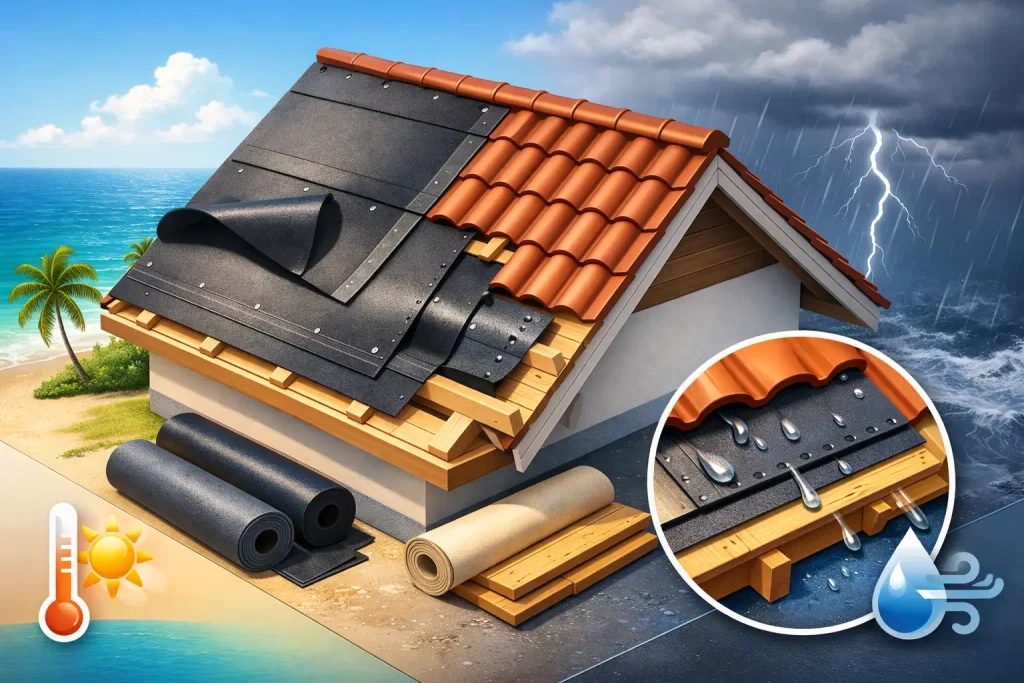
A new roof is only as dependable as the layer installed beneath it. Shingles, metal panels, and other roof coverings take the direct hit from sun and storms, but underlayment is the backup barrier that helps protect the roof deck when wind-driven rain finds a weak point. Knowing how to choose roof underlayment matters even more along the Mississippi Gulf Coast, where heat, humidity, heavy rain, and hurricane-season winds can expose shortcuts fast.
The right choice is not always the most expensive roll on the estimate. It is the underlayment that fits your roof material, roof slope, deck condition, local weather exposure, and manufacturer warranty requirements. A qualified roofer should explain that choice clearly before installation begins.
How to Choose Roof Underlayment for Your Roof
Start with the roof system, not the underlayment label. The material underneath asphalt shingles may not be the best fit for a standing-seam metal roof, a low-slope addition, or a commercial building with a coated flat roof. Underlayment works as part of a complete system, and each layer has a job.
For a typical shingle roof, the main choices are traditional asphalt-saturated felt, synthetic underlayment, and self-adhered waterproofing membrane. Each can be appropriate in the right application. The question is where it will be installed and what it needs to withstand.
Traditional felt is familiar, economical, and still used on many roofing projects. It can perform well when installed correctly and kept dry during construction. However, it is heavier, can wrinkle or tear more easily, and may not hold up as well as modern products when a project is exposed to rain before shingles are installed.
Synthetic underlayment is a popular upgrade for many residential roofs. It is generally lighter, stronger, and more resistant to tearing than felt. It also tends to lie flatter and provide better traction for installers. For many Gulf Coast shingle and metal roofing projects, synthetic underlayment offers a practical balance of cost, durability, and weather resistance.
Self-adhered membrane, often called peel-and-stick underlayment, sticks directly to the roof deck. It creates a tighter water barrier around vulnerable areas, especially valleys, roof edges, penetrations, and transitions. It costs more, and the deck must be properly prepared, but it can provide valuable added protection where leaks are most likely to start.
Match the Underlayment to the Roof Covering
Your final roof covering should guide the decision. Asphalt shingles need an underlayment approved by the shingle manufacturer. Using an unapproved product can create warranty issues, even if the product looks similar on the surface. A contractor should follow the manufacturer’s written installation requirements, including fastening patterns, overlap, ventilation, and required membrane locations.
Metal roofing needs special attention. Metal panels can experience condensation when warm, humid air meets a cooler roof surface. The right underlayment helps manage water intrusion and protects the deck, but some assemblies may also need a vapor-control strategy or separation layer. The best setup depends on whether the metal roof is installed over an open-frame system, solid decking, or an existing roof assembly.
Tile, slate, and specialty roofing materials have their own requirements because they are heavier, installed differently, and expected to last longer. A short-lived underlayment beneath a long-life roof covering is a poor investment. If the roof covering may last 40 years or more, choose an underlayment system designed for that service life.
Low-slope roofs are a different category altogether. Underlayment alone is not a waterproof flat-roof system. Buildings with low-slope or nearly flat roofs may need modified bitumen, TPO, PVC, built-up roofing, liquid-applied waterproofing, or a roof coating system. If water drains slowly or ponds after rain, the roof needs a full assessment rather than a standard shingle-underlayment recommendation.
Consider Gulf Coast Rain, Wind, and Heat
South Mississippi roofs deal with conditions that are harder than an average weather forecast suggests. A brief thunderstorm can turn into driving rain, and high winds can force water beneath shingles or flashing that would otherwise shed rain normally. Underlayment gives the roof a second line of defense when that happens.
For properties in Biloxi, Ocean Springs, Pascagoula, Bay Saint Louis, and other coastal or near-coastal communities, wind exposure should be part of the conversation. Stronger synthetic products and self-adhered membranes in critical zones may be worth the added cost, particularly on roofs with complex valleys, dormers, skylights, chimneys, or numerous pipe penetrations.
Heat also matters. A roof deck can become extremely hot during a Mississippi summer. Choose products rated for the temperatures they will face, especially under metal roofing or dark-colored shingles. An underlayment that softens, degrades, or loses adhesion under prolonged heat can compromise the entire roof assembly.
Humidity adds another concern. Underlayment is not a substitute for proper attic ventilation and insulation. If moisture is building up in the attic, the solution may involve intake and exhaust ventilation, air sealing, or blown-in insulation along with roofing work. Covering a moisture problem without addressing its source can lead to deck rot, mold, and shortened roof life.
Do Not Skip High-Risk Areas
The field of the roof is important, but leaks often start at details. Valleys collect large volumes of water. Eaves and rakes are vulnerable to wind uplift. Chimneys, skylights, wall intersections, vents, and plumbing pipes all interrupt the roof surface. These locations often benefit from self-adhered waterproofing membrane even when the rest of the roof uses synthetic underlayment.
A good roofing estimate should identify how these areas will be handled. Ask whether the proposal includes new flashing, valley protection, pipe boots, starter materials, and deck repairs if hidden damage is found. Underlayment cannot make up for old flashing, poor fasteners, or damaged wood.
Deck condition is especially important. Underlayment needs a clean, dry, solid surface to perform as intended. If the plywood or boards are soft, delaminated, or rotted from past leaks, those sections should be replaced before the new underlayment goes down. Installing premium materials over a failing deck only hides the problem until the next storm.
Compare Cost by Protection, Not Just by the Roll
Budget matters, and there is no reason to pay for a premium system where it offers no real benefit. Still, the cheapest underlayment can become expensive if it tears during installation, fails under high heat, or leaves vulnerable roof details poorly protected.
When comparing proposals, make sure you are comparing complete systems. One quote may include basic felt across the entire roof, while another may include high-quality synthetic underlayment plus self-adhered protection in valleys and around penetrations. The higher initial number may deliver far better water protection and a stronger long-term value.
For an aging roof with recurring leaks, do not assume replacement is the only answer. In some cases, a roof coating or waterproofing restoration system can extend the life of an existing commercial or low-slope roof. That approach depends on the roof’s condition, drainage, substrate, and past repairs. A hands-on inspection is the only dependable way to determine whether restoration or replacement makes more sense.
Questions to Ask Before Work Starts
Before approving a roofing project, get direct answers to these four questions:
- What underlayment product will be installed, and is it approved for my roof covering?
- Where will self-adhered waterproofing membrane be used?
- How will damaged decking, flashing, and penetrations be addressed?
- What workmanship and manufacturer warranty coverage applies to the full roof system?
Clear answers protect you from vague proposals and surprise upgrades after the old roof has been removed. They also make it easier to understand what you are paying for.
Expert Roofing helps South Mississippi homeowners and commercial property owners evaluate roofing, waterproofing, and coating options based on real roof conditions – not a one-size-fits-all sales pitch. A free estimate should give you a practical plan, clear material choices, and a price you can understand, with financing options available for qualifying projects.
Before the next hard rain exposes a weak spot, have the roof inspected and ask to see the underlayment plan in writing. That one layer is out of sight once the job is complete, but its protection can make a major difference for years to come.