
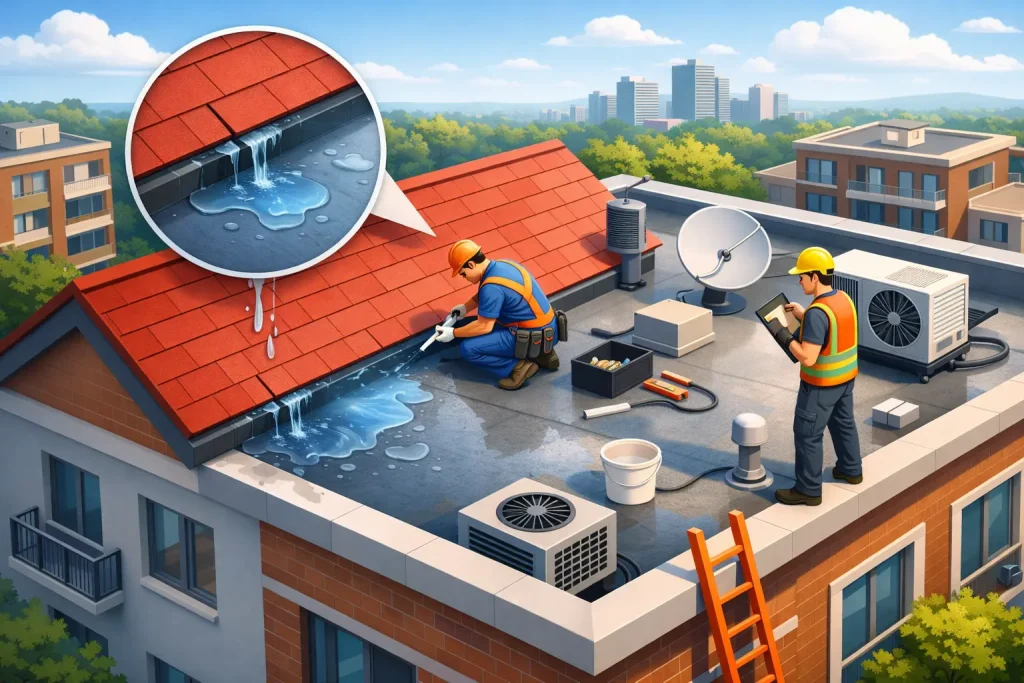
A ceiling stain in one apartment can turn into wet insulation, damaged drywall, mold concerns, and frustrated tenants in several units before anyone sees the full problem. Roof maintenance for apartments is how property owners stay ahead of that chain reaction. On the Mississippi Gulf Coast, strong sun, wind-driven rain, humidity, and tropical weather put every roof system under pressure. Waiting for an active leak is rarely the affordable option.
Apartment roofs also carry a different level of responsibility than a single-family home. A missed drain, loose flashing, or split seam can affect tenants, maintenance staff, insurance claims, and occupancy. A clear maintenance plan protects the building, helps control operating costs, and gives property managers a better answer when residents report a problem.
Why Apartment Roofs Need a Real Maintenance Plan
A roof does not have to be old to need attention. Flat and low-slope apartment roofs collect standing water when drains are blocked or the roof has low spots. Shingle roofs can lose granules, lift at the edges, or develop damaged flashing around vents and walls. Metal roofs may perform for decades, but fasteners, sealants, and penetrations still need regular inspection.
The Gulf Coast adds another layer of risk. Heavy rain can expose small waterproofing failures quickly. Heat causes roofing materials to expand and contract. High humidity can keep moisture trapped longer than expected, especially where drainage is poor or attic ventilation is limited.
For apartment owners, the goal is not to repair every cosmetic mark. The goal is to catch conditions that can allow water into the building envelope. That takes scheduled inspections, documentation, and prompt repairs when warning signs appear.
A Practical Roof Maintenance Schedule for Apartments
Most apartment properties should have a professional roof inspection at least twice a year: once before the peak storm season and once after it. Properties with older roofs, known drainage issues, large flat-roof sections, or heavy tree coverage may need more frequent checks. A post-storm inspection is also smart after high winds, hail, or prolonged heavy rain.
Maintenance staff can perform visual walk-throughs between professional inspections. They should look for ponding water, loose debris, damaged gutters, backed-up drains, obvious membrane damage, displaced shingles, and water marks on upper-floor ceilings. They should not make assumptions about the source of a leak or walk on a roof system they are not trained to access safely.
A good schedule includes three parts: regular observation, qualified inspection, and fast action on documented defects. When those steps are separated, small issues are less likely to become expensive emergency calls.
Start With a Roof Inventory
Before setting a budget, identify what is actually on each building. Record the roof type, approximate age, prior repair history, warranty information, drainage locations, rooftop equipment, and areas that have leaked before. Apartment complexes often have multiple buildings with different roof ages or systems, so treating the whole property as one roof can create blind spots.
Photographs matter. Take clear photos during inspections and keep them with work orders and invoices. Over time, that record helps show whether a crack is growing, whether a repair is holding, and whether a section is approaching the point where restoration or replacement makes more financial sense.
Keep Water Moving Off the Roof
Drainage is one of the biggest maintenance priorities for low-slope apartment roofs. Leaves, pine needles, trash, and loose roofing material can block drains, scuppers, gutters, and downspouts. Water that remains on a roof accelerates deterioration and makes existing seams or weak spots more vulnerable.
Cleaning drains is not a one-time job. It should happen before forecasted severe weather, after major storms, and during routine seasonal maintenance. If water regularly ponds in the same location, simply clearing the drain may not solve the issue. The roof may need a drainage correction, tapered insulation, localized repairs, or a waterproofing solution designed for that area.
Inspect Flashing, Seams, and Penetrations
Many apartment roof leaks do not begin in the middle of the roof field. They start where different materials meet. Flashing at walls, parapets, skylights, vents, HVAC curbs, plumbing stacks, and roof edges must stay sealed as the building moves and materials age.
On flat roofs, seams and transitions deserve close attention. On shingle roofs, inspect valleys, pipe boots, ridge areas, and flashing around chimneys or walls. On metal roofs, check fasteners, panel laps, and sealant condition. These are manageable maintenance items when caught early, but they can become widespread water damage if ignored.
Act Fast When Tenants Report Warning Signs
Tenants are often the first people to see a roof-related issue. A yellow ceiling ring, bubbling paint, damp carpet near an exterior wall, a musty odor, or water appearing after a specific storm should be logged and investigated. The visible water location is not always directly below the roof entry point, since moisture can travel along framing, insulation, conduit, or ductwork.
Treat reports seriously, but diagnose them correctly. Condensation from HVAC equipment, plumbing leaks, failed windows, and exterior wall leaks can look like roof problems. A qualified contractor can inspect the roof and surrounding exterior components to narrow down the source before money is spent on the wrong repair.
When active water is entering the building, protect residents and interiors first. Move belongings, contain the area where possible, document the damage, and arrange emergency roof protection if needed. Temporary tarping can prevent further intrusion after storm damage, but it is not a substitute for a permanent repair plan.
Choose Repair, Coating, or Replacement Based on Condition
There is no single answer for every apartment roof. A roof with limited damage and years of remaining service life may only need targeted repairs and continued maintenance. A roof that is weathered but still structurally sound may be a candidate for a professional roof coating or restoration system. A roof with widespread saturated insulation, repeated leaks, severe deterioration, or major storm damage may be better served by replacement.
Roof coatings can be a practical option for certain low-slope roofs because they create a renewed waterproofing surface and can help reflect heat. They are not a shortcut for every failing roof. The substrate must be evaluated, repaired, cleaned, and prepared properly for a coating system to perform. Coating over trapped moisture, failing seams, or unstable materials only delays the real work.
Replacement costs more upfront, but it can be the right move when repairs are becoming repetitive or the existing system is beyond dependable restoration. The smart comparison is lifecycle cost, not just the lowest proposal. Consider the expected service life, disruption to tenants, warranty terms, energy performance, and how much ongoing repair expense the property has been carrying.
Make Maintenance Easier for Staff and Tenants
A maintenance plan works best when everyone knows what to report and who is responsible for the next step. Give onsite teams a simple process for logging leaks, including the unit number, date, weather conditions, photos, and whether water is active. This information helps contractors identify patterns across a building.
Schedule work with tenant access in mind. Interior inspections may be necessary even when the repair is on the roof, and clear notices reduce missed appointments and frustration. For occupied apartment properties, the best contractor is one that can coordinate repairs professionally, protect common areas, and communicate what is happening without creating unnecessary disruption.
It also helps to keep rooftop access controlled. Unnecessary foot traffic, unapproved satellite installations, HVAC work, and temporary equipment can damage membranes, flashings, and coatings. Any vendor who penetrates or works near the roof should be required to report damage immediately and follow the roof system’s requirements.
What to Expect From a Professional Inspection
A thorough apartment roof inspection should do more than confirm that the roof is wet or dry on that particular day. It should assess the overall condition of the roof covering, seams, flashings, penetrations, drainage components, roof edges, and visible signs of moisture intrusion. The inspector should also identify urgent repairs separately from maintenance items that can be planned and budgeted.
Ask for photos and plain language. Property owners need to know what is wrong, why it matters, what can wait, and what could happen if it is delayed. A useful report gives decision-makers enough detail to plan repairs without burying them in contractor jargon.
For apartment owners across South Mississippi, Expert Roofing provides inspections, emergency roof tarping, repairs, replacement, and waterproofing-focused coating solutions for aging and leak-prone roof systems. Free estimates and financing options can help property managers move forward before a small roof issue turns into a larger capital expense.
The best time to schedule roof work is when you can choose the timing, not when water is already coming through a tenant’s ceiling. Put inspections on the calendar, keep records, and address the small failures while they are still small.