
Properly balanced attic ventilation is the difference between a roof that lasts its full lifespan and one that fails five to seven years early. A correctly vented attic needs roughly equal intake and exhaust airflow — about 1 square foot of net free vent area for every 150 to 300 square feet of attic floor — to control heat, humidity, and mold. I’ve been diagnosing and fixing ventilation failures on Gulf Coast roofs for over 30 years, and it’s one of the most commonly botched parts of a roofing job I see, even on roofs that are otherwise well-installed.
Call (228) 331-1215 for a free attic ventilation inspection, or keep reading — this page covers what actually matters.
Attic Venting in SouthA Mississippi is one of the most important money saving ideas you can have in the hot Coastal MS climate. Poor attic venting can cause several serious issues with your home or business such as trapped heat and moisture, causing severe, costly damage. Key results include premature roof failure, mold growth, saturated insulation, ice dams, and significantly higher energy bills. Excessive heat bakes shingles from below, while trapped moisture causes wood rot and warped decking. Please watch this video.
Expert Roofing can ventillate your attic and save you money. Removing the heat from the attic will prevent future issues and don’t forget about increasing your insulation levels also. Blown-in Attic Insulation is very cost effective and adding attic vents and extra insulation is tax deductible so you save in more ways than one. Ensure that your home benefits from proper attic venting in South Mississippi.
Proper attic venting in South Mississippi is essential for maintaining a healthy home environment.
Attic ventilation is a system of balanced intake (soffit) and exhaust (ridge) vents that allows fresh air to circulate, lowering temperatures in summer and removing moisture in winter to prevent mold, rot, and ice dams. It is essential for protecting roof structures and increasing energy efficiency, often requiring a 1/300 ratio of vent area to attic space.
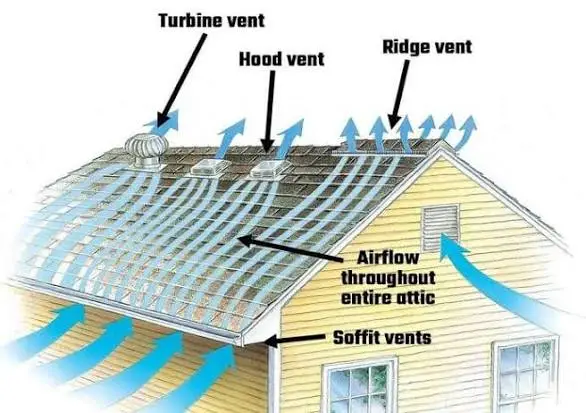
South Mississippi asks more of a roof than a dry, mild climate does. We combine three things that wreck an unventilated attic faster than almost anywhere else: intense summer heat, Gulf humidity, and hurricane-driven wind and rain.
An attic without proper airflow can reach 150°F or higher on a summer afternoon here. That heat radiates down into your living space, forces your AC to run harder, and literally cooks your shingles from underneath — which is why so many Biloxi-area roofs show curling and granule loss well before their rated lifespan. At the same time, Gulf humidity means any trapped moisture in that same attic doesn’t just sit there — it condenses, soaks insulation, and feeds mold on the underside of your roof deck. I’ve opened up attics on 10-year-old roofs that looked like they’d been steamed.
Balanced ventilation fixes both problems at once: it lets heat escape before it builds up, and it keeps moist air moving instead of settling.
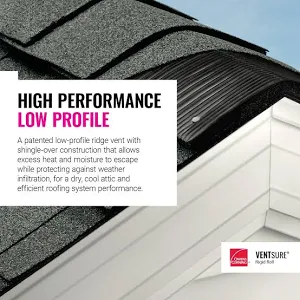
Ridge vents + soffit intake (my default recommendation). A continuous ridge vent paired with real, unobstructed soffit intake is the most reliable system for most Gulf Coast homes — no moving parts to wear out, even airflow across the whole attic, and low maintenance. The catch: it only works if the soffit intake is genuinely open. I still find “vented” soffit panels on service calls where the holes were never cut through the felt or insulation was stuffed right up against them, which means the ridge vent has been doing nothing for years. On storm-exposed homes, I also make sure the ridge vent is baffled and rated to keep out wind-driven rain — not every ridge vent on the market is.
Building code (IRC Section R806) sets the baseline, but code minimum and “correctly done” aren’t always the same thing on a coastal roof.
On a storm-exposed home, I lean toward slightly more intake than the code minimum calls for. It costs almost nothing extra during a re-roof and gives the system margin when a soffit vent gets partially blocked by insulation or debris, which happens more than people think.
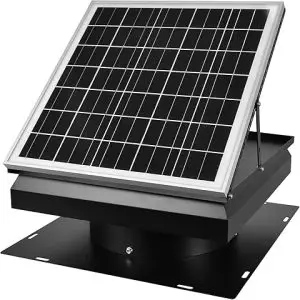
A solid option when a roof doesn’t have enough ridge length for adequate exhaust, or on hip roofs where a continuous ridge isn’t available. Zero operating cost, and they still pull air even on overcast days. I use these as a targeted fix more than a whole-house default.
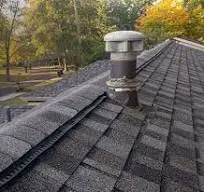
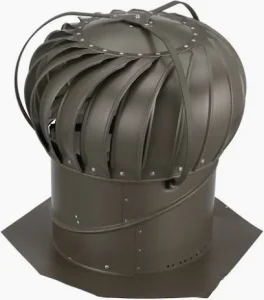
Turbine vents. These work, but only when there’s wind to spin them — on a still Gulf Coast summer day, a turbine can sit dead while your attic bakes. They also have moving parts and bearings that wear out over 10–15 years, and in a hurricane-prone area, that’s one more mechanical point of failure sitting exposed on your roof. I’ll install turbines on a hip roof with limited ridge options, but they’re not my first choice.
Powered attic fans — I generally don’t recommend these in our climate, and I’ll tell you why straight up. In a hot, humid climate like ours, a powered fan can depressurize the attic enough to pull conditioned, air-conditioned air up out of your living space through every gap in the ceiling — which raises your energy bill instead of lowering it, and can pull humid indoor air into the attic where it condenses. I’ve also seen them contribute to backdrafting on homes with gas water heaters or furnaces vented through the attic. A correctly sized passive, balanced system almost always outperforms a powered fan here, without the electrical cost, the moving parts, or the depressurization risk. If you’ve got one installed now and you’re seeing mold or high bills, that’s usually the first thing I check.
If you’re seeing any of these, it’s worth a look before it turns into a bigger repair:
Any one of these can have other causes too — this isn’t a self-diagnosis substitute, it’s a reason to get someone up in the attic who knows what they’re looking at.
Mississippi just launched the Strengthen Mississippi Homes program through the Mississippi Insurance Department, offering up to $10,000 per home toward a FORTIFIED Roof™ upgrade — with insurance discounts reported in the 20–50% range once your roof is certified.
Here’s what matters for Biloxi homeowners specifically:
If you’re planning a re-roof or a ventilation fix anyway, it’s worth finding out whether you qualify before you start — it can turn a several-thousand-dollar job into a mostly-covered one. Call us and we’ll tell you plainly whether your situation qualifies and what a FORTIFIED-compliant ventilation setup would look like on your roof.
(Keeping your existing figures below — please confirm these are still current before this goes live; material and labor costs have moved around a lot over the past year.)
Every attic is different — roof pitch, existing insulation, soffit condition, and whether this is a standalone fix or part of a larger roofing job all change the number. A free inspection gets you an exact figure instead of a guess.

Energy Star Ratings are a classification given by the US government to state items comply with energy saving standards. You may qualify for tax breaks by using these products. Ask for details.
Is attic ventilation required by Mississippi building code? Yes. The IRC requires a minimum of 1 square foot of net free ventilating area per 150 square feet of attic floor (or per 300 square feet if you have a proper vapor barrier and balanced, correctly placed vents). Most Biloxi-area homes built to code have some ventilation, but “installed” and “working correctly” aren’t the same thing — blocked soffits and unbalanced intake/exhaust are common even on homes that technically meet code.
Will better attic ventilation actually lower my energy bill? Yes, when it’s balanced correctly. A properly vented attic keeps summer attic temperatures down, which reduces how hard your AC has to work to cool the rooms below it. Powered attic fans can actually raise your bill in humid climates by pulling conditioned air out of your home — a passive, balanced ridge-and-soffit system is usually the more energy-efficient choice here.
Can an attic have too much ventilation? Not usually from total vent area alone, but an imbalanced system — more exhaust than intake — can cause problems, including pulling air from your living space instead of the soffits. The goal is balance, not maximum vent count.
What’s the difference between ridge vents, turbine vents, and powered fans? Ridge vents are passive, continuous, and rely on natural airflow — no moving parts, low maintenance. Turbine vents are passive but wind-driven, so they only work when there’s wind. Powered fans use electricity to force air out, but in humid Gulf Coast climates they can depressurize the attic and pull conditioned air from your home. For most South Mississippi homes, a balanced ridge-and-soffit system is the most reliable choice.
How do I know if my attic ventilation is failing? Watch for hot upstairs rooms, curling or granule-loss on shingles, a musty attic smell, visible mold or staining on the roof deck, or higher-than-expected summer cooling bills. Any of these is a reason to have it inspected.
Does attic ventilation affect my eligibility for Mississippi’s FORTIFIED Roof grant? It can. FORTIFIED Roof evaluations check that vents are properly rated for wind-driven rain (TAS 100(A)) and correctly balanced. If your current ventilation doesn’t meet that standard, it could affect certification. We can tell you where your roof stands before you apply.
How much does attic ventilation cost in the Biloxi area? It depends on your roof size, pitch, current setup, and whether it’s a standalone fix or part of a larger roofing job. As a rough guide, turbine vents run about $30–$75 per unit ($175 installed); ridge vent systems are priced per linear foot. A free inspection gets you an exact number.
Expert Roofing has served Biloxi and the South Mississippi Gulf Coast for over 30 years, specializing in roof waterproofing, commercial roof coatings, and shingle roofing — with a repair-first philosophy: we fix what can be fixed before we recommend a full replacement. We’re located at 2730 Pass Road, Biloxi, MS 39531. Call (228) 331-1215 for a free attic ventilation inspection.