
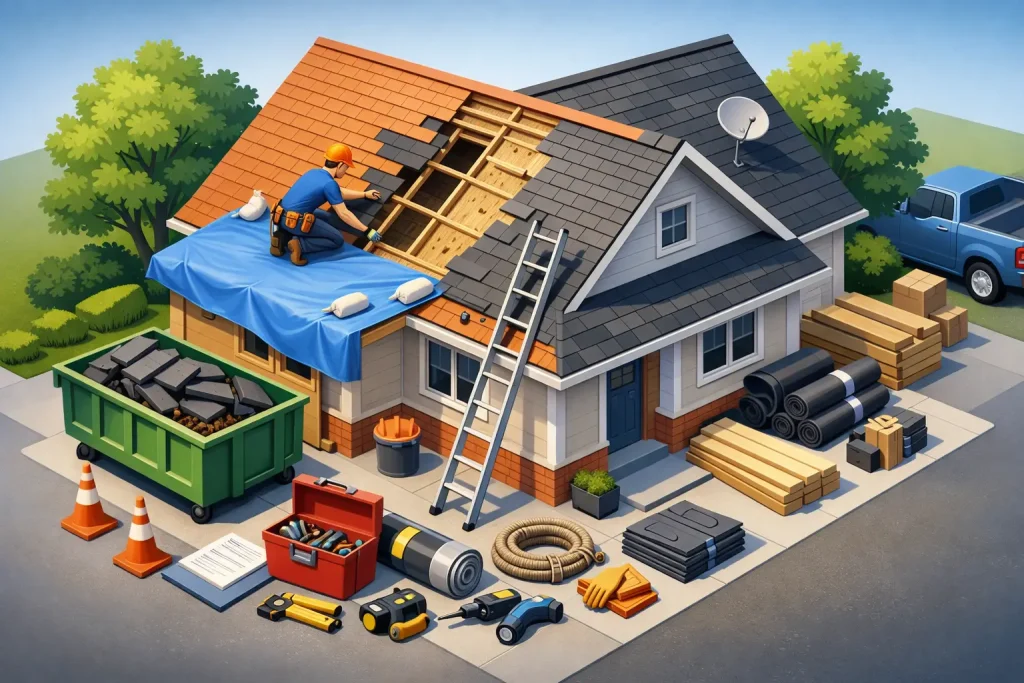
The week before a roof replacement is when most property owners realize the project is bigger than picking a shingle color. Cars need to move. Patio furniture has to be cleared out. Inside the house, a few wall hangings may need to come down. If you want the job to move fast and stay on track, knowing how to prepare for roof replacement makes a real difference.
A good crew can handle the roofing work. What they need from you is access, clear communication, and a property that is ready for a noisy, active jobsite. That matters even more across the Gulf Coast, where weather can shift quickly and scheduling windows need to be used wisely.
How to prepare for roof replacement before materials arrive
Start with the schedule. Confirm the install date, expected start time, and how long the project should take. For a standard home, replacement may take a day or two. Larger homes, steep roofs, weather delays, or decking repairs can stretch that timeline. On commercial properties, access requirements, tenant coordination, and business hours can affect the pace.
Ask your contractor what will be delivered ahead of time and where materials will be placed. Shingles, underlayment, metal panels, dumpsters, and equipment all take up space. If the driveway needs to stay open, say that early. If you manage a retail center, school, hotel, or apartment property, planning deliveries around traffic patterns is part of the job.
This is also the time to discuss special concerns. Maybe your attic has stored items, your building has landscaping close to the walls, or your property has old decking that may need replacement once tear-off begins. Roof replacement is not always a neat swap of old materials for new ones. Sometimes the bigger issue is what gets uncovered after the first layer comes off.
Clear the areas around the house or building
Roofing debris does not stay neatly under the eaves. Even with tarps, magnetic cleanup, and careful tear-off practices, nails and material scraps can travel. The safest move is to create as much open space around the structure as possible.
Move vehicles out of the driveway and away from the work zone. If you have a garage attached to the house, it may be smart to park outside and farther away for the day. Crews need room for ladders, dump trailers, and material loading. For commercial sites, reserve parking spaces near the building and notify staff or tenants in advance.
Patio furniture, grills, potted plants, and lightweight decorations should be moved away from the perimeter. If you have fragile landscaping, let the contractor know before the job starts. Some plants can be protected, but there are limits. A roof replacement is active construction, not detail work, and it helps to be realistic about that.
If you have children or pets, make a plan to keep them away from the house during work hours. The noise alone can be stressful, and doors opening while crews move around the property can create safety issues.
Protect the inside of the property too
Most people focus on the outside and forget what happens indoors during tear-off. Roof replacement causes vibration. Nails are pulled, decking is checked, materials are hauled across the roof, and the structure can shake more than you expect.
Take down wall art, mirrors, and decorations, especially on upper floors or on walls that share roof lines. Secure fragile items on shelves. In the attic, cover stored belongings with plastic or old sheets if dust is a concern. If your attic has valuable items, move them temporarily.
For businesses, think beyond dust. Noise can affect calls, meetings, guest experience, and tenant operations. A hotel may need to block off certain rooms. A school may need work scheduled when students are not present. An office may need staff shifted to a quieter side of the building. Preparation is not just about protecting property. It is about reducing disruption.
Plan for power, access, and communication
Your contractor may need access to exterior outlets, gates, or specific parts of the property. Unlock side yards, move anything blocking fence entrances, and make sure someone is available to answer questions the morning the job starts.
If you will not be on site, choose one point of contact and keep your phone close. Fast decisions matter if damaged decking is found or weather forces a change in plan. Delays often come from missed calls, not the roofing itself.
On commercial projects, access can be more complex. Rooftop HVAC units, loading docks, security procedures, and tenant coordination all need to be addressed ahead of time. The best roofing projects run on communication, not guesswork.
Understand what may change during the job
One of the most useful parts of learning how to prepare for roof replacement is understanding that some costs and timelines depend on what is underneath the old roof. Rotten decking, hidden leak damage, poor ventilation, and flashing failures may not be fully visible until tear-off begins.
That does not mean the project is going wrong. It means the existing roof had more going on than you could see from the ground. A reliable contractor should explain those conditions clearly, document them, and give you options if extra work is needed.
This is where price alone can mislead people. A low quote may not include enough allowance for real-world conditions. A better approach is to ask what happens if wood replacement is needed, how warranty coverage works, and whether there are financing options if the scope grows. Practical answers matter more than a cheap number on paper.
Prepare for noise, debris, and short-term inconvenience
Roof replacement is loud. There is no way around that. Hammering, scraping, compressor noise, footsteps overhead, and debris removal can go on for hours. If you work from home, plan to relocate for the day if you need quiet. If you have pets that are sensitive to noise, boarding or day care may be worth it.
Debris control should be part of the contractor’s process, but your expectations should still be realistic. A roofing crew can protect the property and clean thoroughly, yet the site will still feel like a construction zone while work is active. If your business depends on customer access, temporary signage or traffic direction may help.
Weather is another variable. In South Mississippi, sudden rain is always part of the conversation. Ask how the crew handles unexpected weather, what temporary dry-in measures are used, and whether tarping is available if conditions change fast. That is especially important on older roofs, flat roofs, and buildings that already have leak issues.
Final checks the day before replacement
The day before the project starts, walk the property once more. Make sure vehicles are moved, gates are unlocked, and outdoor items are out of the way. Inside, confirm that fragile items are secured and attic belongings are covered.
Review the basic job details one last time. You should know when the crew is arriving, where materials are staged, who your contact person is, and what the cleanup process looks like. If you own or manage multiple buildings, communicate that information to tenants, staff, or residents so nobody is surprised by blocked access or noise.
This is also a good time to ask about post-job inspection and warranty paperwork. Once the roof is complete, you want a clear understanding of what was installed, what was repaired, and what kind of long-term protection you now have.
Why preparation saves money and stress
The best roof replacement projects are not just about good installation. They are about fewer delays, fewer surprises, and less disruption to your home or operation. When the property is ready and communication is clear, the crew can work efficiently and address problems fast.
That is true whether you own a single-family home in Biloxi, manage apartments in Ocean Springs, or oversee a commercial facility with flat roofing and waterproofing concerns. Every project has different moving parts, but preparation always pays off.
If your roof is aging, leaking, storm-damaged, or costing you money in repeated repairs, now is the right time to ask questions before the first shingle comes off. A solid contractor should make the process feel manageable, not confusing. Expert Roofing works with homeowners and commercial property owners across South Mississippi to do exactly that, with free estimates, financing options, and practical solutions that fit the building in front of them.
A new roof is a major project, but it should not feel like chaos. The more prepared you are before the crew arrives, the smoother the job goes and the faster you get back to normal.