
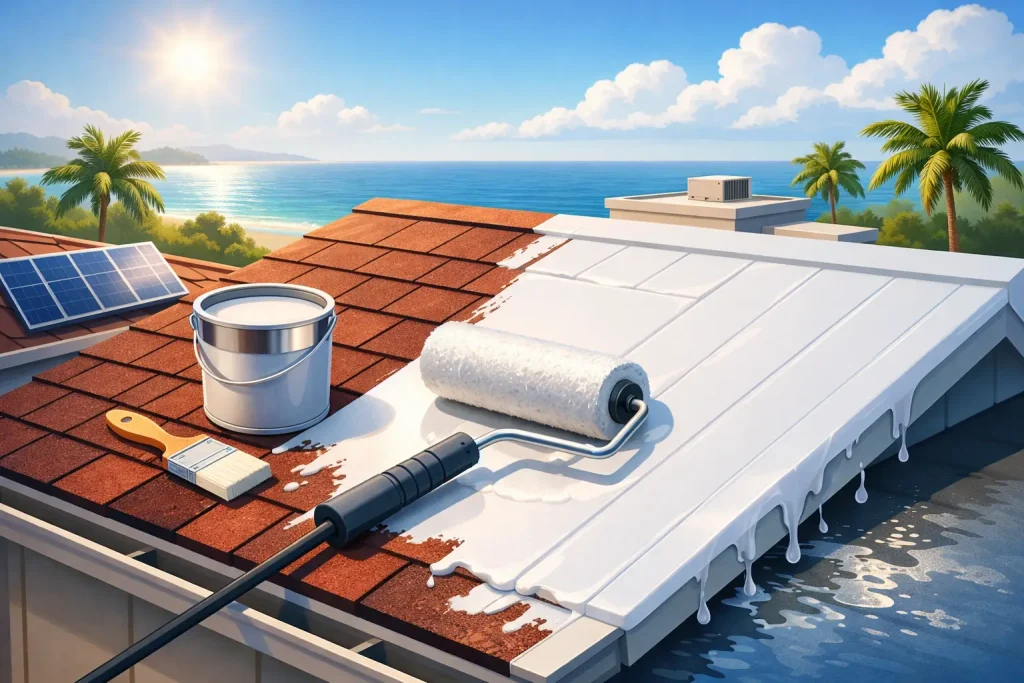
A roof that starts leaking after every hard Gulf Coast rain does not always need to be torn off and replaced. In the right situation, a coating can stop the water, protect the existing roof, and buy meaningful service life at a lower cost. This acrylic roof coating review gives South Mississippi property owners a straight answer on where this system earns its keep, where it falls short, and what has to happen before a coating is applied.
What an Acrylic Roof Coating Actually Does
Acrylic roof coating is a fluid-applied, water-based membrane used mainly on low-slope commercial roofs, metal roofs, and certain residential roof surfaces. Once installed correctly, it dries into a flexible, continuous layer that helps shed water, resist sunlight, and seal minor surface imperfections.
The biggest appeal is restoration. Instead of immediately removing an aging roof system, a qualified roofing contractor can clean, repair, prepare, and coat the existing surface. That can reduce disruption for a business, avoid a major tear-off, and improve the roof’s reflectivity during long, hot Mississippi summers.
Most acrylic systems are white or light-colored. That bright finish reflects a portion of the sun’s heat, which may help reduce roof-surface temperatures and ease the workload on air conditioning equipment. Energy savings vary by building insulation, HVAC condition, roof design, and operating hours, so no contractor should promise one fixed number for every property.
Acrylic Roof Coating Review: The Real Benefits
Acrylic coatings are popular for good reasons. They are typically more affordable than a full roof replacement when the existing roof is still structurally sound. They can also be installed with less noise, less debris, and less interruption than a tear-off project.
For a metal roof, acrylic coating can be especially useful when the panels still have life left but fasteners, laps, seams, and light rust need attention. Proper surface preparation and seam treatment matter more than the bucket label. The coating needs a clean, dry, stable surface to bond correctly.
On many flat and low-slope roofs, a coating can create a fresh protective layer over weathered membrane areas after repairs are completed. It can help address widespread aging, chalking, small surface cracks, and UV exposure. A properly specified system may also come with a manufacturer-backed warranty when installed according to that manufacturer’s requirements.
The application process is another advantage. Acrylic materials are generally low odor and can be applied without the open flames associated with some traditional roofing methods. That can be a practical benefit for occupied buildings such as hotels, schools, offices, apartment communities, and retail spaces.
Where Acrylic Coatings Can Disappoint
A coating is not a cure-all. It will not fix soaked insulation, rotted decking, major structural movement, badly corroded metal, failed flashing, or a roof that has reached the end of its usable life. Coating over active problems may hide them briefly, but the water will keep moving underneath.
Ponding water is one of the main concerns. Acrylic coatings can perform well on roofs with positive drainage, but constant standing water can shorten the life of some systems. If water remains on the roof for days after a normal rain, drainage needs to be part of the conversation. That may mean clearing drains, correcting low areas, adding tapered insulation, or considering a different coating chemistry.
Weather conditions also matter. Acrylic coating is water-based, so it needs suitable temperatures and dry conditions to cure as intended. Along the Gulf Coast, where afternoon storms and humidity can change plans quickly, an experienced crew watches the forecast, moisture levels, and cure windows closely. Rushing a coating job because rain is coming is a poor trade.
Acrylic is also not the best answer for every roof type. Asphalt shingles, for example, should not be coated as a shortcut for replacement. Shingle roofs rely on the design and condition of individual shingles, underlayment, flashing, and ventilation. A coating does not replace those components.
The Inspection Decides Whether Coating Makes Sense
The right question is not, “Can this roof be coated?” Almost any roof can receive material. The better question is, “Will coating this roof solve the actual problem and provide a worthwhile return?” That answer comes from a hands-on inspection.
A contractor should identify the existing roof type, inspect seams and penetrations, look for wet insulation or soft decking, assess drainage, and check the condition of flashing around walls, pipes, HVAC units, and edges. On metal roofs, the inspection should include rust, loose fasteners, panel movement, and failed sealant at laps.
Moisture testing may be necessary on commercial roofs, especially where leaks have gone on for a while. If the roof assembly is wet below the surface, repair or replacement of those areas should happen before coating. A clean-looking roof is not always a dry roof.
Preparation usually includes pressure washing, removing loose material, treating rust where needed, repairing cracks and damaged sections, reinforcing seams, and applying primers if the system calls for them. The coating thickness must also be measured. Thin application is one of the most common reasons a coating system fails early.
What to Ask Before You Approve a Coating Project
Property owners should expect clear answers, not vague promises. Ask what type of roof you have, what repairs are needed before coating, how drainage will be handled, and what coating system is being proposed. The contractor should also explain the required dry film thickness and whether the project qualifies for a material or labor warranty.
It is smart to ask how the crew will protect walls, cars, landscaping, HVAC equipment, and surrounding tenants during cleaning and application. For commercial properties, discuss access, staging, business hours, safety procedures, and how the work will affect occupants.
Get the maintenance expectations in writing. Even a quality coating needs periodic inspections, especially after hurricanes, tropical storms, hail, or wind events. Keeping drains clear and addressing small punctures or failed sealant early can prevent a simple repair from becoming an interior damage claim.
Coating Versus Replacement: A Cost Decision With Consequences
Roof coating often costs less upfront than replacement, but the lowest bid is not automatically the best value. A bargain coating applied over wet materials or unresolved leaks can become money wasted. On the other hand, replacing a roof that can be professionally restored may mean paying for more work than the building truly needs.
A coating is often a strong choice when the roof deck is sound, the existing roof has limited damage, drainage is acceptable, and the building owner wants to extend service life without a major tear-off. Replacement is usually the better choice when there is extensive saturation, repeated failures across the system, widespread deterioration, or a roof design that will keep creating water problems.
For Gulf Coast properties, storm exposure should be part of the decision. High winds, wind-driven rain, intense UV, salt air near the coast, and humid conditions put every roofing system to work. The best solution is the one that matches the building, the roof’s present condition, and the owner’s budget for long-term maintenance.
A Practical Verdict for South Mississippi Properties
This acrylic roof coating review comes down to one point: acrylic coating can be a smart restoration tool, but it is only as dependable as the inspection, repairs, preparation, and application behind it. It is not roof paint, and it should never be treated like a quick cover-up for a failing roof.
For a sound metal or low-slope roof with manageable wear, a professionally installed acrylic system can improve waterproofing, refresh the roof surface, and delay a costly replacement. For a roof with trapped moisture, poor drainage, or deep structural problems, a coating may be the wrong investment.
If your roof is leaking, aging, or showing storm wear, get a clear assessment before committing to either a coating or replacement. Expert Roofing can inspect the condition, explain the practical options, and provide a free estimate so you can make the next move with confidence.