
A roof that soaks up Gulf Coast sun all day can turn your attic, top floor, or commercial space into an oven by midafternoon. If you are asking can roof coating lower cooling bills, the short answer is yes – in the right situation, it absolutely can. But the real answer depends on your roof type, your insulation, your building use, and whether the coating is solving the right problem.
For many property owners, a roof coating is not just about stopping leaks or extending roof life. It can also reduce heat gain by reflecting more sunlight and lowering roof surface temperature. That matters in South Mississippi, where long cooling seasons put steady pressure on HVAC systems and utility bills.
Can roof coating lower cooling bills on every roof?
Not every roof sees the same payoff. Reflective coatings tend to make the biggest difference on low-slope or flat roofing systems that take direct sun for hours at a time. Commercial buildings, apartment buildings, schools, warehouses, and older retail properties often benefit most because they usually have large roof areas and high daytime cooling demand.
On homes, the answer is a little more case by case. If you have a dark roof, limited attic ventilation, older insulation, or rooms that stay hot no matter how long the AC runs, a roof coating may help. If your attic is already well insulated and your roof is steep, vented, and shaded, the savings may be more modest.
That does not mean coatings are not worth considering. It means a coating should be matched to the roof system and the building’s actual weak points, not sold as a one-size-fits-all fix.
How roof coatings reduce heat
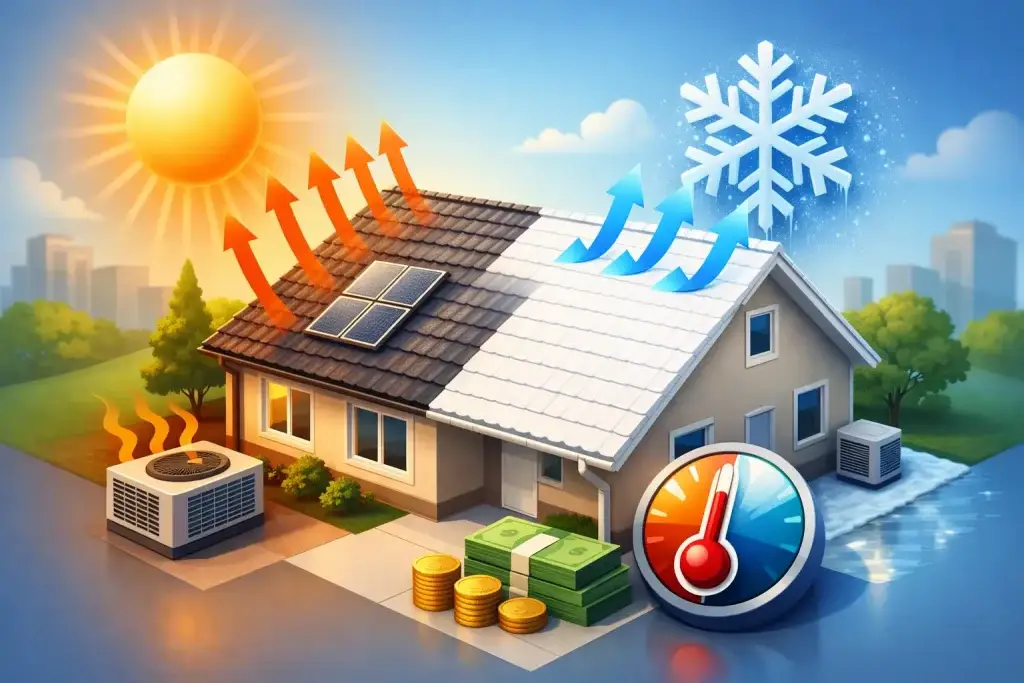
A quality roof coating works by changing how your roof handles sunlight. Traditional dark roofing surfaces absorb solar radiation and transfer that heat into the roof assembly. Reflective coatings are designed to bounce more of that sunlight away and release heat faster instead of holding it.
When roof surface temperatures drop, less heat moves into the building below. Your air conditioner does not have to work as hard to maintain indoor temperature, especially during the hottest part of the day. On a commercial flat roof, that can translate into meaningful operating savings over time.
There is also a comfort benefit that property owners notice right away. Top-floor rooms, offices, and tenant spaces often feel more stable and less stuffy when the roof is not radiating stored heat into the structure.
Why the Gulf Coast makes this more relevant
In South Mississippi, cooling season is not a short summer event. Heat and humidity hang around for months, and roofs take a beating. That long exposure makes reflective roof systems more attractive here than in cooler climates where heating costs dominate.
If your building is in Biloxi, Ocean Springs, Pascagoula, or anywhere along the coast, you are dealing with intense sun, salt air, storms, and moisture. A coating system that helps reflect heat while also adding waterproofing value can solve more than one problem at once.
Where cooling bill savings are most likely
Savings are usually strongest when the roof is a major source of heat gain. That often happens on buildings with large exposed roof areas, minimal shade, older dark membranes, or rooftop equipment that already struggles in summer conditions.
Commercial flat roofs are often the best candidates. A white or reflective coating on an aging modified bitumen, metal, or single-ply roof can lower surface temperatures enough to reduce strain on HVAC equipment. Facility managers also like the fact that coatings can restore a roof without the cost and disruption of a full tear-off in many cases.
Residential properties can benefit too, especially if the home has an older roof, high second-floor temperatures, bonus rooms over garages, or poor attic performance. If the roof is part of the problem, coating it can help. If the real issue is missing insulation or bad ductwork, the coating alone will not fix the whole bill.
When a roof coating may not lower cooling bills much
This is where honest roofing advice matters. If your energy loss is happening through drafty windows, leaky doors, under-insulated walls, or an aging AC unit, roof coating may not move the needle enough to notice on its own.
The same goes for certain steep-slope shingle roofs. Some coatings are not appropriate for every shingle system, and even where a coating is technically possible, the energy savings may not justify the application. In those cases, roof replacement, attic insulation upgrades, or ventilation improvements may be the better investment.
A coating also has to be installed correctly over a roof that is still a good candidate for restoration. If the roof is saturated, badly deteriorated, or structurally compromised, coating over damage is not a smart shortcut. It may delay the real repair and create bigger problems later.
The biggest mistake property owners make
The biggest mistake is shopping for a coating based on price alone. Cheap coating jobs can look good for a short time and still fail to deliver real performance. Surface prep, moisture testing, seam treatment, detailing around penetrations, and choosing the right coating chemistry all matter.
A proper roof coating system is not just paint rolled across the surface. It is a restoration process. If a contractor skips the prep work or applies the wrong product to the wrong substrate, the roof may not reflect heat the way it should, and it may not hold up under Gulf Coast weather.
That is why experienced roof coating contractors start with an inspection, not a sales pitch. They need to know what roof you have, how it is aging, where water is getting in, and whether the building has other efficiency issues that should be addressed at the same time.
Roof coating and energy savings work best with other upgrades
If your goal is lower cooling costs, a coating often performs best as part of a broader plan. For some buildings, that means sealing roof leaks first and applying a reflective waterproof coating. For others, it means pairing roof improvements with attic insulation, ventilation corrections, or HVAC servicing.
That combination approach is especially useful for older homes and commercial buildings across South Mississippi. A roof may be contributing to high indoor heat, but not acting alone. When the roof, insulation, and ventilation all work together, you usually see stronger comfort improvements and better efficiency.
This is one reason many property owners choose a contractor with wider exterior and building-envelope experience. If the same team can assess the roof, waterproofing, and insulation together, you are more likely to get a practical answer instead of a product-first pitch.
Can roof coating lower cooling bills enough to justify the cost?
For many property owners, yes. The value is not only in utility savings. A good coating can also extend the life of an existing roof, reduce thermal stress, improve waterproofing, and postpone a more expensive replacement. When those benefits stack together, the return looks stronger.
Still, the payback timeline depends on the building. A large commercial roof with heavy summer AC use may see noticeable savings faster than a small shaded home. The condition of the existing roof matters too. If a coating prevents early replacement while also cutting cooling demand, that is a different value proposition than energy savings alone.
This is why free inspections and estimates matter. A real contractor should be able to tell you whether coating is the smart move, the temporary move, or the wrong move. That kind of straight answer saves money.
What to ask before moving forward
If you are considering a roof coating, ask what type of roof you have, whether it is restorable, what coating system is recommended, and what kind of prep work is included. Ask about warranty coverage, expected service life, and whether there are visible signs that insulation or ventilation should be addressed too.
You should also ask what results are realistic. No reputable contractor should promise the same savings for every building. The right answer is usually more specific than that.
For property owners dealing with high summer bills, aging flat roofs, or persistent top-floor heat, a roof coating can be one of the more cost-effective upgrades available. But it has to be the right coating on the right roof, installed the right way. If you want a practical answer instead of guesswork, get the roof inspected and let the condition of the building lead the decision. That is how you turn a hot roof into a real opportunity instead of just another expense.