
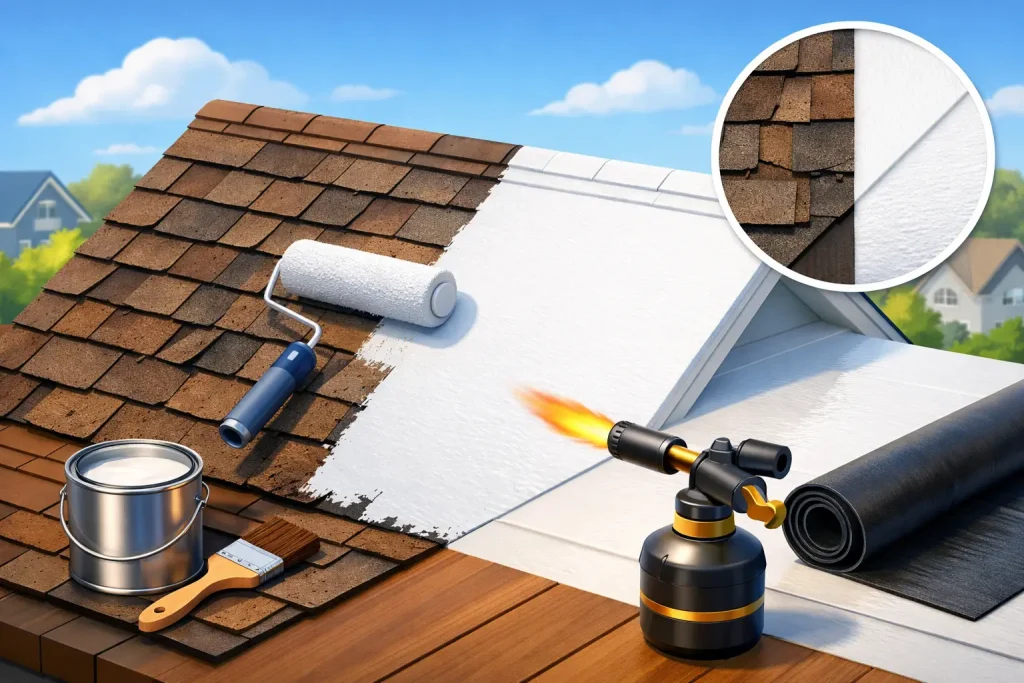
A shingle roof can look worn out long before it is completely finished. That leads many property owners to ask, can you coat over old shingles instead of paying for a replacement? The honest answer is: sometimes a specialty coating may be an option, but standard roof coatings are not a cure-all for aging asphalt shingles. On many homes, coating the wrong roof can trap problems underneath, affect drainage, and delay the repair that the roof actually needs.
For Gulf Coast properties, the decision deserves a close inspection. Heat, hard rain, hurricane-season winds, humidity, salt air near the coast, and algae growth all put extra stress on roofing materials. A practical solution starts with knowing whether the shingles are still a sound surface or whether the roof has already reached replacement territory.
Can You Coat Over Old Shingles Without Problems?
You should not assume that a coating made for flat or low-slope commercial roofs will work on a shingle roof. Asphalt shingles are designed to shed water in overlapping courses. Their granulated surface, slope, ventilation, and drainage pattern all work together. Applying a thick coating across that system can change how the roof handles water and heat.
In some cases, a manufacturer-approved shingle restoration coating can be applied to an older shingle roof that is dry, properly attached, and free of active leaks. These products are different from the silicone, acrylic, or elastomeric systems commonly used on commercial flat roofs, metal roofs, and certain low-slope surfaces. They must be selected and installed for asphalt shingles specifically.
Even then, a coating is not a substitute for a roof with failed shingles, wet decking, deteriorated flashing, or widespread granule loss. If the roof is near the end of its service life, putting money into a coating can become an expensive temporary patch.
When a Shingle Coating May Be Worth Considering
A coating conversation can make sense when the roof is aging cosmetically but still structurally sound. For example, the shingles may have faded, show light surface wear, or have minor algae staining while remaining flexible, securely fastened, and fully watertight. The roof deck must be solid, and attic ventilation must be doing its job.
The roof also needs to be clean and dry before any approved coating is considered. Moss, loose granules, dirt, mildew, and moisture keep products from bonding correctly. A contractor should inspect valleys, pipe boots, chimney flashing, wall transitions, ridge areas, and penetrations first. Those are common places for leaks to start, and no surface coating should be used to hide a failed detail.
For a property owner trying to extend the life of a roof for a limited period, a qualified restoration option may offer a lower upfront cost than replacement. It may also improve the roof’s appearance. But the expected service life, maintenance requirements, manufacturer warranty, and future replacement plan should all be clear before work begins.
When Coating Old Shingles Is the Wrong Move
A coating should not be used to cover damage that requires repair or replacement. If you can see curled shingle edges, missing tabs, exposed fiberglass mat, bald areas with heavy granule loss, soft spots in the roof deck, or repeated leaks, the roof needs more than a new top layer.
Watch for these red flags:
- Water stains on ceilings, damp attic insulation, or visible mold growth
- Shingles lifting in wind, broken seal strips, or widespread storm damage
- Granules collecting heavily in gutters and downspouts
- Sagging roof lines, rotten decking, or damaged fascia
- Multiple old roof layers that add weight and complicate repairs
On the Mississippi Gulf Coast, wind damage is a major concern. A roof may look acceptable from the ground but have lifted seals or creased shingles after a storm. Those shingles may no longer resist wind-driven rain the way they should. Coating over them does not restore the original shingle seal or repair the fastening underneath.
There is also a warranty issue. Many shingle manufacturers do not approve aftermarket coatings on their products. Applying an unapproved material can void remaining warranty coverage. A dependable contractor will check the roof system and product requirements instead of promising a shortcut that may create a bigger problem later.
Roof Coatings Work Best on the Right Roof Type
Roof coatings are valuable products when they are matched to the correct surface. They are often an excellent solution for commercial flat roofs, low-slope roofs, metal roofing, modified bitumen, and certain membrane systems. A properly designed coating system can seal seams, stop minor water intrusion, reduce surface temperature, and postpone costly tear-off work.
That is why roof coatings are popular for hotels, shopping centers, warehouses, schools, apartment buildings, and other large facilities. Instead of automatically removing a serviceable roof, a restoration system may provide a practical, budget-conscious path forward. The roof must still be dry, stable, and prepared correctly. Coating systems do not fix saturated insulation, major ponding water, failed substrate, or structural issues.
The same principle applies to shingle roofs: use the right repair for the roof in front of you. A homeowner may need a targeted repair and a few replacement shingles. Another may benefit from a complete shingle replacement with upgraded underlayment and ventilation. A commercial owner may be a strong candidate for a high-tech coating and waterproofing system. The answer depends on condition, material, slope, drainage, and long-term goals.
What a Professional Inspection Should Tell You
Before deciding whether to coat, repair, or replace, ask for an inspection that goes beyond a quick look from the driveway. A good roofing assessment should identify the roof’s age and material, current leak locations, shingle condition, flashing condition, storm damage, roof deck concerns, ventilation, and the number of existing layers.
For commercial properties, the inspection should also consider drains, scuppers, seams, rooftop equipment, penetrations, ponding areas, and insulation moisture. These details affect whether a coating system can perform as intended.
The best estimate is not always the lowest number on paper. It is the one that clearly explains what is being repaired, what materials will be used, what conditions could change the scope, and what warranty applies. If a contractor says they can coat every old shingle roof without inspecting it first, that is a reason to be cautious.
Choosing the Most Cost-Effective Solution
Replacing a roof is a larger investment, but it can be the better value when the shingles are failing across large areas. A new roof gives you the chance to address damaged decking, underlayment, flashing, ventilation, drip edge, gutters, and other details that protect the entire structure. It also gives homeowners and buyers more confidence in the property.
Repair can be the right middle ground when damage is limited to a defined area. Replacing missing or damaged shingles, correcting flashing, sealing penetrations, and fixing storm-related issues may keep a younger roof in service for years.
A coating system belongs in the conversation when the roof type and condition support it, especially on eligible low-slope and commercial roofing. It can be an affordable restoration tool, but it should be installed as a complete system rather than treated like paint from a hardware store.
Get a Straight Answer Before You Spend
If your roof is leaking, shedding granules, or looking tired after years of Gulf Coast weather, do not let appearance alone decide the project. Expert Roofing helps South Mississippi homeowners and commercial property owners compare repair, replacement, waterproofing, and coating options based on the actual condition of the roof. Free estimates and financing options can make it easier to act before a small roof problem reaches the ceilings, walls, and structure below.
A careful inspection now can give you a clear plan, protect your property through the next storm season, and keep you from paying for a coating when your roof really needs a stronger solution.