
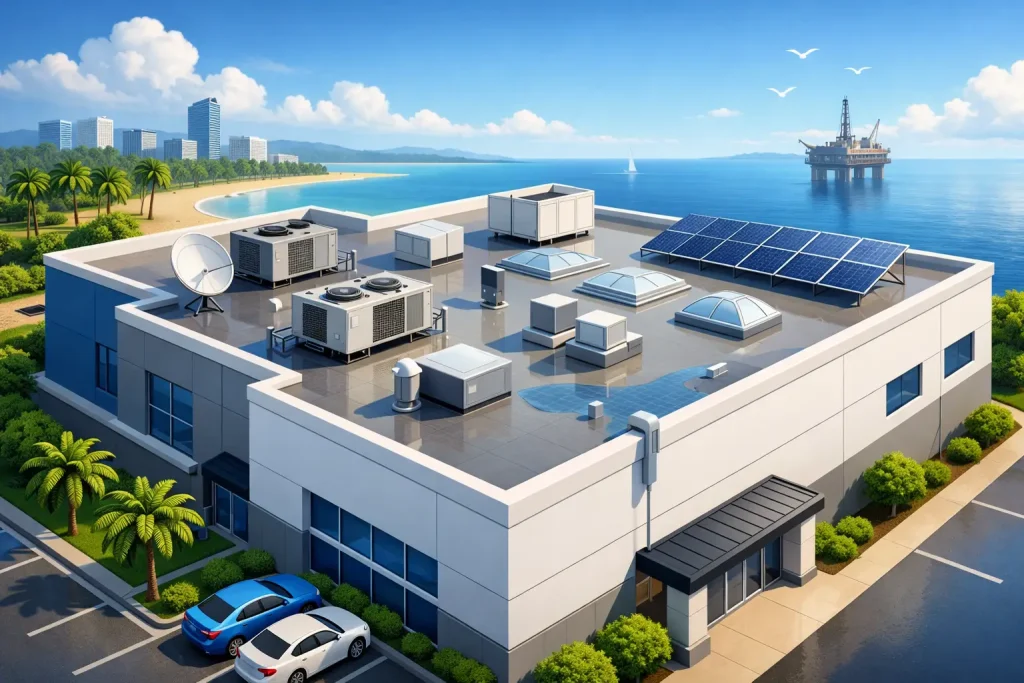
A commercial roof rarely fails all at once. It starts with a damp ceiling tile, a seam that opens after a hard storm, water standing around a drain, or a small blister in the membrane. This commercial flat roof guide gives Gulf Coast property owners and facility managers a practical way to assess what is happening overhead, choose the right solution, and avoid paying for the same leak twice.
For businesses in South Mississippi, roof decisions carry real consequences. A leak can interrupt tenants, damage inventory, create safety concerns, and turn a manageable repair into an expensive interior renovation. The right response is not always a full replacement. Depending on the roof’s condition, a targeted repair, waterproofing upgrade, or high-performance roof coating may provide years of dependable service at a lower upfront cost.
Start With the Roof’s Current Condition
Flat roofs are not truly flat. They are built with a slight slope that moves rainwater toward drains, scuppers, or gutters. When drainage is poor, water remains on the roof longer, putting extra stress on seams, flashing, fasteners, and the membrane itself.
A professional inspection should look beyond the visible leak inside the building. Water often travels beneath the roof surface before it finds a place to enter, so the stain on a ceiling may be several feet from the actual failure. Inspectors should evaluate the membrane, seams, penetrations, edge metal, drains, rooftop equipment curbs, and areas around prior repairs.
Age matters, but age alone does not decide whether a roof needs replacement. A 15-year-old roof with dry insulation, sound seams, and isolated damage may be a strong candidate for repair or restoration. A newer roof with widespread ponding water, trapped moisture, and failing details may need more extensive work.
Warning Signs a Commercial Roof Needs Attention
Property owners often wait until a leak reaches the interior. By then, moisture may already be affecting insulation, decking, electrical systems, drywall, or stored materials. Regular inspections catch smaller problems before they become operational headaches.
Watch for these common warning signs:
- Water stains, peeling paint, moldy odors, or wet ceiling tiles inside the building
- Standing water that remains more than 48 hours after rain
- Open seams, cracked flashing, splits, punctures, or loose edge materials
- Bubbles, blisters, wrinkles, or soft areas in the roof surface
- Clogged drains, damaged scuppers, or gutters that overflow during storms
- Rising cooling costs caused by an aging, dark, or poorly insulated roof system
On the Mississippi Gulf Coast, wind-driven rain deserves special attention. Heavy storms can push water into weak flashings and wall transitions that appear fine during a quick visual check. Salt air, humidity, intense sun, and repeated storm exposure also speed up wear on vulnerable materials.
Understand the Main Commercial Flat Roof Options
The best system depends on the building, the roof deck, drainage, budget, existing roof condition, and how long you intend to own the property. A hotel, school, retail center, warehouse, and small office building can all have different priorities.
Built-Up Roofing and Modified Bitumen
Built-up roofing uses multiple layers to create a durable surface. Modified bitumen is a related asphalt-based system commonly installed in sheets. These systems have a long track record and can hold up well in demanding conditions, especially when properly detailed.
The trade-off is that repairs and installation can be more labor-intensive than some modern single-ply systems. If a roof has multiple old layers or widespread saturated insulation, adding another layer may not be the right move.
TPO and PVC Membranes
TPO and PVC are single-ply roofing systems, often selected for their reflective surfaces and heat-welded seams. A white membrane can reduce heat absorption, which is valuable for commercial buildings facing long, hot Gulf Coast summers.
TPO is widely used and can be a cost-effective choice when installed correctly. PVC is often valued for its chemical resistance, making it worth considering for restaurants or facilities with rooftop exhaust exposure. Both systems depend heavily on quality installation at seams, penetrations, and perimeter edges.
EPDM Rubber Roofing
EPDM is a durable synthetic rubber membrane that has been used on commercial roofs for decades. It is known for flexibility and can perform well on large, low-slope roofs.
Traditional EPDM is usually black, so it can absorb more heat than white reflective systems. A coating may help address heat gain in some situations, but the existing membrane and seams must be evaluated first.
Roof Coatings and Restoration Systems
A coating system can be one of the smartest choices for a roof that is aging but still structurally sound. These systems are applied over a prepared roof surface to create a continuous waterproof layer. Many coatings are highly reflective, helping reduce rooftop temperatures and easing strain on HVAC equipment.
A coating is not paint, and it is not a shortcut for a failing roof. Surface preparation, seam treatment, flashing reinforcement, moisture checks, and correct product selection determine whether the restoration lasts. When installed over wet insulation or widespread membrane failure, a coating may only delay a larger problem.
Repair, Restore, or Replace?
This is the decision that matters most in any commercial flat roof guide. The right answer should come from evidence, not a one-size-fits-all sales pitch.
Repair is often the right choice when damage is limited to a few areas. A puncture from maintenance traffic, a cracked pipe boot, a separated seam, or a small flashing failure can frequently be corrected without replacing the full roof. Fast repair protects the building and preserves the remaining service life of the system.
Restoration with a roof coating makes sense when the roof has widespread surface wear but remains dry and stable underneath. It can extend roof life, improve reflectivity, reduce tear-off waste, and avoid the disruption of a full replacement. For occupied buildings, that reduced disruption can be a major advantage.
Replacement becomes the better investment when the roof has extensive trapped moisture, deteriorated decking, repeated leaks across multiple areas, severe storm damage, or a membrane that has reached the end of its useful life. Replacement costs more upfront, but repeatedly patching a failed system can cost more over time and leave the building exposed between repairs.
Drainage and Flashing Are Not Small Details
Many commercial roof leaks are not caused by the main membrane. They start at the details: HVAC curbs, vent pipes, wall flashings, expansion joints, skylights, drains, and roof edges. These areas move, flex, and take direct exposure from wind and water.
Drainage is equally important. Ponding water can shorten the life of certain roofing materials and reveal weaknesses in seams or flashing. Sometimes the solution is as simple as clearing drains and correcting a blockage. Other times, the roof needs added drains, tapered insulation, or slope improvements to move water properly.
A contractor should explain where the water is going and why. If there is no clear drainage plan, there is no complete roofing plan.
Plan Maintenance Before the Next Storm
Commercial roof maintenance is one of the least expensive ways to protect a major building asset. A scheduled inspection after severe weather and at least once or twice per year can identify minor issues while they are still affordable to correct.
Keep roof drains and gutters clear. Limit unnecessary foot traffic. Require HVAC or equipment vendors to report damage they notice while working on the roof. Document repairs, inspections, and leak locations so recurring issues can be tracked instead of guessed at.
For property managers with multiple buildings, a maintenance plan also helps with budgeting. Rather than reacting to every leak as an emergency, you can prioritize repairs, plan restoration work, and forecast replacement years with fewer surprises.
Choose a Contractor Who Can Offer More Than One Answer
A commercial roofer should be able to inspect the complete system and explain the pros and cons of repair, coating, waterproofing, and replacement. Be cautious when the only recommendation is always a full tear-off or always a coating. Both can be excellent solutions, but neither fits every roof.
Ask for a written scope that identifies the roof condition, the proposed materials, preparation work, drainage concerns, warranty options, and any exclusions. Confirm the contractor is insured and experienced with the type of building and roofing system you own. For storm-related damage, prompt documentation can also help support an insurance claim.
Expert Roofing helps commercial owners across South Mississippi evaluate leak-prone and deteriorating flat roofs with practical repair, coating, waterproofing, and replacement options. A free estimate gives you a clearer picture of the roof’s condition and the cost of acting now versus waiting.
The best time to make a roof decision is before the next heavy rain turns a small weakness into a business interruption. Start with a thorough inspection, insist on a solution that fits the actual condition of the roof, and keep a maintenance plan in place once the work is complete.