
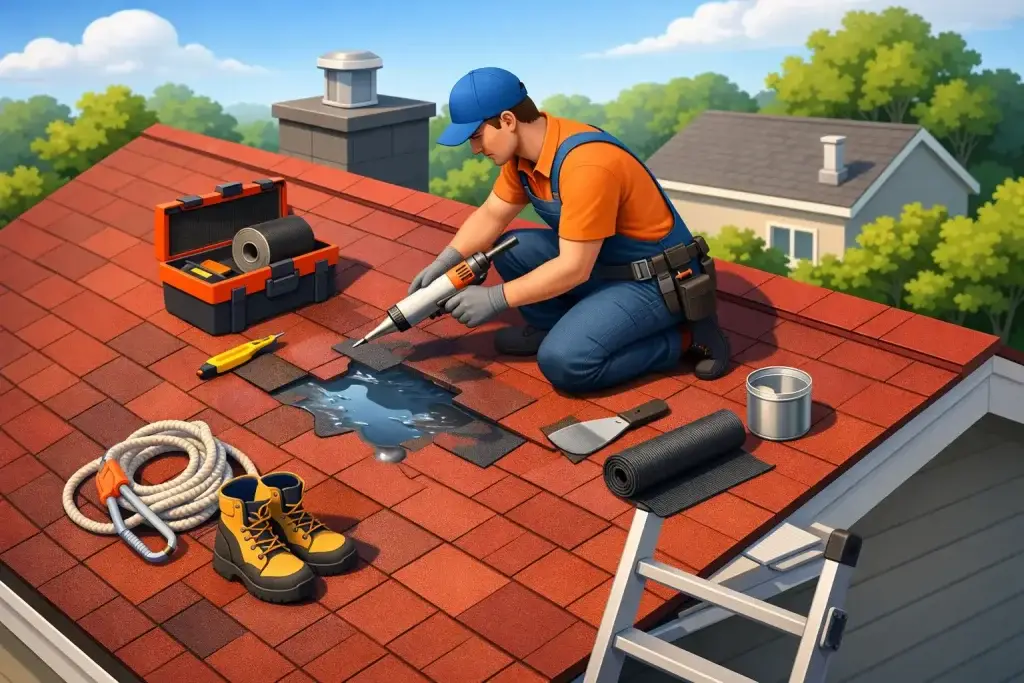
A roof leak rarely starts as a big dramatic problem. More often, it shows up as a brown ceiling stain, a damp spot near a vent, or a drip that only appears during a hard Gulf Coast rain. If you are searching for how to fix minor roof leaks, the first thing to know is this: small leaks can sometimes be handled with a basic repair, but only if you catch them early and work safely.
On the Mississippi Gulf Coast, leaks do not stay minor for long. Wind-driven rain, heat, humidity, and storm exposure can push water into weak spots fast. That is why the right move is not just stopping the drip you see. It is finding the real entry point, making a solid repair, and knowing when a quick patch is no longer enough.
How to fix minor roof leaks without making them worse
The biggest mistake property owners make is sealing the obvious wet spot without tracing where the water is actually getting in. Water travels. It can enter near a vent boot, flashing seam, exposed fastener, or lifted shingle and show up several feet away inside the attic or ceiling.
Start indoors if the leak is active. Put down a bucket, move anything valuable out of the way, and relieve any ceiling bulge carefully if water is trapped behind drywall. Then head into the attic, if you have safe access, with a flashlight. Look for wet decking, dark stains, mold, or a visible drip line. If you can identify the general path of the water, you have a much better chance of finding the source outside.
When you inspect the roof, do it in dry weather. Never climb onto a wet roof, and do not get on a steep roof without the right safety equipment. For many homeowners, a ladder inspection from the edge is the safer choice. For commercial properties with low-slope roofing, the surface may look easier to walk, but ponding water, slick coatings, and hidden soft areas can still make it risky.
The most common causes of minor roof leaks
Minor leaks usually come from a handful of predictable trouble spots. On shingle roofs, damaged or missing shingles are common after storms. So are lifted tabs, exposed nail heads, and cracked pipe boots around plumbing vents. Flashing around chimneys, skylights, walls, and valleys is another frequent source.
On low-slope and commercial roofs, leaks often start at seams, penetrations, drains, edge details, or areas where old patching has failed. Coating breakdown and surface cracking can also let water work its way into the system. In older Gulf Coast buildings, repeated expansion, sun exposure, and storm cycles can wear down even a decent roof if maintenance has been delayed.
The fix depends on the material and the condition around the leak. A single compromised shingle is one thing. Widespread deterioration is another.
Minor shingle roof leak repairs
If the issue is one or two damaged shingles, a small repair may be possible. A cracked or loose shingle can sometimes be resealed with roofing cement under the tab and secured properly. If a shingle is torn or missing, replacing it is usually the better fix. The new shingle needs to match the existing roof as closely as possible and be installed without damaging surrounding material.
Vent boots are another frequent weak point. If the rubber boot around a plumbing vent is split or brittle, water can get in around the pipe. In some cases, replacing the boot solves the problem. If the surrounding shingles are also worn or improperly installed, the repair may need to go beyond the boot itself.
Exposed nails should not be ignored. A nail backing out creates a small but very real entry point for water. A proper repair means removing or resecuring the problem fastener and sealing the area correctly, not just smearing tar over it and hoping for the best.
Minor flat roof leak repairs
On low-slope roofs, small punctures, open seams, or failed flashing details can sometimes be patched. The exact repair depends on whether the roof is modified bitumen, TPO, EPDM, metal, or a coated system. The repair material has to be compatible with the roof. That is where do-it-yourself fixes often go wrong.
A random sealant from the hardware store may stick for a little while, but it can also fail quickly or interfere with a better repair later. On coated roofs, the right patch and coating detail matter. On seam-based systems, surface prep matters just as much. If the leak is isolated and the roof is still in decent shape overall, a targeted repair can buy good service life. If the surface is breaking down in multiple areas, restoration or recoating may be the smarter investment.
What you can do right away
If you need a short-term response before a roofer arrives, a temporary measure can help limit damage. That might mean using a heavy-duty tarp over a damaged area, secured properly so wind cannot turn it into a bigger problem. It might also mean sealing a very small, obvious gap with the correct roofing sealant if the roof is dry and safely accessible.
Temporary is the key word. A tarp is not a repair. A visible bead of sealant is not always a repair either. These steps are about buying time, especially after storm damage or when rain is in the forecast.
Inside the building, dry the area as much as you can. Wet insulation, drywall, and decking can lead to mold, wood rot, and higher repair costs. For commercial properties, even a small leak can affect tenants, ceiling tiles, electrical systems, inventory, or operations. Acting fast matters.
Signs the leak is not actually minor
Some roof leaks look small from inside but point to a bigger roofing problem. If you notice repeated leaks in the same area, soft roof decking, sagging, mold odor, bubbling paint, widespread granule loss, or multiple repair spots across the roof, you are probably past the point of a quick fix.
Age matters too. If an older shingle roof has leak issues in several places, replacing isolated shingles may just be delaying a replacement. If a commercial roof has chronic seam or flashing failures, a more complete repair plan or roof coating system may make more financial sense than constant patching.
This is where experience counts. A good contractor should tell you when a small repair is enough and when it is not. Property owners do not need a sales pitch for a full roof every time they see a stain, but they also should not keep spending money on patches that fail every storm season.
When to call a professional roofer
Call a roofer if the leak source is unclear, the roof is steep, the damage followed a storm, or the area involves flashing, penetrations, or low-slope materials you are not familiar with. Also call if the leak has been going on long enough to affect insulation, ceilings, framing, or interior finishes.
For South Mississippi homes and buildings, local weather adds another reason not to wait. Heavy rains, wind uplift, and humidity can turn a manageable roof issue into interior damage fast. A professional inspection can confirm whether you need a small repair, emergency tarping, waterproofing work, or a broader restoration plan.
At that point, the right company should give you a clear explanation, a fair price, and options that fit the roof you actually have. That may be a simple repair. It may be a coating-based solution for a leak-prone low-slope roof. It may be a replacement if the system is worn out. The point is to solve the problem, not just hide it.
How to prevent the next minor roof leak
Most minor leaks give some warning before they become active. Annual roof inspections help. So does checking the roof after major wind and hail events, clearing debris from valleys and drains, and watching for damaged flashing, loose shingles, or aging sealant around penetrations.
For commercial properties and larger residential buildings, regular maintenance is usually cheaper than repeated emergency service. For older roofs, coatings and waterproofing upgrades can extend service life when the underlying system is still a good candidate. That is often a smart move on the Gulf Coast, where sun and storms put constant pressure on exposed roofing materials.
If you own property in Biloxi or anywhere along the coast, it pays to treat small leaks seriously and early. A fast repair is affordable. Interior damage, decking replacement, and recurring leak calls are not.
A minor roof leak is one of those problems that gets more expensive the longer it sits. If you can stop it safely, do it. If you are not sure what you are seeing, get it inspected and get a real answer before the next rain decides for you.