
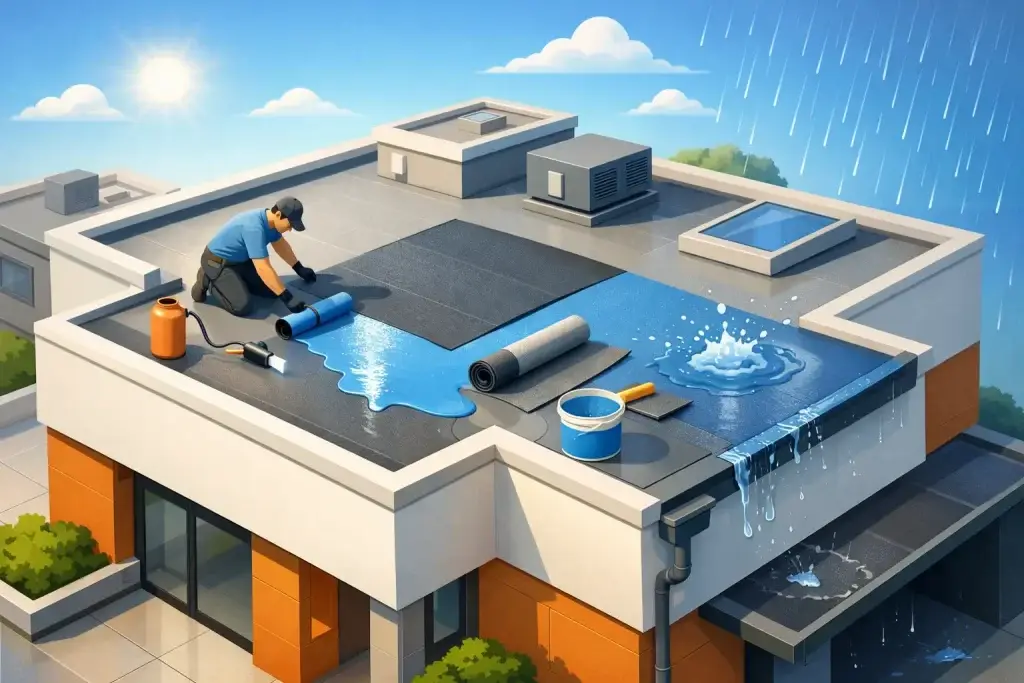
A flat roof usually starts talking before it fails. You see ponding water after a storm, bubbling in the membrane, stains on the ceiling, or seams that look tired and pulled apart. If you are searching for how to waterproof flat roofs, the real answer is not one product or one quick patch. It is choosing the right system for the roof you have, fixing the weak points first, and making sure water has a clear path off the building.
Along the Gulf Coast, that matters even more. Heat, heavy rain, high humidity, wind-driven storms, and constant UV exposure can wear out a flat roof faster than many owners expect. A waterproofing job that works in a mild climate may not hold up the same way here. That is why the best results come from matching the waterproofing method to the roof condition, the building use, and the budget.
How to Waterproof Flat Roofs the Right Way
The first step is figuring out what kind of flat roof you actually have. Not every low-slope roof is built the same, and waterproofing options depend on the surface. You may be dealing with modified bitumen, built-up roofing, EPDM, TPO, PVC, metal, or a sprayed foam roof with an aging coating. Each one has different repair methods, adhesion requirements, and coating compatibility.
Before any waterproofing product goes down, the roof needs a real inspection. That means checking seams, penetrations, drains, flashing, parapet walls, coping edges, rooftop equipment curbs, and any place where movement or standing water tends to show up. If the roof deck is soft, insulation is saturated, or the membrane is badly deteriorated, a coating alone is not going to fix it. In those cases, partial tear-off, targeted replacement, or a full reroof may be the smarter investment.
A lot of leaks come from the details, not the field of the roof. Pipes, HVAC supports, skylights, wall transitions, and scuppers are common failure points. If those areas are not repaired and reinforced first, even a premium waterproofing system can fail early.
Start With Repairs, Not Just Coating
One of the biggest mistakes property owners make is treating waterproofing like paint. They roll something over a dirty, damaged roof and hope for the best. Waterproofing only works when the surface is sound, dry enough for application, and properly prepared.
That usually starts with cleaning. Dirt, chalking, biological growth, grease from rooftop equipment, and loose granules can keep coatings from bonding. After cleaning, damaged seams may need to be re-adhered, open laps sealed, wet insulation removed, blisters cut and repaired, and flashing rebuilt. Cracks around penetrations often need fabric reinforcement or flashing-grade sealant before the main system is installed.
Ponding areas deserve special attention. Some coatings are rated for occasional standing water, while others break down if water sits for long periods. If water stays on the roof more than 48 hours after rain, drainage correction should be part of the plan. That might mean adding tapered insulation, installing crickets, improving drain assemblies, or clearing clogged outlets.
The Most Common Waterproofing Options
For many flat roofs, liquid-applied systems are the most practical answer. They can restore an aging roof, seal problem areas, and add years of service life without the cost and disruption of a full replacement. But there is no single best coating for every roof.
Acrylic roof coatings
Acrylic coatings are popular because they are cost-effective, reflective, and useful on many low-slope roofs. They can help reduce surface temperature and improve energy performance. The trade-off is that standard acrylics are not always the best choice where long-term ponding water is a major issue. On a roof with good drainage, they can perform well. On a roof that holds water, another system may make more sense.
Silicone roof coatings
Silicone is often chosen for flat roofs that deal with ponding water and harsh sun exposure. It resists UV damage well and creates a durable waterproof layer. It is a strong option for many commercial roofs and restoration projects. The trade-off is that silicone can attract dirt over time, and future recoating or repairs may require careful surface prep and compatible materials.
Polyurethane coatings
Polyurethane coatings are known for impact resistance and toughness, which can help on roofs with foot traffic or exposure to mechanical abuse. They are often used in systems where durability matters as much as water resistance. Cost can be higher, and the application process can be more demanding, so this is usually a system where contractor experience really matters.
Modified bitumen and membrane repairs
Sometimes the right waterproofing approach is not a full coating system right away. If a modified bitumen or single-ply membrane roof still has useful life left, targeted repair and reinforcement may be enough. Seams can be repaired, flashing can be rebuilt, and vulnerable areas can be sealed with compatible materials. This can buy time, but it only works if the roof is still structurally worth saving.
Drainage Is Part of Waterproofing
If you want to know how to waterproof flat roofs for the long haul, pay attention to drainage. A flat roof is never truly flat. It should have enough slope to move water toward drains, scuppers, or gutters. When that slope is missing, water sits. When water sits, every seam, fastener, and flashing detail stays under pressure.
That is why waterproofing and drainage usually go together. A quality contractor should look beyond the surface coating and ask why the roof leaks in the first place. If drain bowls are too high, if insulation has settled, or if old repairs created low spots, those problems need attention. Otherwise, you are paying for a temporary improvement instead of a reliable solution.
On homes and smaller buildings, clogged gutters and blocked scuppers can create backup that looks like a roof failure. On larger commercial buildings, internal drains and overflow systems need to be checked routinely. Waterproofing performs better when the roof can actually shed water.
When a Coating Makes Sense and When It Does Not
Roof coatings can be one of the best values in flat roofing, especially when the roof is aging but still recoverable. They cost less than replacement, create a new waterproof surface, and can extend service life significantly. For owners trying to control capital expenses, that can be a smart move.
But coatings are not magic. If the roof has widespread moisture under the membrane, major deck damage, failed insulation, or repeated leak history from neglected structural issues, restoration may not be enough. In that situation, spending less today can cost more later. A good contractor should be willing to say when a roof needs more than a coating.
This is where experience matters. A sales pitch is easy. A correct diagnosis is harder. Property owners need clear answers about what can be repaired, what should be replaced, and what kind of warranty is realistic for the roof condition.
What to Expect During a Flat Roof Waterproofing Project
Most waterproofing projects follow a straightforward process. The roof is inspected, moisture issues are identified, repairs are scoped, the surface is cleaned, detail work is completed, and the waterproofing system is applied in stages. Depending on the system, that may include primer, base coat, reinforcing fabric, flashing-grade materials, and a finish coat at a specified thickness.
Weather matters during application. Humidity, rain chance, surface temperature, and cure time all affect results. That is one reason Gulf Coast projects need careful scheduling. Rushing an install ahead of bad weather can ruin adhesion and shorten the life of the system.
For commercial properties, timing also matters around tenant use, business operations, and rooftop equipment access. The right contractor plans around that instead of treating every building the same.
Choosing the Right Contractor for Waterproofing
Flat roof waterproofing is not the place to gamble on the cheapest bid. Low pricing often means thin application, poor prep work, skipped repairs, or the wrong material for the roof type. The waterproofing layer you do not see is what decides whether the job lasts.
Look for a contractor who handles both repairs and full roofing work, not just coatings. That matters because the best recommendation may be a restoration, a repair program, or a replacement depending on what the roof tells us. You also want someone who can explain the trade-offs in plain language, offer a warranty that matches the scope, and move quickly when a leak is active.
In South Mississippi, roofs take a beating. Salt air, storms, heat, and year-round moisture expose shortcuts fast. Companies like Expert Roofing have built their reputation by combining roof replacement knowledge with modern waterproofing and coating systems, which is exactly what many low-slope roofs need.
If your flat roof is showing signs of age, the best move is not to wait for the next hard rain to make the decision for you. Get the roof inspected, find out what is repairable, and choose a waterproofing plan that fits the building, not just the budget on paper.