

How to Vet Roofing Companies in Mississippi: Licenses, Reviews and Waterproofing Expertise
Hiring the wrong roofing companies in mississippi costs time, money, and leaves roofs vulnerable to leaks and storm damage. This step-by-step guide shows how to verify licenses and insurance, evaluate reviews and local references, and test a contractor's waterproofing expertise and manufacturer certifications so you can compare proposals and avoid common pitfalls.
Verify Mississippi Contractor Licensing and Classification
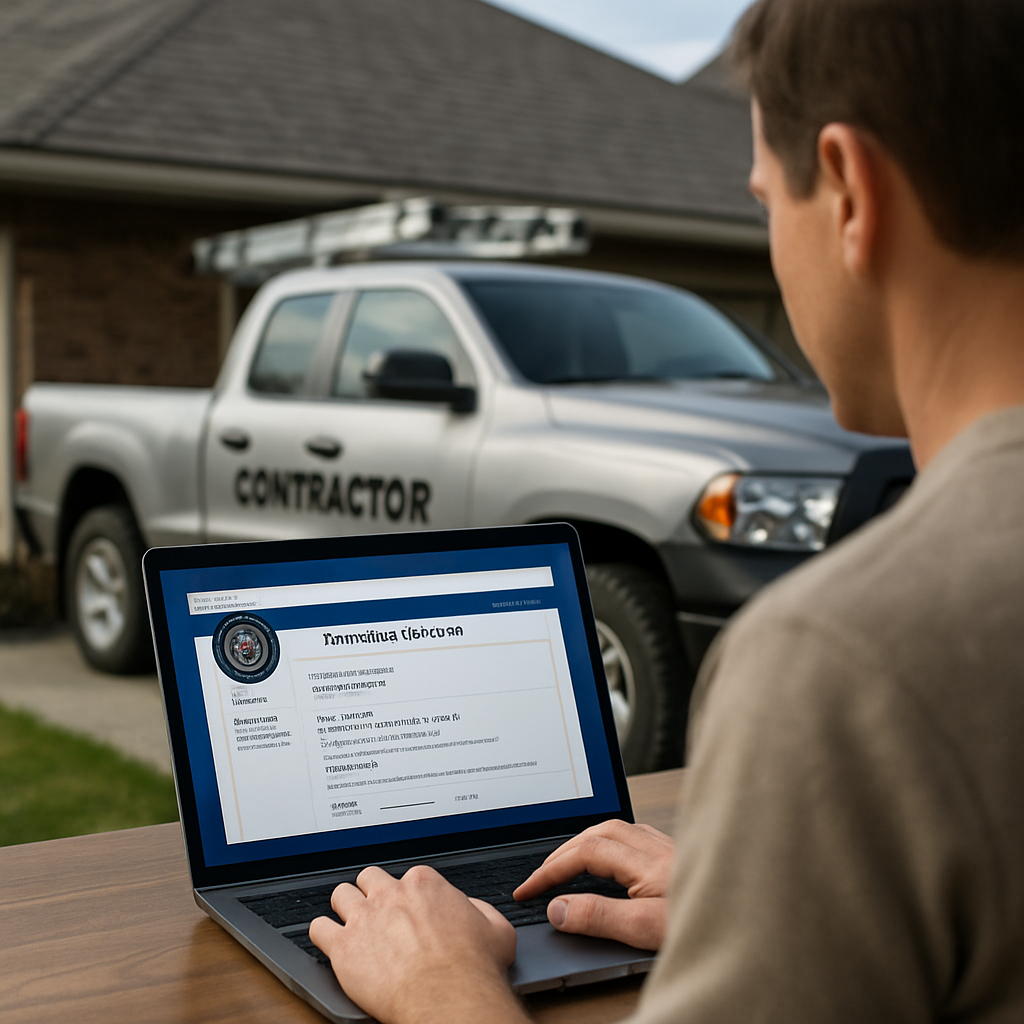
Start here: license verification is a gatekeeper. For roofing companies in mississippi the State Board of Contractors record is the single best source to confirm a contractor can legally perform the work on your property. Search by the contractor name or license number at Mississippi State Board of Contractors to confirm classification, monetary limits, expiration date, and any disciplinary history.
What to read on the license record
Key fields matter. On the MSBOC record look for classification (residential, commercial, specialty), license tier or monetary limit, the qualifying party name, and active/expired status. A license that covers residential roof repair in mississippi may not authorize large commercial roofing projects or complex waterproofing systems.
- Confirm the exact company name: Verify the corporate or trade name matches the contract; cross-check with the Mississippi Secretary of State business search.
- Check the qualifying agent: If the license is held by an individual qualifier, verify that person is still employed by the business you will hire.
- Watch monetary limits: Licenses often state a maximum contract value; projects above that limit require a different classification.
- Look for complaints or discipline: Multiple complaints or active disciplinary actions are material risk signals.
Practical trade-off: A small local roofer may be perfectly competent for shingle roof repair in Mississippi but operate under a different company name or through a qualifying agent. That is acceptable if the license record, corporate registration, and insurance line up. It is not acceptable to accept verbal assurances or rely on a card taped to a truck.
Concrete Example: A property manager in Biloxi accepted a low bid from a contractor whose MSBOC record showed the qualifier had a different business address. The contractor could not pull the required hurricane-resistance permit, delaying repairs and causing the insurer to deny part of the claim. Verifying the license and principal on both MSBOC and Secretary of State records would have flagged the mismatch before work started.
Final judgment: Too many decisions hinge on price; license verification costs nothing and removes a large share of legal and financial risk. Before you compare roofing estimates, confirm the license, classification, and qualifying party match the contract and project size.
Confirm Insurance, Bonds, and Additional Insured Endorsements
Start here: a certificate of insurance alone is not enough. A COI is a snapshot that can be faked, misdated, or missing critical endorsements. For roofing companies in mississippi you need the underlying endorsements, bond paperwork, and direct carrier verification before permitting work or releasing more than a modest deposit.
What to request from the contractor
- Certificate of Insurance showing general liability and workers compensation with policy numbers and effective/expiration dates
- Additional insured endorsement copy (not just a COI line) naming the owner or entity — look for CG 20 10 or equivalent and language for ongoing and completed operations
- Waiver of subrogation on the workers compensation policy when possible
- Umbrella/Excess policy details if limits exceed primary coverage
- Surety bond documentation for performance and payment bonds on large commercial jobs, including the surety company name and bond number
- Verification contact: insurer phone number and the policyholder name exactly as on the insurer record
Practical trade-off: insisting on performance bonds and $2M liability coverage reduces contractor options and raises price. For many residential or small commercial jobs, a properly verified $1M CGL, workers compensation, and an additional insured endorsement is sufficient. For hurricane-prone, high-value, or public work demand bonds and higher limits.
How to validate documents in practice
Do this step-by-step: ask the insurer to email the COI and endorsements directly to you, then call the insurer using the phone number on the carrier website to confirm the policy number and that the endorsement is active. Do not rely on a contractor-supplied PDF without carrier confirmation.
Judgment that matters: many property owners assume the COI line naming additional insured suffices. It does not. The endorsement language controls coverage. If the endorsement omits completed operations or is limited to operations only, the owner may have no protection after the job closes.
Concrete Example: A hotel owner in Gulfport accepted a COI listing an active policy. After roof work, storm damage exposed installation defects and the contractor's CGL had lapsed. Because the owner had not obtained the endorsement copy or called the carrier, the claim became a recovery fight that cost the owner tens of thousands while repairs waited on litigation.
Red flag to stop the job: contractor refuses carrier contact, provides an unverifiable COI, or says endorsements are not available until after payment. Hold payments, call the carrier, and escalate if necessary to protect the property and your insurer.
Evaluate Waterproofing Expertise and Relevant Systems
Start with system suitability, not sales pitch. A roof coating or liquid membrane is only as good as the surface beneath it. If insulation is saturated, flashings are failing, or there is chronic ponding, a coating will fail sooner than the warranty period.
What to expect from a competent waterproofing proposal
Required proposal items. Demand an itemized specification that lists the substrate type, manufacturer and product names, surface preparation steps, primer and topcoat mil specs, expected dry times, adhesion test results, and a clear warranty split between manufacturer and installer.
- Diagnostics: Delmhorst moisture readings, infrared thermal imaging, and core samples where recommended
- Surface prep: Power-wash PSI, profile requirements, rust removal on metal, seam repairs on single-ply
- Material detail: Product names (for example, a specific elastomeric coating and the required primer) and required film thickness in mils
- Quality control: On-site adhesion tests, time-stamped photos of prep, and a post-installation inspection report
Practical insight and limitation. Manufacturer certifications (GAF, Carlisle, Firestone, Sika, Owens Corning) matter, but they are confirmation of training, not proof of quality outcomes. The useful signal is a combination of certification plus recent, local project references using the exact system you are buying.
Trade-off to weigh. Coatings buy time and reduce life-cycle cost when the deck and flashings are sound; they are a poor choice when moisture is trapped or ponding persists. Replacement has higher upfront cost but removes hidden wet insulation and eliminates recurring leaks—choose replacement for saturated decks or roofs with persistent standing water.
Concrete example: A mid-rise condominium in Gulfport had a TPO roof with patched seams and invisible soft spots. A competent contractor performed infrared scanning and core pulls, found widespread wet insulation, and recommended a recover or full replacement. A different contractor pushed an elastomeric coating; six months later the coating blistered where moisture had migrated.
Diagnostics and verification you should require
- Moisture map: Thermographic scan plus spot cores where anomalies appear
- Adhesion test: 90-day or on-the-spot pull tests per manufacturer guidance
- Waterflow check: Identify and document ponding areas and recommend drainage corrections
- Material traceability: Batch numbers and manufacturer installation reports for warranty validation
Red flag: A contractor who quotes a coating without performing a moisture scan or who cannot produce a manufacturer-approved specification for that system.
Where to verify training and specs. Check manufacturer certification rosters and technical literature on Roof Coatings Manufacturers Association and confirm the contractor lists the certification on their proposal. For local projects and contractors, review examples on Expert Roofing to see documented coastal installations and methods used in Mississippi conditions.
Final takeaway: Treat waterproofing recommendations as a technical deliverable. Require diagnostics, manufacturer-approved specs, and local, system-specific references. If the contractor resists these checks, move on.
Use Reviews, References, and Local Track Record to Verify Work Quality
Start here: online reviews are a triage tool, not proof of competence. A string of five-star ratings can get you on the shortlist, but the work quality that matters for Mississippi roofs is shown in local, recent projects and direct reference conversations.
Pattern reading beats single scores. Look for recurring themes across platforms: do reviews repeatedly mention missed schedules, poor cleanup, or warranty issues? Check Better Business Bureau Gulf Coast for complaints and how the contractor responded. High volume of short, generic reviews with little detail is a reliability risk; detailed reviews from local property owners carry more weight.
What to ask references and how to verify them
- Project similarity: Was the job similar in roof type and size to yours (residential shingle, commercial TPO, flat roof waterproofing)?
- Storm performance: How did the roof hold up through the last major storm or hurricane season?
- Scope fidelity: Did the contractor perform the agreed scope or add change orders? Were those justified and documented?
- Warranty follow-through: If a problem arose, did the contractor honor workmanship warranties and coordinate with manufacturers?
- Documentation: Can they show time-stamped photos, permits pulled, and final as-built records?
Practical trade-off to accept: a well-established local roofer with fewer flashy reviews but solid local references is usually a safer bet than an ecommerce-era contractor with lots of national 5-star ratings and no Mississippi projects. Local track record matters because coastal exposure, hail patterns, and permit practices vary across the state.
Concrete Example: A Biloxi property manager compared two bids for a flat roof coating. One firm had many positive national reviews but could not produce Gulf Coast case studies. The manager chose a contractor who provided three local references, time-stamped before-and-after photos, and a copy of an approved permit—after two seasons the coating showed expected performance and fewer call-backs.
Judgment you won't get from stars: investigate response behavior. Contractors who acknowledge problems publicly and describe corrective steps show accountability. Contractors who delete negative reviews or repeatedly promise quick fixes without written scope usually shift risk to the owner.
On-Site Inspection Checklist and Red Flags During the Estimate
Start with how they inspect, not what they quote. The quality of an estimate is revealed in the inspection method: are they looking, measuring, documenting, and testing, or just throwing numbers based on a curbside glance? Treat the on-site visit as the single best filter between competent roofing companies in mississippi and those who rely on luck.
Practical on-site checklist (what a competent estimator should do)
- Walk the roof or use a detailed drone survey. Confirm slope, membrane condition, seam integrity, and presence of ponding water; a quick ladder peek is not sufficient.
- Probe the substrate in several locations. Use moisture meters or make small core cuts when coatings are proposed; a contractor who resists any probing is dodging accountability.
- Inspect all flashings and penetrations. Check step flashings, pipe boots, curbs, scuppers, and gutter-to-roof junctions for corrosion, sealant failures, or missing metal.
- Document with time-stamped photos and sketches. Expect roof-plane photos, close-ups of problem areas, and notes about hidden damages — not a single generic picture.
- Measure drainage and slope details. Look for blocked scuppers, low spots, and failed tapered insulation; ask for recorded slope measurements if ponding is present.
- Confirm ventilation and attic deck condition (residential). Attic inspection often reveals roof failures misattributed to shingles alone.
- Provide a written diagnostic section in the estimate. This should explain the tests performed, findings, and the decision logic behind repair versus replacement.
Trade-off to accept: full diagnostics cost time and money up front. A moisture scan or core cut adds vendor expense but prevents wasted dollars on a coating that will fail over wet insulation. Pay for the diagnosis once; you reduce the chance of rejects and costly callbacks.
Concrete Example: A commercial building in Gulfport received three bids. One estimator used infrared and Delmhorst readings and documented saturated ISO under the membrane, recommending replacement of 40% of the roof deck before any coating. The lowbid contractor recommended a full coating without probes; three months later the coating blistered and the owner paid twice.
Common red flags during the estimate
- Flat, lowball estimate with no test results. This usually excludes substrate work and creates change orders later.
- Refusal to make core cuts, probe, or use moisture diagnostics. If they say tests are unnecessary, that is a technical judgment you should not accept without justification.
- Pressure to sign on the spot or vague start/completion dates. Good contractors schedule projects and explain permit timing and staging.
- No written scope or materials list on site. If they cannot or will not write down the specific membrane, primer, flashings, and fasteners, walk away.
If a contractor won't produce time-stamped photos, test results, or a brief diagnostic explaining why their scope fits the roof, assume hidden costs later.

Final judgment: Use the on-site inspection as both a technical and cultural check. Competent local roofers miss things sometimes, but they document their process, explain trade-offs (repair vs replace, coating limits), and accept accountability through tests and photos. That behavior separates reliable roofing companies mississippi clients can trust from opportunists.
Compare Written Proposals, Warranties, and Maintenance Plans
Start with the paper, not the salesperson. The written proposal and warranty language are where contractors either take responsibility or leave you holding risk. If the document is vague, the cheapest bid will usually cost more after storms or when a warranty claim arrives.
What a usable proposal must include
- Itemized materials and manufacturers: list product names, colors, gauges, fastener types, and manufacturer part numbers so you can verify any manufacturer warranty claims.
- Scope of work and exclusions: clear statements about substrate prep, removal or overlay, flashing replacement, penetration work, and site cleanup.
- Performance milestones and payment schedule: specific start and completion dates, holdbacks for punchlist items, and staged payments tied to measurable milestones.
- Permit and inspection responsibilities: who pulls permits, who schedules inspections, and whether permit fees are included.
- Change order process: how extra work is approved, priced, and documented.
- Documentation deliverables: final as-built drawings, photos, signed permit closeouts, and lien waivers before final payment.
Practical tradeoff: a fully itemized bid costs the contractor more time, so expect a modest premium for clarity. That premium buys you proof and leverage during warranty claims and insurance adjustments.
Warranties and the maintenance obligation
Differentiate manufacturer versus workmanship warranties. Manufacturer warranties cover specific products and are often conditional. Workmanship warranties cover installation; both can be time-limited and require documented maintenance to remain valid.
Key limitation to watch for: many coating and membrane warranties require documented periodic recoats, inspections, or cleaning. If the owner skips those services the warranty can be voided even if the material failed prematurely.
- Ask for full warranty paperwork at bid stage not after contract signing so you can read maintenance clauses and exclusions.
- Require the contractor to be the single point of contact for any combined warranty claims; split responsibility between multiple parties makes recovery slow or impossible.
- Insist on transferable warranties if you plan to sell the property, and note any fees or conditions that affect transfer.
Concrete Example: A Biloxi condominium had a flat roof coated with an elastomeric system. The manufacturer offered a 10-year conditional warranty requiring a recoat at year five and documented annual inspections. The owner skipped the third-year inspection; when wind damage occurred, the manufacturer denied the claim because maintenance records were missing. The contractor warranty covered only two years, leaving the owner to pay for most repairs.
How maintenance plans should read on paper. A credible maintenance plan spells out inspection frequency, what is included in each visit, emergency response times, and per-visit pricing. For coating systems include expected recoat windows and criteria that trigger recoating versus repairs.
Final practical judgment: never accept blanket language like will maintain integrity or lifetime warranty without written conditions. Get the warranties, the maintenance schedule, and the proof obligations in the contract and require lien waivers and as-built documentation before final payment.
Next consideration: use the proposal checklist to compare bids side-by-side and verify each listed manufacturer warranty at the time of bidding via the manufacturer website or certification program such as those noted on Roof Coatings Manufacturers Association.
Cost Transparency, Insurance Claims, and Local Permitting
Direct cost drivers in Mississippi are often invisible until paperwork appears. Expect hurricane-grade materials, substrate replacement, wind-rated fasteners, and permit-related upgrades to be the largest line items — not the hourly labor rate. If a contractor quotes only shingle price and labor, they are omitting the things that actually move a proposal from patchwork to code-compliant, durable work.
How contractors typically handle insurance claims — and what to watch for
Practical point: there are two realistic workflows you will see. Either the homeowner retains control of the insurer interaction, or the contractor asks for an assignment of benefits so they manage the claim. Give the homeowner-managed route strong preference. Assignment-of-benefits can speed payment, but it transfers negotiation leverage and creates a higher risk of billing disputes or inflated supplements.
- Documents you must collect for an insurer and your records: itemized estimate with line-item prices, time-stamped roof photos, pre- and post-repair invoices, permit receipts, and final lien waivers.
- Be aware of depreciation and RCV vs ACB: insurers often pay Actual Cash Value first and withhold recoverable depreciation. Contractors should explain how supplements work — they cannot assume depreciation will automatically be released.
- Supplements and hidden damage: a good contractor documents moisture mapping or core probes before asking for supplements; poor contractors ask for extras after work is underway.
Trade-off to accept: letting the contractor handle adjuster meetings saves time but reduces your control. If you let them negotiate, require weekly documentation of adjuster reports, copies of all correspondence, and insist insurer checks be made out to you or to you and the contractor jointly.
Permits, inspections, and local code realities in Mississippi
Local permitting is not optional — it changes cost and schedule. Cities and counties in Mississippi differ on required upgrades when a roof is re-roofed: you may be forced to install secondary water barriers, hurricane straps, or upgraded flashing details during inspection. Those add labor and materials and are correctly charged as part of compliance work.
- Confirm who pulls permits and which jurisdiction covers your property; ask for the permit number and a copy of the paid receipt.
- Plan for inspection-driven cost increases. If an inspector requires substrate replacement or a code upgrade, get a written change order that lists cost and schedule impact before proceeding.
- Check local rules yourself. Contact your city or county building department — permit fees and required details vary between Biloxi, Gulfport, Jackson, and smaller counties.
Concrete example: After a storm in Gulfport a homeowner accepted a low bid that omitted permit pull. The city issued a stop-work order after a partial tear-off; the contractor had to reapply for permits, add hurricane straps, and the job cost rose by 18 percent. The homeowner lost time and had to sign two supplemental invoices to clear the stop-work, which is entirely avoidable with upfront permit verification.
Judgment: prioritize transparent paperwork over lowest price. A slightly higher bid that includes adjuster coordination, itemized supplements, explicit permit responsibility, and clear invoice routing will save you money and headaches when a claim or inspection takes an unexpected turn.
Quick action: require the contractor to deliver an insurance-claim packet before work starts: itemized estimate, photos, promised permit pull details, and the name of the adjuster or insurer contact.
Final Selection Checklist and Contract Items to Require
Start here: do not sign a contract until you have a short, concrete checklist that converts promises into verifiable deliverables and tests. A few contract clauses will prevent most of the common failures you see after a roof job finishes.
- Verified identity and authority: company legal name matches Mississippi Secretary of State record and license number verified on the Mississippi State Board of Contractors.
- Schedule of values: itemized costs for materials, labor, permits, disposal, and any testing so you can audit invoices.
- Payment terms with retainage: defined payment milestones tied to inspections and a final retainage (typical 5–10%) held until final acceptance.
- Performance measures and acceptance tests: explicit criteria for completion, including moisture diagnostics, adhesion or bond tests, and what constitutes acceptable ponding or leaks.
- Manufacturer warranty registration: clause requiring the contractor to register the warranty in the property owner name and provide confirmation before final payment.
- Product traceability: require delivery tickets, product names, model numbers, and batch or lot numbers for membranes and coatings.
- Third-party inspection or commissioning: option for independent inspection at critical milestones before payment is released.
- Change order rules: all change orders must be written, signed, and priced using the schedule of values or a capped percent markup.
- Progressive unconditional lien waivers: provided with each payment and a final waiver at completion.
- Cleanup, site protection, and staging responsibilities: define who is responsible and acceptable hours for noisy or disruptive work.
Contract clauses to insist on
Start and finish dates with remedies: put calendar dates in the contract and a modest liquidated damages clause for unreasonable delay. Expect a higher bid when you demand these protections; the trade-off is lower risk of open roof exposure during storm season.
- Define completion: include final permit sign-off, manufacturer warranty registration, and passing third-party inspection if required.
- Acceptance testing: require the contractor to perform moisture scans or core tests and include pass/fail thresholds tied to acceptance.
- Insurance and indemnity: require updated COI and additional insured endorsement to be delivered before work starts.
- Dispute resolution and venue: specify mediation then arbitration and Mississippi law as governing jurisdiction.
- Holdbacks for defects: retain final payment until punch list items are cleared within a defined window (30–60 days).
Practical trade-off: demanding third-party testing and performance guarantees reduces your post-job risk but raises bids and scheduling complexity. If budget limits you, prioritize tests that affect warranty eligibility, such as moisture scans before coating work.
Concrete Example: A Biloxi-area property manager required pre-coating moisture mapping and product batch documentation. When the moisture scan revealed saturated insulation, the owner avoided a coating that would have failed and paid for targeted replacement instead. That change cost more up front but preserved the manufacturer warranty and avoided rapid rework after the next heavy storm.
Insist on manufacturer warranty registration in the owner name and require that final payment is conditioned on delivery of the registration confirmation and unconditional lien waiver.
Next step: include this checklist as an exhibit to the contract and require the contractor initial each line. That small step turns vague promises into enforceable obligations and makes dispute resolution far easier if things go wrong.