
Hurricane Proof Roof Shingles: What They Are and Which Roofs Benefit Most
If you manage property in coastal areas, choosing hurricane proof roof shingles can be the difference between a roof that survives a storm and one that needs immediate repair. This article cuts through marketing claims and explains the ratings and tests that matter, which roof types and assemblies benefit most, and the installation, cost, and insurance details decision makers must demand. You will get clear selection criteria, retrofit versus replacement trade-offs, and a contractor checklist to make bids comparable and reduce wind and water risk.
How hurricane proof shingles are defined and tested
Key point: Testing for hurricane proof roof shingles targets specific failure modes – wind uplift, impact from debris, and system water entry – not a generic imperviousness to storms. Standards most commonly referenced are ___CODE0 and CODE1 for wind performance and CODE_2___ for impact resistance; each test answers a different question about how a shingle behaves under stress.
What each test measures: ___CODE0 simulates wind uplift on an installed shingle strip, CODE1 evaluates shingles under cyclic wind pressure across assemblies and classifies products into ascending wind classes, and CODE_2___ rates impact resistance with a steel ball to establish Class 4 performance. None of these tests directly measures water intrusion through flashings, or failures at eaves and penetrations; those are assembly issues.
Practical tradeoff: Choosing a shingle with a high wind or Class 4 impact rating only buys expected field performance when the installation matches the test assumptions – correct nail type, pattern, starter strip, underlayment, and edge metal. If the roof deck is loose, fasteners corroded, or eave details are weak, the marginal benefit of a premium shingle is small compared with a proper assembly upgrade.
Concrete example: A Gulf Coast homeowner upgraded to an impact-rated architectural shingle line and paired it with the IBHS Fortified edge reinforcement and upgraded underlayment. During a later storm the roof lost no shingles at the rake and only minimal flashing damage – the combination of a rated product plus edge and underlayment attention prevented water entry that a shingle swap alone would not have avoided. See IBHS Fortified guidance at IBHS Fortified and product options at Owens Corning Duration Storm.
Reality check and judgment: Laboratory ratings are useful filters but not guarantees. In field experience the two biggest failure modes are incorrect fastener selection/pattern and weak roof edges – both are avoidable with clear specs and supervision. Require contractors to follow the manufacturer high-wind installation instructions exactly and document compliance with photos and product data sheets.
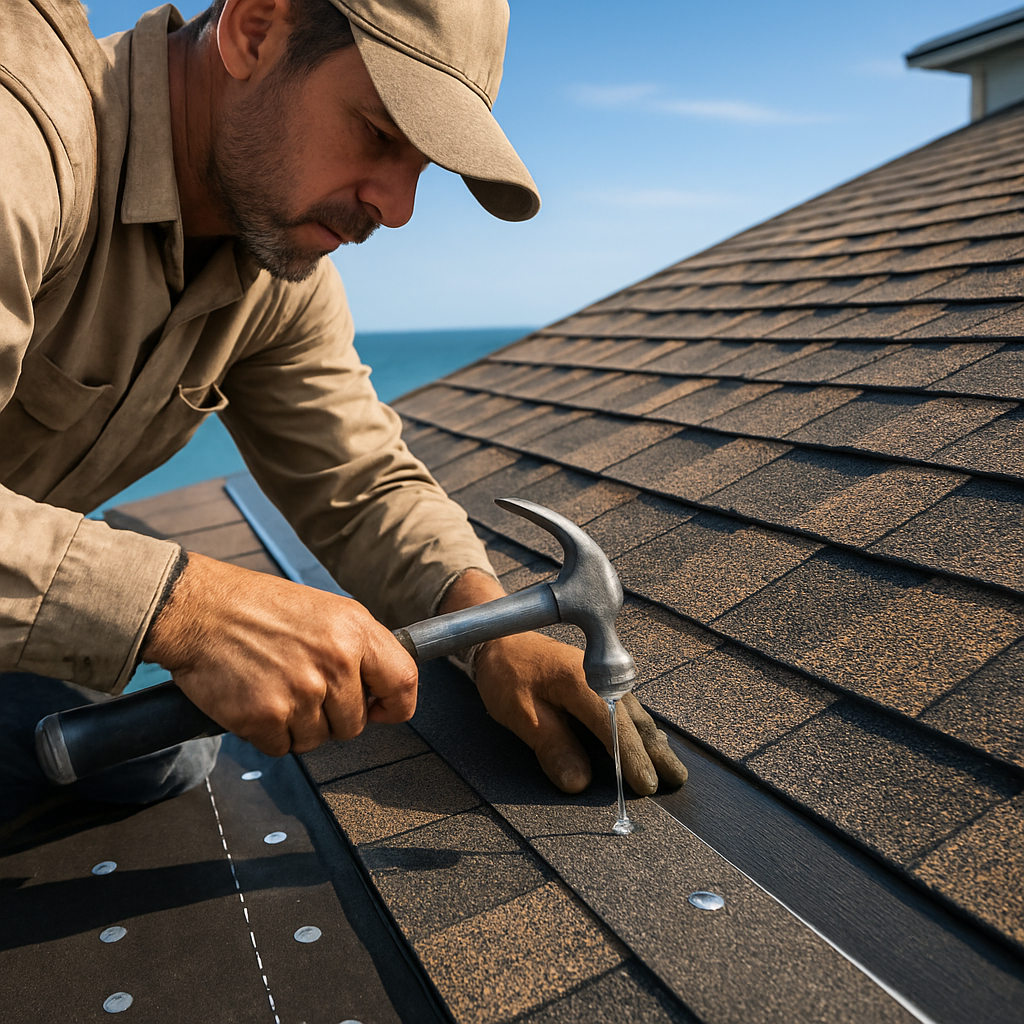
Next consideration: Before accepting bids, specify required wind and impact classes and demand an installation plan that ties those ratings to exact fastening, underlayment, and edge details so the test results translate into field performance.
Shingle materials and manufacturer examples that matter
Straight to the point: the material recipe and the way a manufacturer builds a shingle determine what failure mode it resists — not the logo. Choose based on construction (fiberglass mat, asphalt formula, modifiers, adhesive) and documented wind/impact ratings, then force the contractor to follow the manufacturer installation details to realize that performance.
What the major manufacturers actually offer
- Owens Corning Duration Storm: polymer-enhanced asphalt with stronger factory-applied sealant and larger adhesive bands designed to support higher wind ratings; widely available and documented — see Owens Corning Duration Storm.
- GAF impact-resistant lines: GAF bundles Class 4 impact options with compatible starter and edge systems; useful where insurers require impact ratings — see GAF impact resistant shingles.
- Malarkey: focuses on SBS-modified binders and upgraded granule adhesion for flexibility and tear resistance in cold/hot cycles; often paired with upgraded adhesive and
ring-shankfastening recommendations. - CertainTeed and TAMKO: offer laminated architectural options with polymer modifiers and alternative grain/adhesive systems; they compete on warranty structure and local installer networks rather than a single superior chemistry.
Material trade-off: polymer-modified (SBS/APP) asphalt and reinforced fiberglass mats increase tear strength and flexibility, improving wind and impact resistance, but cost more and require proper nail length and pattern to work. Lighter, lower-cost three-tab shingles still exist, but they lose ground fast in actual storms.
Architectural laminated vs three-tab: laminated shingles provide multiple layers for redundancy and larger self-seal areas, which reduces blow-off risk when installed correctly. Practical limit: high-profile heavy laminates can act like sails if the sealant is insufficient or nails are misplaced, so heavier does not automatically equal better without correct fastening and starter details.
When to consider alternatives to asphalt shingles
Consider metal or synthetic when roof slope, expected lifespan, or insurance incentives justify higher up-front cost. For commercial low-slope or facilities where low maintenance and long life matter, profiles like standing seam metal or modified bitumen outperform shingles for wind and long-term lifecycle cost.
Concrete Example: A Gulf Coast property owner replaced failing three-tab shingles with a polymer-modified, wind-rated shingle and upgraded to a synthetic underlayment and ring-shank nails. The job met local 130 mph attachment specs and allowed the owner to present documented wind-rated assembly details to their insurer for underwriting review and possible credits.
Inspector's priority: demand the product technical data sheet, proof of the wind and impact ratings, and the manufacturer installation instructions. If a contractor cannot produce those before bidding, they are not prepared to deliver a wind-rated assembly.
Judgment call: buyers overvalue brand names and under-invest in detailing. The manufacturer matters, but only as a package — material chemistry, documented ratings, and a contractor who follows the installation guide. For decision makers, the correct test is not the face warranty but the assembly evidence: data sheet + installation plan + post-installation photos.
Next consideration: if you are evaluating quotes, attach the product pages and require installers to confirm nail type, nail count per shingle, starter strip model, and underlayment spec in writing. For a short primer on protecting the substrate and water barrier, see What Is Roof Waterproofing And Why It Matters.
Roof assemblies and features that control performance
Direct statement: The shingle is only one part of the system — roof assembly details control whether a hurricane proof roof shingles upgrade actually survives a storm or becomes an expensive cosmetic fix.
Critical assembly components that make or break performance
- Deck attachment and substrate: Sheathing thickness, panel spacing, and fastener pattern often determine uplift failure before shingles even peel. Ring-shank nails with correct length matter where uplift is high; inadequate nailing or spaced sheathing will still fail under load.
- Underlayment and secondary barriers: An appropriate underlayment (and continuous ice-and-water or synthetic strip at eaves/rakes) stops most water intrusion when shingles are lifted. Underlayment choice is a performance decision, not a finish decision.
- Starter strips and edge metal: Proper starter courses, mechanically fastened edge metal, and sealed rake/ eave details prevent progressive edge failure that propagates inward during wind events.
- Flashings and penetrations: Skylights, plumbing stacks, and step-flashings are common failure points. Flashing material and how it is integrated into the underlayment and shingles matters more than brand of shingle.
- Roof-to-wall connections and geometry: Gables, overhangs, parapets, and roof slope create suction zones. Attachment at eaves and rakes must be stronger on gable ends; long unsupported overhangs need blocking or tie-downs.
- Venting and attic pressure control: Uncontrolled attic pressurization turns a roof into a parachute. Ensure vents are protected and consider balanced ventilation or pressure-relief strategies before relying on wind-rated shingles.
Practical trade-off: You can spec high-wind, impact-resistant shingles, but saving money by skipping edge metal, underlayment upgrades, or increased fastener counts is a false economy; the marginal cost of correct attachment is small compared with a partial failure and reroof after a storm.
Concrete example: On a Gulf Coast duplex we inspected, the owner had installed high-wind shingles but left the original 3-inch overhang and no reinforced edge metal. During a 100+ mph event the shingles along the rake lifted first, then peeled back two rows into the field. A later retrofit that added mechanical edge metal, a continuous synthetic underlayment at eaves, and ring-shank nails at the manufacturer-recommended pattern stopped repeated failures.
Common misunderstanding: Many decision makers treat underlayment as optional or cosmetic. In practice, the underlayment and how flashings tie to it are the difference between controlled water intrusion and a catastrophic interior loss after shingle damage.
Next consideration: If a roof has older or sparsely nailed sheathing, budget for full deck reattachment or replacement — this is where a shingle upgrade gives the greatest return on risk reduction. See our primer on What Is Roof Waterproofing And Why It Matters for how underlayment and detailing reduce post-storm losses.
Bottom line: Assembly and detailing determine whether hurricane proof roof shingles perform as advertised; insist on documented attachment, edge reinforcement, and underlayment integration before awarding a contract.
Which roofs benefit most from hurricane proof shingles
Not every roof deserves the same hurricane-proof shingle treatment. The roofs that get the largest, most cost-effective reduction in storm risk are those where shingle failure is the primary failure mode and where the underlying assembly can reasonably be upgraded without full replacement.
- High-exposure coastal residences: Homes within the first several miles of open water with gable roofs or long eaves where wind uplift and flying debris are common – these see the biggest benefit from high wind rated and impact resistant shingles.
- Moderate-slope roofs (4:12 to 12:12): This slope range is where laminated, adhesive-backed hurricane proof roof shingles perform well; very low slopes or very steep slopes change the failure modes and the material choice.
- Roofs with otherwise-sound decking/attachment: If the roof deck is solid, properly fastened, and flashing is serviceable, replacing shingles with a high-wind, impact-rated assembly gains a lot of resilience for relatively modest incremental cost.
- Aging shingle roofs near end of life with intact structure: Replacing an old three-tab roof with a top-rated impact shingle and proper edge reinforcement gives long-term benefit compared with patching.
- Properties with insurance or code incentives: Buildings in wind-rated zones where insurers or local codes offer discounts for rated products or IBHS Fortified compliance are clear candidates.
Where shingles are a poor choice. Low-slope commercial roofs, heavily penetrated roofs, or structures with degraded decks often do better with a system change – for example modified bitumen, built-up roofing, or metal – rather than upgrading shingles alone. Expect diminishing returns when the assembly has multiple weak points; spending on a premium shingle while leaving poor flashing and deck attachment unchanged is a common, ineffective expense.
Practical tradeoffs and decision thresholds
Cost versus risk tradeoff. If the deck, attachment, and edge metal are correctable with targeted work, paying a 10 to 30 percent premium for high-wind, impact-rated shingles is usually justified. If the roof needs a full deck replacement or has extensive flashing failures, choose a full assembly replacement instead – the shingle upgrade alone won't prevent leak-related damage.
Concrete Example: A 1998 coastal bungalow with original three-tab shingles and visible curled edges benefited materially when replaced with Class 4 impact, 130 mph rated architectural shingles plus new starter strips and reinforced rake edges. The owner avoided a full deck tear-off because inspection showed plywood and fastening were serviceable; the incremental cost was under 20 percent versus a like-for-like replacement and produced measurable insurer credit.
Quick inspection checklist for deciding benefit
- Distance to coast/exposure: Closer exposure increases ROI on hurricane proof roof shingles and may trigger specific code or insurer requirements – see IBHS Fortified.
- Roof slope and type: If slope < 3:12, consider alternatives to shingles; if 4:12-12:12, shingles are often appropriate.
- Deck and attachment condition: If decking is solid and fasteners are correct, shingles upgrade is high value.
- Complexity and penetrations: High penetration counts lower the benefit of shingle upgrades unless flashing is redone.
Installation best practices and specifications that determine real world results
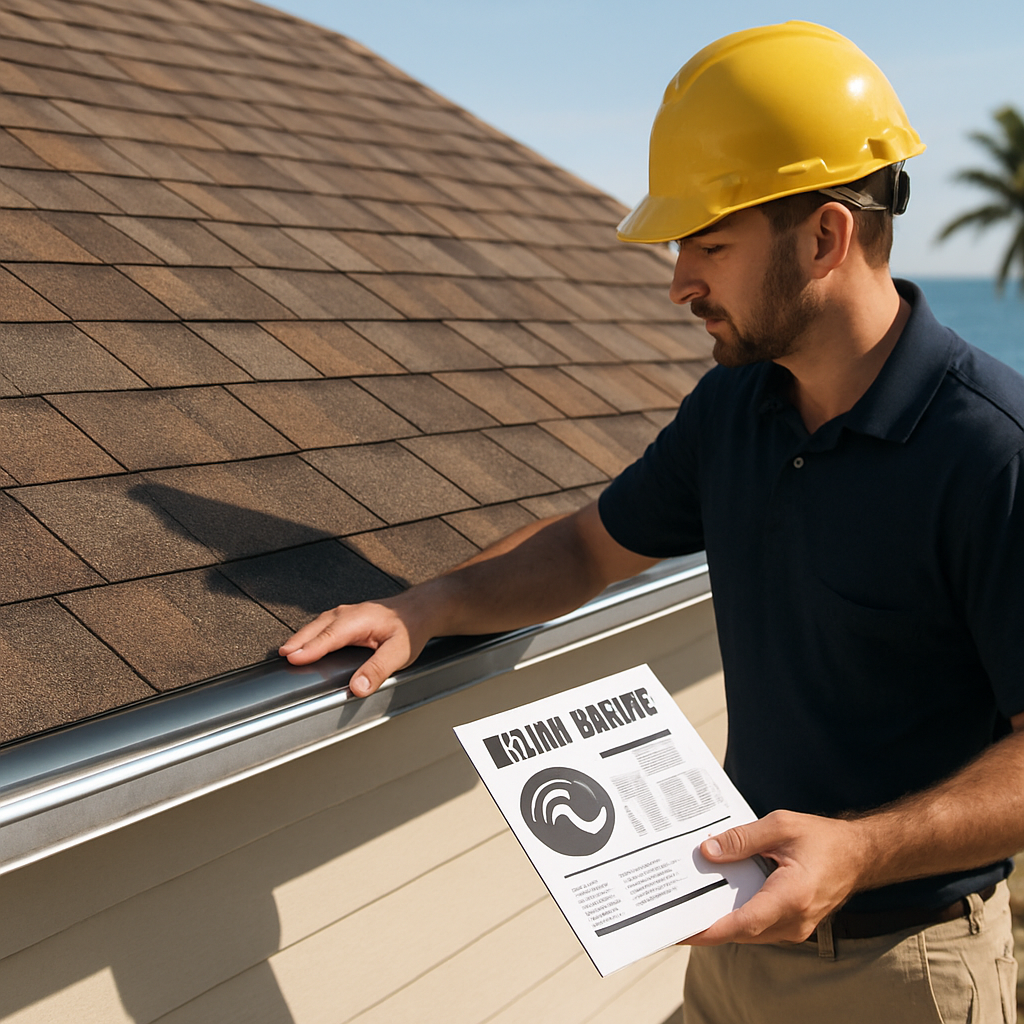
Installation matters more than marketing. You can buy the highest-rated hurricane proof roof shingles, but incorrect fasteners, weak deck attachment, missing starter strips, or poor edge metal will still let wind pry shingles off and water in.
Specify performance, then spell out how to achieve it. Require manufacturer wind-rating documentation (ASTM D7158/D3161) and the installation method that earns that rating — nail type, nail count, starter strip, underlayment, edge metal, and seam adhesive. If the product warranty lists a high-wind option, make that option mandatory in the contract.
Core installation items that change outcomes
- Fasteners: Use the nail type the manufacturer requires (ring-shank/annular for high-wind), not staples; match length to deck thickness. In coastal settings insist on stainless or hot-dipped galvanized to avoid corrosion.
- Nail pattern and count: Follow the high-wind pattern (many manufacturers require six nails per shingle or a reinforced strip in wind zones). Photos of the pattern during install are a must for post-storm claims.
- Starter and edge details: Continuous starter strips at eaves/rakes, mechanically attached edge metal, and sealed rake edges reduce lift points. Don’t accept trimmed or missing starters to cut cost.
- Underlayment and secondary barrier: Use self-adhered membrane at eaves and valleys (IBHS Fortified levels it up) and high-temperature synthetic underlayment elsewhere. Underlayment is the second line of defense if shingles fail.
- Adhesive and sealant: Factory sealant fails in cold temps or on steep slopes; specify manufacturer-approved asphalt adhesive at overlaps or a bead at rakes when required.
- Deck condition and fastening: Replace broken, delaminated, or soft sheathing. Fasten the deck to framing per code — loose sheathing negates any shingle upgrade.
Trade-off to accept: More fastening and corrosion-resistant materials cost more and take longer to install, but the alternative is recurring repairs and failed insurance claims after a storm. Overdriven nails or wrong fastener heads are common installer errors; insist on quality control photos.
Concrete example: On a Biloxi duplex, Expert Roofing replaced a tired roof using a high-wind shingle and switched from a 4-nail to a 6-nail pattern, added continuous self-adhered membrane at the eaves, and mechanically fastened edge metal. When a 110 mph squall hit the neighborhood, adjacent houses with only a shingle swap lost shingles; the duplex held with only minor flashing repairs.
- Contract language to demand: Require the bid to list product model, wind/impact ratings, nail type and length, nail count per shingle, underlayment type, edge metal details, and installer certification.
- Verification steps: Require photos of starter strip, nail pattern, and edge fastening before final payment; require a final manufacturer inspection or certification when available.
Insist on documented installation. Without photo proof and manufacturer-compliant specs, a high-wind shingle purchase is mostly noise.
Next consideration. Before signing a contract, run the scope against IBHS Fortified and ask your insurer whether the specified assembly will change premium or claims handling; that alignment reduces surprises after the next storm.
Costs, lifespan, insurance and code interactions
Upfront cost is only half the decision; you must pair price with expected life, documented installation, and insurer acceptance. Upgrading to hurricane proof roof shingles typically raises material and labor costs versus a standard architectural reroof because manufacturers require upgraded underlayment, starter strips, specific nail patterns, and sometimes tear-off to meet wind warranties. Expect a premium in the range of 10–40% over a quality architectural shingle job depending on roof complexity and whether you convert a poor deck/attachment as part of the scope.
Lifespan trade-offs. High-wind or impact-rated shingles often carry similar or slightly better service lives than standard architectural shingles—commonly 25–35 years under Gulf Coast conditions—because they use reinforced mats and stronger adhesives. That said, UV, ventilation, and substrate quality drive aging as much as the shingle itself. If the roof deck is failing or ventilation is poor, a premium shingle buys little without assembly fixes.
Insurance and building-code realities
What insurers actually want. Carriers look for proof: product data sheets, wind and impact ratings, and clear photo documentation of nail pattern, starter strip, and edge metal. Meeting IBHS Fortified criteria or manufacturer high-wind installation makes claims smoother and often unlocks discounts; check your carrier before you spend. See IBHS Fortified for program details: IBHS Fortified.
- Ask your insurer before you contract. Get written confirmation of what rating or program qualifies for discounts.
- Document installation during work. Require the contractor to supply product data sheets, permit signoff, and post-installation photos of nail patterns and edge details.
- Mind local code triggers. In many coastal jurisdictions, partial reroofs that alter more than a set percentage of the roof must comply with current wind attachment standards—check your local permitting office or FEMA guidance: FEMA.
Practical trade-off to evaluate: If the existing deck or fastening is suspect, a targeted shingle-only upgrade is a short-term mitigation, not a durable solution. Spend the extra now to upgrade attachment and underlayment if you expect two or more hurricanes over the next decade—the ROI comes from avoided repair cycles and better insurance outcomes.
Concrete Example: A 2,000 sq ft single-family roof on the Gulf Coast was quoted at $9,500 for standard architectural shingles and $13,500 for a high-wind certified assembly (proper tear-off, upgraded underlayment, starter strip, and ring-shank nails). The owner chose the certified assembly; two seasons later the house survived a 120 mph storm with only minor flashing repairs. The additional $4,000 roughly equaled one avoided major post-storm claim and kept insurance renewal smooth.
Don’t buy a wind warranty blind: a voided or unprovable installation is how warranty and insurance promises fail in practice.
Real world examples and recommended next steps for property owners
Start by treating the roof as an assembly, not just a product. In our field work after storms like Hurricane Michael and Hurricane Ian the common pattern is obvious: manufacturers' wind-rated shingles perform when the attachment, edge metal, and underlayment are done to spec. When they fail, it is almost always at the connections or roof edges.
Practical tradeoff: a targeted shingle replacement with edge reinforcement is the lowest upfront cost but only effective when the deck, fasteners, and flashing are in good condition. If the deck is soft, nails pull, or rafters show movement, spending on a full assembly replacement pays off in reduced damage risk and fewer post-storm claims.
Concrete field example
Concrete Example: A 1998 wood‑frame bungalow on the Gulf Coast received a high-wind, Class 4 impact shingle replacement plus re-fastened roof sheathing and continuous edge metal ahead of the 2018 season. After a 110+ mph storm nearby, the upgraded house had isolated shingle lifting but no large blow-offs or interior leaks; a neighbor who only swapped shingles without edge work needed a full partial deck replacement and water remediation. That contrast illustrates how installation and detailing—not brand alone—determine outcomes.
Recommended next steps (practical, ordered)
- Assess the whole roof assembly first: commission a licensed roof inspection that documents deck condition, nail type, and existing edge details; require a written photo report.
- Require specific performance in bids: ask for products that meet ASTM D7158 / ASTM D3161 and UL 2218 Class 4 where debris is a risk; include the exact wind rating in mph and the manufacturer data sheet as part of the bid.
- Get a scope that ties product to installation: the proposal must specify nail type (
ring-shankvs smooth), nail length, fastening pattern, starter strip, self-sealing adhesive, underlayment type, and edge metal profile; demand post-installation photo evidence of nail pattern and edge clips. - Weigh retrofit vs full replacement: if roof is older than 15 years, shows soft sheathing, or has multiple patches, choose assembly replacement — it costs more now but avoids near-term failures and claim complications.
- Align with insurer and code: before signing, send the scope to your insurer and local permitting office; upgrades that meet IBHS Fortified or manufacturer high-wind installation may qualify for discounts or expedited claims handling.
Sample RFP phrase to copy: Provide ASTM and UL product data sheets, installer certification, full nail pattern diagram, edge metal details, and a 10-year workmanship warranty; contractor will submit pre- and post-installation photos and disposal receipts.
Last practical judgment: If you must prioritize one upgrade today, reinforce eave/rake edges and replace damaged underlayment. Those steps reduce immediate blow-off and water intrusion risk more reliably than cosmetic shingle-only swaps. For a deeper decision framework see What Is Roof Waterproofing And Why It Matters.