

Hurricane‑Resistant Roof Shingles: Ratings, Costs and Installation Considerations
Choosing hurricane resistant roof shingles is not a marketing exercise — it is a procurement and installation decision that determines whether your roof will survive a major storm. This guide breaks down the difference between lab tests, jurisdictional approvals such as Miami-Dade NOA and IBHS Fortified, realistic installed cost ranges for coastal replacements, and the specific installation details that actually control wind performance. Use the checklists and questions here to specify products, vet contractors, and preserve warranties and insurance benefits.
1. How hurricane-resistant ratings and approvals differ and why that matters
Straight to the point: industry test numbers like ASTM D3161 or ASTM D7158 measure specific lab conditions, not how a roof performs on a real house during a hurricane. Manufacturers will publish those ASTM results because they are useful, but treating them as a permit or insurer approval is a common mistake that costs time and money.
Test standards, product approvals and whole-roof programs — how they differ
ASTM tests: ASTM D3161 and ASTM D7158 simulate wind uplift and impact on a sample shingle under controlled lab conditions. They tell you about material behavior under a defined load, not installation quality or system interactions.
Miami-Dade Notice of Acceptance (NOA): NOA is a jurisdictional product approval that bundles lab evidence, factory quality controls and field documentation into a package local permitting and many insurers accept. If you need permit acceptance in coastal Florida or want insurer confidence, ask for the NOA and verify it on the Miami-Dade Product Control site: Miami-Dade Product Control Office and NOA search.
IBHS Fortified: Fortified is not a single-product test. It is a set of whole-roof and whole-building practices that reduce failure modes across materials, attachments and roof-to-wall connections. Fortified can deliver insurance credits but requires an inspection-based program and prescriptive upgrades, which raises upfront cost.
- Key trade-off: ASTM compliance is lower cost and shows material capability; NOA gives regulatory weight but narrows you to approved SKUs and specified installation methods.
- Practical limitation: A Miami-Dade NOA only protects you if the installation matches the NOA diagrams and fastener schedule; sloppy installation voids the benefit.
- Program implication: IBHS Fortified improves overall resilience but requires broader work than swapping shingles and is more expensive.
Concrete example: A Gulf Coast homeowner chose a shingle line with ASTM D7158 Class H results but later learned the local permit required a Miami-Dade NOA. The installer replaced the product with an NOA-approved SKU and followed the NOA nailing pattern, which delayed the job and increased cost by about 12 percent, but avoided a permit rejection and preserved eligibility for an insurer discount.
How to verify before you buy: always request the exact product SKU NOA or test report, not a generic brand statement. Cross-check the NOA number on the Miami-Dade site, and ask the manufacturer for the installation diagram and a certified installer list. For Fortified credit, consult IBHS Fortified roof criteria: IBHS Fortified Roof.
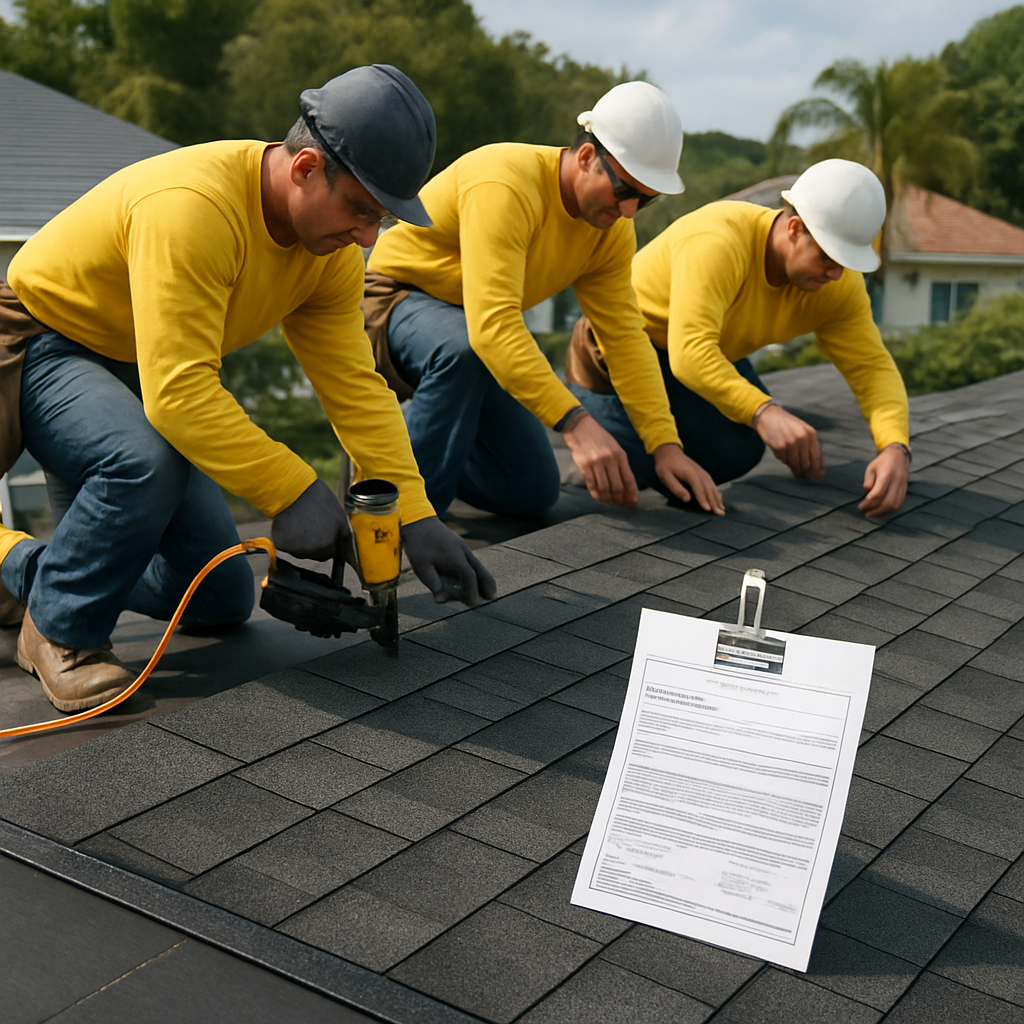
Next consideration: confirm whether your insurer or local code requires NOA or Fortified evidence before you commit to a product or contractor. If they do, budget for the approved SKU and certified installation now to avoid rework and denied claims later.
2. Common shingle manufacturers and product lines used for high-wind applications
Straight answer: the market narrows to a handful of national manufacturers offering wind-focused product lines, but the deciding factor is the exact product SKU and its approvals, not the brand logo on the box. Choose by documented approvals and installation requirements rather than marketing names.
- GAF – Timberline HDZ and Advanced Protection lines; known for reinforced nailing zones and broad installer certification programs. See manufacturer resources on GAF product pages.
- Owens Corning – Duration Series with SureNail technology; emphasizes a reinforced nail line and adhesive performance under lift. Look for the exact SKU NOA before specifying.
- CertainTeed – Landmark PRO and Patriot lines; Common in coastal regions where enhanced wind and impact options are required.
- Atlas – StormMaster Shake and StormMaster Slate; marketed as higher-profile options with wind-tested variants and specific starter/hip products.
- IKO – Cambridge with ArmourZone; offers impact-resistant options and wind-rated SKUs that require specific nailing patterns.
Practical insight: manufacturers produce wind-rated versions of many standard lines. What matters in procurement is whether the exact SKU has a Miami-Dade NOA or equivalent and whether the installation diagram requires upgraded accessories or nailing patterns that raise labor cost.
How product lines actually differ
Differences are operational – not just marketing. Expect variation in the reinforced nail area, adhesive strip size and location, laminate thickness, tab geometry, and accessory requirements like enhanced starter strips and hip/ridge caps. Those differences change installation time and the chance of warranty eligibility.
Limitation and tradeoff: higher-profile, thicker laminates and stronger adhesives improve tear resistance but add weight and cost. On older decks that means additional sheathing or structural work. Also, some high-wind SKUs require more nails per shingle – that increases labor and the need for contractor discipline.
Concrete example: a Gulf Coast residential replacement used Owens Corning Duration with the wind-rated SKU and a synthetic underlayment. The crew followed the manufacturer nailing pattern and installed the specified starter and ridge products; the job met the insurer documentation requirement and avoided a warranty dispute after a named storm.
If you need a quick next step, ask bidders to attach the product NOA and the manufacturer installation bulletin for the SKU. For local help with verification and installation standards see Miami-Dade Product Control and our service pages like Shingle Roof Rejuvenation.
3. Realistic installed cost breakdown and regional price factors
Straight answer: expect a meaningful premium for true hurricane-resistant roof shingles — not a small add-on. In Gulf Coast and other high-velocity zones, realistic installed costs for a properly specified, wind-rated asphalt shingle roof usually run $600–$1,500 per square ($6.00–$15.00 per sq ft), depending on product approvals, required upgrades and site complexity.
Line-item cost drivers
| Line item | Typical cost per square (approx.) |
|---|---|
| Premium wind-rated shingles (NOA/IBHS-eligible models) | $100 – $350 |
| Synthetic underlayment (full-field) | $40 – $100 |
| Ice & water shield / sealed eave areas | $50 – $150 |
| Starter, hip/ridge and ridge vent upgrades | $30 – $120 |
| Flashing and metal work (step, counter, chimneys) | $40 – $120 |
| Fasteners (hot-dip galvanized or stainless) | $10 – $40 |
| Labor (installation, cleanup, crew travel) | $200 – $600 |
| Disposal, permits, inspections | $60 – $220 |
| Deck repair or re-sheathing (if required) | $100 – $600+ |
Practical insight: the material line items rarely explain the whole variance — deck repairs and labor do. A roof with rotten or undersized sheathing, or one that needs additional fastening to meet current code, will push a job from the low end into the high end quickly.
- Regional labor markets: coastal labor shortages and certified installer premiums increase costs.
- Local code and acceptance requirements: jurisdictions that require Miami-Dade NOA or TAS compliance limit product choices and raise price.
- Logistics and roof complexity: multi-plane roofs, high slopes and multi-story scaffolding add labour and safety costs.
- Material availability: some high-wind SKUs sell out after storms; surge pricing happens.
Trade-off to consider: you can save on upfront costs by choosing a lower-cost wind-rated shingle and skimping on underlayment or fasteners — that saves now and costs more after the first hurricane. Spending 10–20% more on proper underlayment, corrosion-resistant fasteners and certified installation usually reduces claim frequency and can qualify you for insurer credits.
Concrete example: a 24-square Gulf Coast re-roof with a Miami-Dade NOA shingle, full synthetic underlayment, stainless fasteners and modest flashing work commonly lands around $20,000–$28,000 installed. If a third of the decking needs replacement, add another $3,000–$8,000; that deck repair is the single largest cause of cost escalation on real jobs.
Before you bid or accept a number, request itemized pricing, insist on seeing the exact product NOA or manufacturer document, and verify whether insurer incentives or IBHS Fortified programs apply to your project. If you need localized help estimating, see Expert Roofing examples on staged upgrades and waterproofing at What Is Roof Waterproofing And Why It Matters.
4. Installation elements that determine wind performance
Plain fact: the shingle you buy is only as strong as how it is installed. Fastener type and placement, substrate condition, starter details, and underlayment continuity are the items that actually stop blow‑offs in a storm — not marketing copy or a single lab number.
Critical elements installers must get right
- Roof deck and fastening: Confirm sheathing thickness and fastener spacing; loose or split boards must be replaced. A stranded, well‑nailed deck reduces flutter at the source.
- Fastener specification and pattern: Use the corrosion‑resistant fasteners the manufacturer calls for (hot‑dip galvanized or stainless where specified) and follow the exact nail pattern — many high‑wind models require a six‑nail pattern or additional clips.
- Starter strip and nailing line: A properly installed starter prevents edge lift. Misaligned starter or missed starter nails are a repeat failure mode we see on storm claims.
- Full‑field underlayment and eave protection: Synthetic underlayment and ice‑and‑water shield at eaves/rakes prevent wind‑driven water entry when shingles are damaged.
- Adhesive bond and sealant alignment: Ensure seal strips line up and are clean when installed; cold or dusty conditions prevent adhesion and defeat wind performance.
- Perimeters, hips, ridges and penetrations: Reinforce eaves/rakes, mechanically secure ridge caps, and detail flashing at pipes, skylights and walls per NOA or manufacturer diagrams.
Practical tradeoff: stainless nails resist coastal corrosion best but add 10–20% to fastener costs. For many Gulf Coast houses hot‑dip galvanized nails meet code and perform well if installed correctly; choose the higher cost only where salt spray or long‑term warranty requirements justify it.
Common failure mode to avoid: overdriven or underdriven nails. We still see crews run nail guns without gauge checks; a misplaced head or wrong shank length voids the wind warranty and makes blow‑offs inevitable.
Concrete example: On a 22‑square coastal replacement we removed rotten sheathing discovered during tear‑off, installed full‑field synthetic underlayment plus eave ice‑and‑water, upgraded to hot‑dip galvanized ring‑shank nails, and followed the six‑nail pattern from the product NOA. The insurer accepted the documentation for a reduced premium and the roof passed final inspection with the extended wind endorsement intact.
- Pre‑install checklist: inspect and document deck condition, specify fastener type and length in the contract, require manufacturer installation diagrams in scope, confirm starter and underlayment brands, and require post‑install photos of nail pattern and flashing.
- On the day: verify nail gun settings or hand‑nail practice, keep materials dry and ambient temperature acceptable for seal activation, and sequence work to avoid long exposures of the deck.
For more on field practice and NRCA guidance see NRCA technical resources. If you need local contractor examples for these installation checks, see our work on shingle roof rejuvenation at Shingle Roof Rejuvenation In Wiggins MS | Expert Roofing Contractor | Biloxi MS | Roof Waterproofing | Coatings | Roof Repair.
5. Workmanship, warranties and how to verify contractor qualifications
Workmanship and documentation matter as much as the shingle specification. Manufacturer wind warranties and contractor workmanship guarantees are separate contracts; one will cover material failures under specific test conditions, the other covers how the job was executed. In practice most warranty denials are paperwork or installation-detail issues, not the shingle failing its laboratory rating.
What to demand in writing before work starts
- Product approval: Request the exact product SKU and its Miami-Dade
NOAor equivalent and verify it yourself via the Miami-Dade Product Control Office and NOA search. - Installation instructions: Require the manufacturer installation instructions to be attached to the contract and followed verbatim, including specified nail type, nailing pattern and underlayment.
- Installer certification: Ask for proof of manufacturer certified installer status and the cert number, then confirm the program is more than marketing by checking what the certificate covers.
- Workmanship warranty: Get a written contractor warranty with duration, what it covers, and a clause that workmanship claims will be remedied promptly; avoid vague promises.
- Insurance and licensing: Obtain a copy of current liability and worker compensation insurance and the contractor license; call the carrier to confirm coverage dates.
- Documentation deliverables: Require post-install photos showing nail pattern, underlayment, flashing details, and permit closeout or final inspection report before final payment.
Practical tradeoff: Certified installers cost more and sometimes add scheduling overhead, but certification is often a prerequisite for extended wind warranties. Some certifications are lightweight marketing; prefer contractors who can show completed Miami-Dade NOA jobs and provide local references with similar roof geometry.
Limitation to watch: Manufacturer extended wind warranties frequently require job registration within a short window and adherence to specific fastener types and spacing. Failure to register or to use the specified fasteners is a common grounds for denial, even years after installation.
Concrete example: A Gulf Coast homeowner hired a low-cost crew to replace shingles; the crew used aluminum roofing nails instead of hot-dip galvanized as stated in the installation documents. After a storm the manufacturer denied the wind warranty. The homeowner had no post-install photos or permit closeout, so the workmanship warranty claim was slow and underpaid.
What I look for when vetting a contractor: field evidence of similar high-wind installs, ability to produce NOA-backed job files, clear warranty paperwork, and a process that keeps a copy of the installed materials list and fastener receipts on file. If the contractor resists these deliverables, walk away.
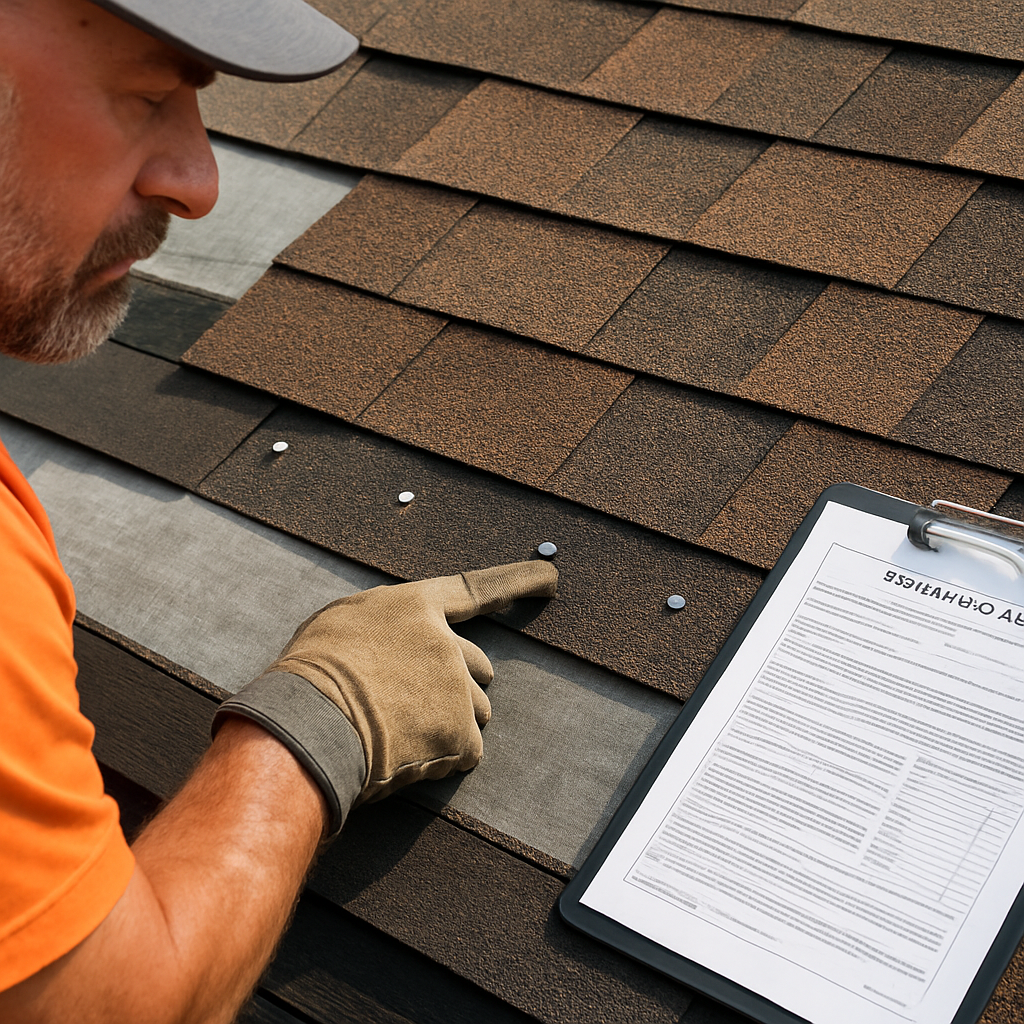
Next consideration: Before signing, call your insurer and confirm whether they require specific product approvals, installer certification, or documentation to qualify for discounts or to accept the replacement for underwriting purposes; mismatch here is an expensive oversight.
6. Permitting, insurance interactions and incentives
Immediate point: local permits and insurer underwriting are often the gatekeepers that turn a hurricane resistant roof shingles purchase into actual protection or a wasted expense. If you buy a hurricane grade shingles product but fail to secure the right approvals and documentation, insurers may deny discounts, void extended wind coverage, or slow claims.
What matters to building departments and underwriters
Regulatory proof vs marketing claims: building departments and many insurers require a Miami-Dade Notice of Acceptance, TAS reports, or equivalent product approval — not just a manufacturer wind-rating sticker. Accepted documentation is specific to the SKU and roof assembly, so demand the NOA/TAS number for the exact product and installation method.
Installer evidence: insurers commonly require proof the installer is certified for that product and that the installation followed the NOA or manufacturer instructions. That means permit records, final inspection sign-off, post-install photos of nailing patterns and flashing, and a contractor workmanship warranty — all on file before a premium credit is applied.
- Documents to collect: copy of Miami-Dade NOA or IBHS Fortified certificate for the exact SKU, manufacturer installation instructions, permit receipt, final inspection, contractor certification, and post-install photos.
- When to contact insurer: call before work starts to confirm what evidence they will accept for a premium credit or endorsement; get the agreement in writing or a formal policy endorsement.
- Timing trap: many insurers only apply discounts at renewal; others require inspection before binding the credit — plan schedules accordingly.
Practical trade-off: chasing the highest-rated, NOA-certified shingles narrows supplier choices and raises installed cost because required attachments (stainless fasteners, synthetic underlayment, taped flashings) and documentation add labor and time. That upfront cost often pays off in lower expected storm losses and potential insurance credits, but only if you document it correctly.
Concrete example: A Gulf Coast homeowner chose a Miami-Dade NOA product and paid $2,200 extra for synthetic underlayment and stainless nails to meet the NOA assembly. The insurer required the NOA number, contractor certification, and permit closeout before applying a 10 percent wind mitigation credit at renewal — the credit covered the extra cost in roughly six years and smoothed claims handling after a subsequent storm.
What doesn't work: leaving permit pulls and final inspections to chance. In practice, permits are the single most overlooked documentation item that voids insurer credits. Contractors sometimes assume a homeowner won't need copies; insist on them and put that requirement in the contract.
Get insurer confirmation in writing of the exact evidence they require for premium credits before you sign the contract.
7. Decision checklist and specification template for procurement
Concrete point: Most procurement problems are specification problems. Vague RFPs that say accept hurricane resistant roof shingles invite substitutes that pass a marketing sniff test but fail under permit or insurer scrutiny. Specify approvals, installation, documentation, and holdbacks up front.
Procurement checklist – items to require and verify
- Wind requirement: State the design wind speed or code reference and whether Miami-Dade NOA or equivalent is mandatory.
- Product approval: Require the Miami-Dade NOA number or IBHS Fortified endorsement for the exact product SKU and roof assembly. Cross check on the Miami-Dade Product Control site.
- Installation instructions: Include the manufacturer installation diagram as a contract exhibit and require adherence; any deviations must be written and approved by the manufacturer.
- Fasteners and materials: Specify hot-dip galvanized or stainless steel nails, nail size, and exact nailing pattern per the NOA or manufacturer; name the underlayment type (synthetic full field) and ice and water shield locations.
- Deck condition acceptance: Define acceptable sheathing gaps, moisture limits, and a scope for deck repair with unit pricing for additional decking work.
- Installer qualifications: Require manufacturer certification, local license, proof of high-wind project references, and insurer proof of workers compensation and general liability.
- Documentation deliverables: Permit closeout, manufacturer warranty registration, stamped photos showing nail pattern and flashing, and a NOA compliance checklist signed by installer.
- Payment terms and holdback: Retain 5 to 15 percent until permit final and delivery of documentation; use an acceptance period for latent defects.
- Inspection rights: Reserve right to third party inspection at key milestones with cost responsibility defined.
Sample specification paragraph to paste into an RFP or contract
Sample spec: The contractor shall supply and install hurricane resistant roof shingles that are listed on a current Miami-Dade NOA for this SKU and installation method. Installation must follow the manufacturer installation diagram included as Exhibit A. Fasteners shall be hot-dip galvanized or stainless steel as required by the NOA. The contractor shall provide permit final, manufacturer warranty registration, and post install timestamped photos showing full-field nailing, starter strip, ridge and all penetrations. Five percent retainage will be held until all documentation is delivered and permit is closed.
Tradeoff to accept: Requiring a Miami-Dade NOA and certified installer reduces bidder count and raises price, but it prevents permit delays and insurer rejections. If schedule or budget prevents a NOA product, require stricter fastening, third party inspection, and an extended holdback.
Real world example: A Gulf Coast property manager required the exact NOA number for a Timberline-style shingle and a 10 percent holdback. Bids dropped by two vendors, price rose about 8 percent, but the job passed insurer review without additional documentation and the policy renewal proceeded without surcharge.
| Document | Who provides | Why it matters |
|---|---|---|
| Miami-Dade NOA or Fortified certificate | Manufacturer | Permitting and insurer acceptance for high-velocity zones |
| Manufacturer installation diagram | Manufacturer | Defines acceptable nailing, fasteners, and underlayment – contract baseline |
| Post-install photos, permit final, warranty registration | Contractor | Proof of correct installation to preserve warranties and insurer compliance |
Final takeaway: Build the RFP around verifiable approvals and deliverables, not marketing names. Expect a small premium for auditable compliance and fewer headaches at permit and insurance time. The next item to resolve is who will perform third party verification and under what acceptance criteria.
8. Local examples and practical scenarios
You can stage hurricane hardening, but the order matters. Roof work done piecemeal without a plan often costs more over time and can leave you noncompliant with insurer requirements.
Prioritization and staging
Priority principle: start where failure starts — eaves, rakes and poorly sealed penetrations. For many Gulf Coast homes, a focused eave-and-starter upgrade buys two hurricane seasons of improved performance while you budget for a full replacement.
- Immediate (low budget): replace degraded starter strips, seal exposed flashings, add temporary tarps if a storm is imminent
- Short-term (1 season): install synthetic underlayment at eaves, replace corroded nails with hot-dip galvanized or stainless at critical edges
- Medium-term (1–3 years): scheduled full-field replacement with a hurricane-rated product and documented NOA or Fortified compliance
Trade-off to accept: targeted fixes lower near-term risk but rarely meet the documentation insurers want for premium discounts. If your goal is insurer recognition or a Fortified endorsement, plan on full-system work and certified installers.
Concrete example
Concrete Example: A 1,800 sq ft Biloxi bungalow had a mid-season inspection that found torn starter strips and failing valley metal. Expert Roofing staged the work: immediate starter replacement and high-adhesion underlayment at eaves for $1,200, then a full reroof the following year with Miami-Dade NOA shingles. The short-term fix prevented blow-offs during a tropical storm, but only the later full reroof qualified for insurer wind-credit paperwork.
Coordination insight: work timing affects permits and availability. Post-storm demand inflates labor rates and delays inspections. Schedule non-urgent upgrades in the off-season and get permit application packets ready before contractor mobilization to avoid delays.
Practical limitation: salvaging existing shingles for reuse is rarely worth it in high-wind zones. Reused materials complicate NOA traceability and often void extended wind warranties. If the product SKU cannot be matched to a current NOA, plan for full replacement.
Final judgment: prioritize documentation and sequencing over the cheapest fix. The cheapest immediate repair is only good if it preserves your ability to schedule a certified, NOA-compliant replacement before the next hurricane season.