

Mississippi Roofers: Weather Challenges, Materials That Work, and Hiring Advice
Mississippi roofers face a unique mix of high humidity, salt air, heavy rainfall, and hurricane-force winds that drive most premature roof failures. This guide maps those stressors to the materials and installation details that actually work in Mississippi—from coastal standing seam metal and corrosion resistant fasteners to upgraded laminated shingles and single-ply commercial systems—and finishes with a practical hiring and contract checklist you can use immediately. Expect manufacturer examples, inspection cadences, and the red flags to watch for when choosing local roofing contractors.
Mississippi weather and roof stressors that matter
Clear reality: Mississippi roofs are defined more by repeated exposure than by a single event. High winds from tropical storms, wind driven rain, persistent high humidity, and coastal salt spray create a stacked set of failure modes that multiply each other over time.
Regional patterns and seasonal drivers
Gulf Coast versus inland: Properties in Biloxi, Gulfport, and Pascagoula face salt corrosion and hurricane surge risks that are not significant for Jackson or Oxford. Inland locations still get the same rainfall intensity and humidity but wind exposure declines with distance from the coast. See NOAA climate summaries for storm frequency and the National Weather Service Jackson office for local wind and rainfall patterns: NOAA climate information and NWS Jackson.
How stressors translate into failure: Wind tends to lift and blow off shingles when fastening patterns or edge details are weak. Wind driven rain forces water into improperly flashed penetrations and under poorly seated shingles. Prolonged humidity encourages membrane rot, mold under shingles, and metal corrosion. Salt increases the corrosion rate of exposed fasteners and flashings, turning a small leak into a fast leaking hole.
Practical tradeoff: Material choice matters, but correct details and corrosion resistant accessories matter more. A well installed architectural shingle system with upgraded underlayment and proper flashings will generally outlast a poorly installed premium product. Conversely, an inferior fastener or wrong flashing will negate advantages of higher cost materials.
Concrete example: After a 2018 Gulf Coast storm a commercial flat roof with a well welded TPO system and reprofiled drains needed only seam repairs and coating touch up. A nearby retail strip with older modified bitumen and clogged drains suffered ponding, membrane splits, and full replacement within two years. The difference was drainage and installation quality, not only material age.
Judgment call for owners: For coastal properties prioritize coated Galvalume or aluminum standing seam with stainless or coated fasteners and continuous metal flashings. For inland residential properties architectural laminated shingles with hurricane rated nailing, synthetic underlayment, and ice and water shield at eaves is usually the cost effective choice. In both cases budget for regular inspections and targeted corrosion control.
Inspection priority: Check flashings, edge terminations, and fastener corrosion first after any storm; those three items predict most near term failures.
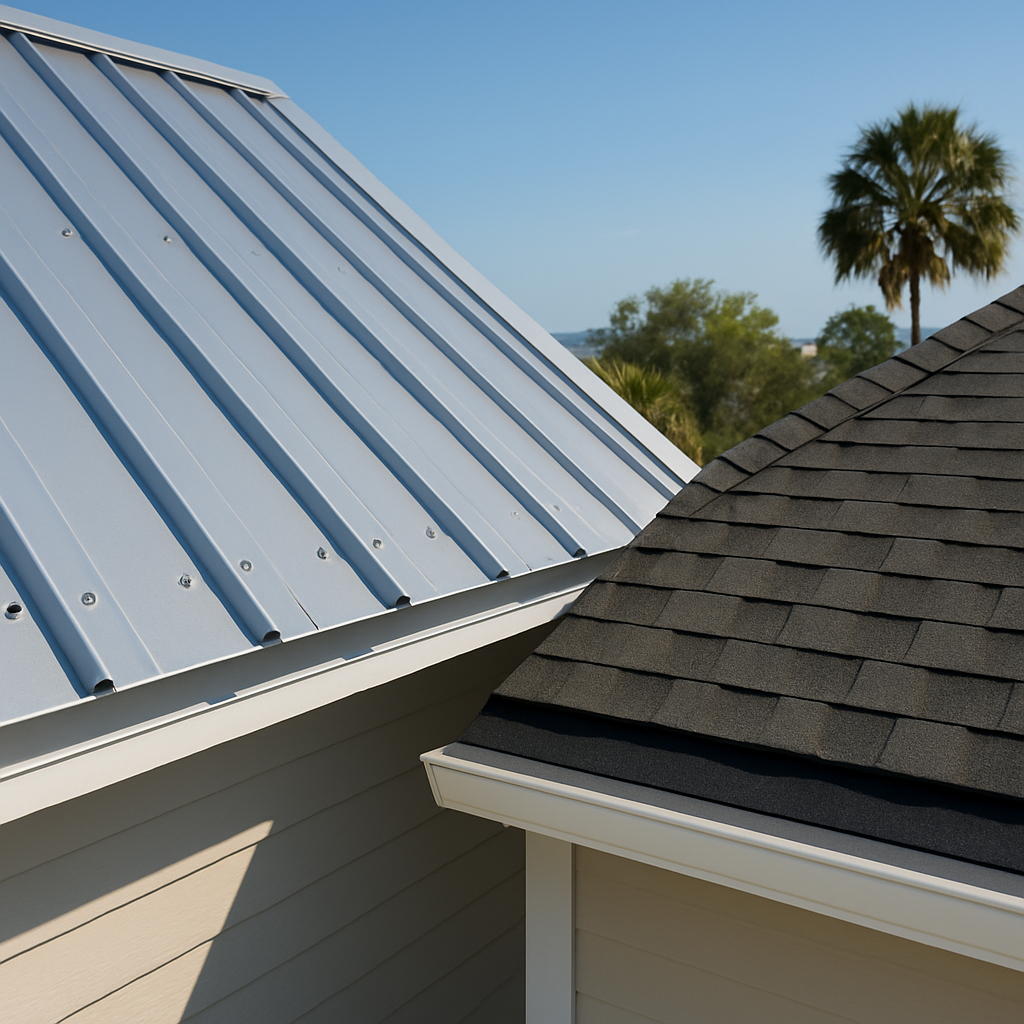
Most common roof failure modes observed in Mississippi
Clear pattern: in Mississippi the failures we see repeat predictably — not because a material is inherently bad, but because installation details, moisture, salt, and wind amplify small defects until they become leaks or collapses. Mississippi roofers should expect the same handful of failure modes on both residential and commercial properties and know which diagnostics to run first.
Primary failure modes and why they happen
Shingle stripping and granule loss: laminated asphalt shingles frequently fail at the field or at hips and ridges when sealant adhesion is weakened by heat cycles, persistent dampness, or mechanical lift from wind. Practical consideration: if you find heavy granules in gutters, the remaining shingle life is often much less than manufacturer rated — that is a measurable precursor to failure, not a cosmetic issue.
Flashing and penetration failure: step flashings, skylight curbs, and roof-to-wall transitions are the single largest source of repeat leaks. Faulty counterflashing, improperly lapped kickout flashings, and plastic flashings that shrink under sun will leak long before the field material fails. Inspect flashings first on every leak call.
Low-slope membrane degradation and ponding: TPO/PVC seams split, adhesives creep, and membranes puncture where water ponds. Ponding shortens life nonlinearly — a 1 inch persistent pond will double the seam fatigue rate compared with well-drained areas. Coatings can delay replacement, but they mask underlying seam and flashing weaknesses if you skip a pre-coating survey.
Corrosion and fastener failures in coastal zones: salt spray attacks coated fasteners, metal panels, and flashing terminations. Trade-off: an otherwise serviceable painted Galvalume roof becomes a maintenance nightmare if installers use zinc plated nails instead of stainless or polymer coated fasteners — the metal choice matters as much as the panel profile for coastal longevity.
- Diagnostic signs to look for: missing granules in gutters, rust streaks below flashings, lifted or curled shingles at edges, split membrane seams, visible fastener back-out, soft decking or daylight seen from the attic.
- Hidden causes often missed: poor attic ventilation causing thermal cycling and adhesive failure, incompatible metals causing galvanic corrosion, and insufficient slope or blocked drains creating chronic ponding.
Concrete example: after a high-wind event on the Gulf Coast we inspected a duplex where shingles along the leeward eaves were gone but the field looked intact. The root cause was missing starter course and underlayment laps cut short during a prior quick reroof; wind uplift started at the drip edge and propagated inward. Repairing only the missing shingles would have failed again; we replaced the starter, upgraded the eave underlayment to StormGuard, and refastened to the manufacturer wind pattern.
Judgment call: choosing a higher-cost material like standing seam metal or a fully adhered single ply matters most where exposure or access makes repairs costly. But more important in practice is insisting on correct fasteners, properly detailed flashings, and verified seam welding or adhesive records — those installation controls prevent 60 to 80 percent of premature failures.
Next consideration: when you call Mississippi roofers for a quote, ask for a written diagnostic that ties observed symptoms to the specific failure modes above and lists the corrective details required, not just a cost per square foot.
Materials and systems that perform best in Mississippi microclimates
Bottom line: pick the material to match the exposure, not the price tag. Installation details and corrosion-resistant accessories determine whether a roof survives Mississippi wind, humidity, and salt air more than the manufacturer name alone.
Recommended systems by microclimate
- Coastal steep-slope (Biloxi, Gulfport, Pascagoula): aluminum standing seam or PVDF-coated Galvalume standing seam, 24–26 gauge or heavier, stainless or premium coated fasteners, continuous clip attachment where possible; specify factory-formed flashings and raised crickets at penetrations.
- Inland steep-slope (Jackson, Oxford, Tupelo): architectural laminated shingles such as GAF Timberline HDZ, Owens Corning Duration, or CertainTeed Landmark installed with synthetic underlayment and ice-and-water shield at eaves and penetrations; use enhanced nailing patterns and hurricane clips for wind uplift.
- Low-slope commercial (hospitals, warehouses): fully-adhered or mechanically-fastened TPO/PVC from Carlisle or Firestone with tested welded seams; add tapered polyiso insulation to eliminate ponding and specify high-quality edge terminations.
- Aged or marginal membranes: restorative silicone or polyurethane coatings from Gaco or Karnak can extend service life when substrate is sound, but do not use coatings to mask structural ponding or large seam failures.
Trade-off to recognize: metal roofs cost more up-front and require different detailing (condensation control, thermal expansion joints, and noise mitigation) but usually halve life-cycle interventions compared with 20–30 year shingles. Shingles are inexpensive to install and repair inland, but near the coast their service life drops and flashing corrosion becomes the dominant failure mode.
Installation detail that matters: specify synthetic underlayment such as GAF StormGuard or IKO StormShield under shingles in high-wind bands, and require hot-air welded seams and field seam testing for TPO/PVC systems. These are inexpensive spec items that stop most early failures.
Concrete Example: A small commercial building in Biloxi replaced an aging BUR system with Firestone TPO, added tapered insulation to eliminate two-inch-deep ponding zones, and applied Gaco silicone on parapet walls. The owner avoided a full tear-off of the wall flashings and gained eight years of leak-free performance — because the ponding and edge details were corrected before coating.
Practical judgment: choose aluminum standing seam for salt-spray exposure; choose high-wind-rated architectural shingles inland when budget dictates. Never rely on coatings to fix drainage or flashing defects.
Where to read more: for coastal metal guidance see the Metal Roofing Alliance resources at Metal Roofing Alliance. For hurricane-rated installation guidance consult FEMA standards at FEMA hurricane standards. For local coating and waterproofing case work see Expert Roofing waterproofing pages.
Critical design and installation details that reduce risk
Key point: The difference between a roof that survives a hurricane-force event and one that fails is almost always in the details installers control: edge securement, flashing continuity, fastener selection, drainage, and quality assurance. Mississippi roofers who skip these items to save a few hundred dollars create concentrated failure risk that shows up within a single major storm.
Fastening, edge securement, and material compatibility
Fastening matters: Specify manufacturer-prescribed fastening patterns tied to the wind-uplift rating, and insist on stainless or polymer-coated fasteners in coastal exposures. For metal standing seam use concealed clip attachment when possible; for exposed-fastener panels use neoprene-sealed screws plus a scheduled retorque check on year one.
- Edge securement: Continuous edge clips or enhanced perimeter nailing per FM or ASTM guidance reduce peel-back failures
- Compatibility: Avoid mixed metal contact – separate copper flashings from steel fasteners or use isolating washers to prevent galvanic corrosion
- Underlayment: Use peel-and-stick membrane at eaves, rake, and roof-to-wall transitions to resist wind-driven rain rather than standard felt alone
Flashing, transitions, and workmanship that last
Critical detail: Continuous step flashing at roof-to-wall interfaces and metal counterflashing set into a dressed reglet are not optional in high wind or salt-spray zones. Short, improvised flashing pieces and coped mortar joints are the weak links installers exploit when schedules are tight.
Trade-off to accept: Upgrading to closed-cell foam tape, stainless step flashing, and welded terminations adds cost but eliminates repeated roofer callbacks and leak patches that erode the warranty window. Insurance often views that premium installation more favorably.
Drainage, slope fixes, attic practices, and low-slope specifics
Practical fix: Do not accept persistent ponding. Design tapered insulation to force positive drainage, or re-profile the deck. For single-ply membranes insist on factory-welded details at curbs and proper edge metal – poor seam welding is the number one installation failure on TPO/PVC systems.
Ventilation: Balanced intake and exhaust ventilation reduces attic humidity, limits thermal cycling, and prevents moisture-driven deck rot. Passive soffit-to-ridge designs work well; power ventilators are rarely a substitute for balanced passive flow.
Concrete example: A 1970s bungalow near Biloxi with repeated attic condensation and shingle delamination had its soffit vents blocked and a flat roof section with two inches of standing water after storms. Replacing the damaged deck, installing balanced soffit-to-ridge ventilation, and adding tapered polyiso to the flat section eliminated recurrent leaks and reduced interior mold complaints within one year.
Quality assurance, acceptance testing, and contract language
Holdbacks and tests: Require photographed fastener patterns, a sample pull test for wind uplift, seam-weld integrity tests for single-ply, and a 10% random inspection report signed by the foreman before final payment. Mississippi roofers who resist documented QA are often hiding poor practices.
- Contract must include: exact manufacturer and model numbers for shingles, membranes, and fasteners
- Performance acceptance: defined QA checkpoints, remedy schedule, and lien-waiver requirement tied to payments
- Warranty transfer: written confirmation of manufacturer warranty transferability where applicable
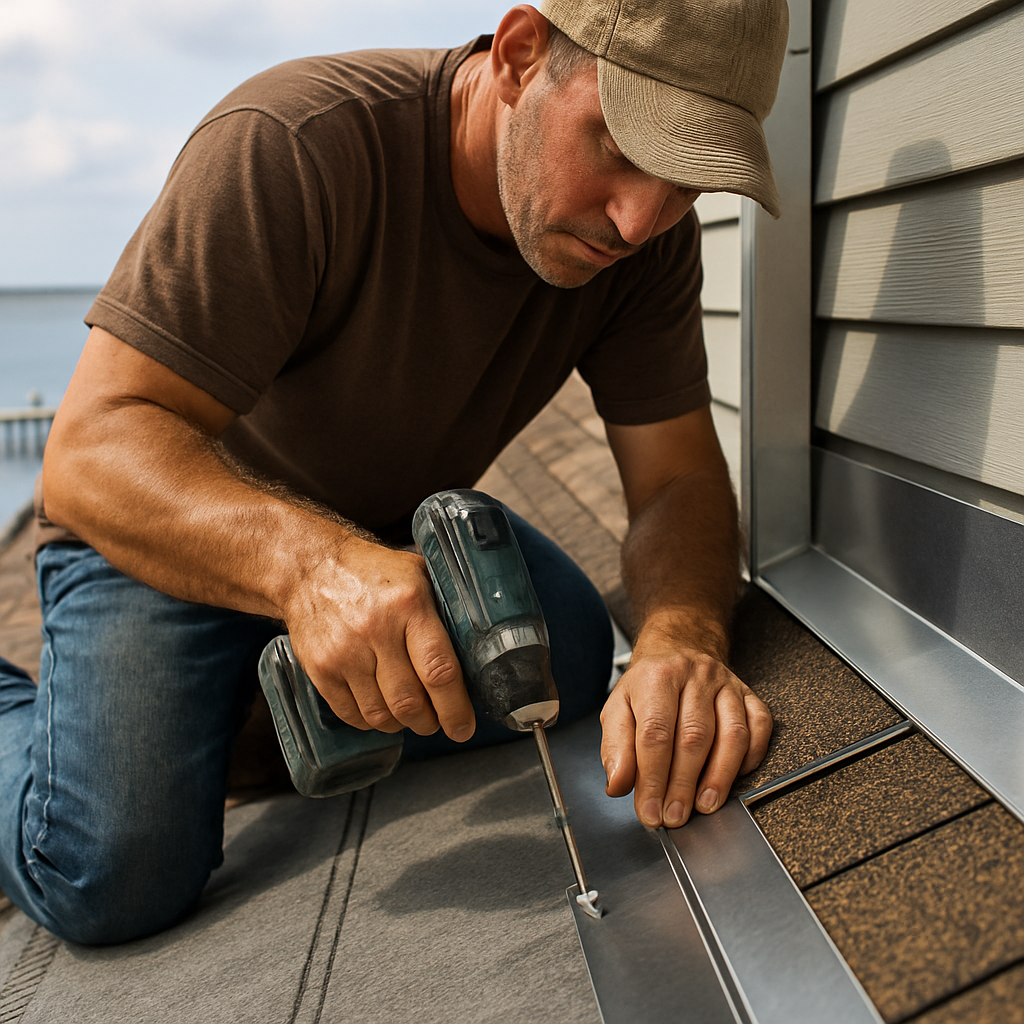
Final judgment: Spending on correct details and third-party QA is rarely wasted in Mississippi. The cheapest roof is often the most expensive over five years when callbacks, insurance disputes, and water damage claims are counted.
Maintenance, inspection schedule, and rejuvenation strategies for Mississippi roofs
Short, decisive point: Regular inspections and targeted rejuvenation save money in Mississippi more reliably than picking the cheapest material. Mississippi roofers who push coating as a cure-all are often masking deferred maintenance. Budget a small, repeatable inspection program instead of reacting after failures.
Inspection cadence: Inspect after every major storm, perform a focused walk or drone check in spring and fall, and schedule a formal condition survey every three to five years for commercial assets. Properties on the Gulf Coast or under heavy tree cover should move to quarterly visual checks; inland, biannual is the minimum.
Inspection checklist – what to record and thresholds that matter
- Granule loss: look for bald spots larger than 1 square foot or consistent granule accumulation in gutters. Heavy granule loss means replacement is closer than a coat.
- Flashings and penetrations: check step flashings, pipe boots, and curb caps for gaps or pulled fasteners. Flashing gaps are a common leak source after wind events.
- Ponding: any standing water that persists more than 48 hours or shows depth over 1/4 inch after drainage is a failure trigger for low slope systems.
- Fasteners and seams: on metal roofs check for loose or corroded screws; on single ply check seam weld integrity and welded flashings.
- Deck condition: probe suspected soft spots from inside the attic or with a moisture meter. A wet deck disqualifies a coating-only approach.
- Documenting: take geo-tagged photos, note GPS location, and keep a short log for each roof area so comparisons over time are possible.
Practical maintenance tasks facility teams can do: clean gutters quarterly, clear scuppers and drains, trim overhanging limbs, wash salt accumulations on coastal roofs, and re-torque exposed fasteners annually. These cost a few hundred dollars a year and materially reduce failure risk.
Rejuvenation strategies and limits: Use high-solids silicone coatings such as Gaco for flat roofs with occasional ponding; choose polyurethane or aliphatic topcoats where abrasion resistance is required. Acrylics are cheaper but perform poorly in continuous ponding and salt-laden humidity. Typical real-world recoat intervals under Gulf Coast conditions: silicone 8 to 12 years, polyurethane 7 to 10 years, acrylic 4 to 7 years — expect the lower end near the coast.
Important limitation: coatings extend life only when the substrate is dry, seams are intact, and flashings work. Coating over a saturated or mechanically failing roof only delays an inevitable replacement and can hide deterioration that voids warranties. Always require a moisture scan and substrate repair before coating.
Concrete example: A small commercial strip center in Hattiesburg had recurring leaks from TPO ponding. The contractor installed tapered polyiso in problem areas, repaired seams, and applied a seamless silicone system from Gaco. The owner avoided immediate replacement and gained roughly eight years of watertight performance at about 25 percent of full replacement cost.
Final practical judgment: If an inspection shows intact seams, dry deck, and limited localized damage, a targeted repair plus coating is a cost-effective path. If there is widespread membrane splitting, wet deck, or corroded metal substrate, budget for replacement and use coatings only as a temporary measure while planning that work. When evaluating vendors, insist your Mississippi roofing contractors provide pre-coating moisture reports and manufacturer-certified application notes.
How to hire Mississippi roofers: vetting, questions to ask, and red flags
Start here: the single biggest hiring mistake is treating roofing as a commodity. The installer and the contract details matter more than a few dollars per square on materials. In Mississippi that gap widens: coastal exposure, hurricane-rated details, and corrosion control require local knowledge and verifiable proof, not promises.
Prequalification checklist
- Licensing and local permits: verify any local licensing or registration required in your city or county and confirm the roofer will pull permits.
- Insurance: get a Certificate of Insurance with policy numbers for general liability and workers compensation and call the carrier to confirm coverage dates and limits.
- Manufacturer certifications: confirm installer certifications for the product you want – GAF, Owens Corning, CertainTeed, Carlisle, Firestone – and verify on the manufacturer portal when possible.
- Local presence and references: request recent projects within your market such as Jackson, Biloxi, Hattiesburg, or Gulfport and call the owners or property managers listed.
- Emergency response capability: confirm they offer emergency roofing services Mississippi owners rely on after storms and have documented storm-response plans.
Questions to ask on the phone or site visit
- What exact materials will you install? demand model names, underlayment brand, fastener type, and flashing material.
- What fastening pattern and uplift design do you use? ask for written nailing diagrams tied to wind uplift values.
- How do you handle coastal corrosion? expect stainless or coated fasteners and aluminum or coated Galvalume where salt spray is present.
- Can you show a warranty transfer process? learn how manufacturer and workmanship warranties transfer to a new owner.
- Who will manage permits and inspections? get names and timelines for permit pulls and local building inspections.
Concrete Example: A property manager in Gulfport accepted the lowest storm repair bid after a hurricane. The crew used staples instead of ring-shank nails and minimal flashing at rake edges. When the next high wind event arrived the insurer denied part of the claim citing noncompliant installation patterns; the owner then paid to re-do the work to manufacturer standards.
Contract, payment, and warranty checklist
- Written scope and materials list: include manufacturer model names, colors, gauge, and underlayment spec.
- Schedule and milestones: start, critical inspections, and completion dates tied to payment draw schedule.
- Lien waivers and final lien release: require conditional waivers with each progress payment and a final unconditional waiver at completion.
- Workmanship warranty details: get the length, what it covers, and how to make a claim; require response time for emergency leak calls.
- Manufacturer warranty transfer steps: document who files the transfer and any fees so the owner can secure the longer-term warranty.
Red flags that should stop you from hiring a roofer
- Storm chaser behavior: high-pressure sales after storms, no local office, only mobile phones, or insistence on cash only.
- Vague material descriptions: answers like shingle or membrane without model numbers or underlayment specifics.
- Refusal to show insurance or COI: if they balk at you verifying coverage by calling the carrier, walk away.
- No written fastening or flashing details: manufacturer-certified installers can produce nailing diagrams and shop drawings on request.
- Unwillingness to provide local references or recent job photos: local verification matters for warranty claims and storm response.
Important: manufacturer certification is useful, but it does not replace on-site verification of nailing patterns, flashing detail, and fastener type.
Practical judgment: prefer a mid-range bid from a certified local roofer with documented coastal installations over the absolute low bid. The cheap option frequently costs more in failed warranties, denied insurance claims, and early rework. Use FEMA guidance to validate storm retrofit claims and see local examples on waterproofing and coating at South Mississippi Flat Roof Waterproofing.
Takeaway: treat vetting as risk management: verify insurance and certifications, force material-level specificity into the contract, and insist on local references and on-site verification of fastening and flashing. If those boxes are not checked, the lowest price is a liability, not a saving.
Cost, lifecycle, and insurance considerations for roof choices in Mississippi
Clear trade-off: the cheapest roof today is often the most expensive roof over 20 years. Upfront installed price, frequency of reroofing, maintenance demands, and how an insurer treats the assembly determine true lifecycle cost — not material list price alone.
| System | Typical installed cost (per sq ft, observed in Mississippi) | Typical service life (years) | Maintenance cadence / failure modes | Insurance and coastal considerations |
|---|---|---|---|---|
| Architectural laminated shingles (GAF, Owens Corning, CertainTeed) | $3.00 – $5.50 | 20 – 30 | Inspect biannually; replace flashings/underlayment more often in coastal zones | Little premium reduction unless impact-rated; wind-rated installations matter for claims |
| Metal standing seam (Galvalume / aluminum) | $7.00 – $12.00 | 35 – 60 | Low; check fasteners, edge flashings, and coastal corrosion annually | Often eligible for wind/impact discounts; choose aluminum or coated finishes near the Gulf |
| TPO / PVC single-ply (commercial low slope) | $5.50 – $9.00 | 20 – 30 | Seam inspection and membrane cleaning annually; welded seams are critical | Claims often tied to seam failures; robust workmanship documentation helps |
| Silicone / polyurethane coatings (over existing membranes) | $1.50 – $3.50 | 5 – 15 (extension) | Recoat cycles every 5–10 years depending on exposure; ponding reduces life | Usually does not change premiums directly but defers replacement costs |
Practical insight: owners underestimate removal and subsurface repairs when forecasting lifecycle cost. A shingle reroof that encounters rot, replaced decking, or upgraded underlayment will spike future replacement cost by 20–40% compared with a clean overlay. Budget for that possibility up front.
Concrete example: For a 2,000 sq ft house (20 squares) an architectural shingle roof at $4/sq ft installs for about $8,000. A comparable standing seam metal roof at $9/sq ft installs for about $18,000. Over 40 years a shingle system replaced once (two complete installed cycles) costs roughly $16,000 versus a single metal installation at $18,000. Insurance premium reductions for metal are usually modest; expect a conservative 3–7% annual premium drop if your carrier recognizes the upgrade. That means the metal's payback on insurance alone is slow — its value comes from fewer disruptions, longer service life, and lower maintenance risk in coastal storms.
- Insurance checklist: Confirm whether your policy is replacement cost value (RCV) or actual cash value (ACV); ACV can leave you underinsured after depreciation.
- Wind/hurricane deductibles: Many Mississippi policies impose percentage deductibles for named storms; a higher-value roof can raise your claim threshold.
- Certification matters: Manufacturer certification and documented hurricane-rated fastening patterns are required by many carriers for premium discounts — get that documentation in the contract.
- Claims process risk: Keep before/after photos, signed scopes, and COIs — adjuster disputes are the most common source of delayed payments.
- Mitigation funding: Investigate mitigation grants and guidance from FEMA before committing; some rebates require specific installers or materials.
Judgment to act on: in coastal Mississippi, spend more on corrosion-resistant metal or premium coatings if you plan to hold the asset 20+ years. Inland, upgraded architectural shingles with proper underlayment usually give the best near-term cost-to-life ratio. Either way, demand manufacturer-certified installation and get your insurer to confirm any premium credits in writing before you choose.
Next consideration: before signing a contract, ask the roofer to produce a lifecycle estimate (installed cost now, projected replacements, and maintenance schedule) and take that estimate to your insurer for written premium impact — that single step prevents costly assumptions.