
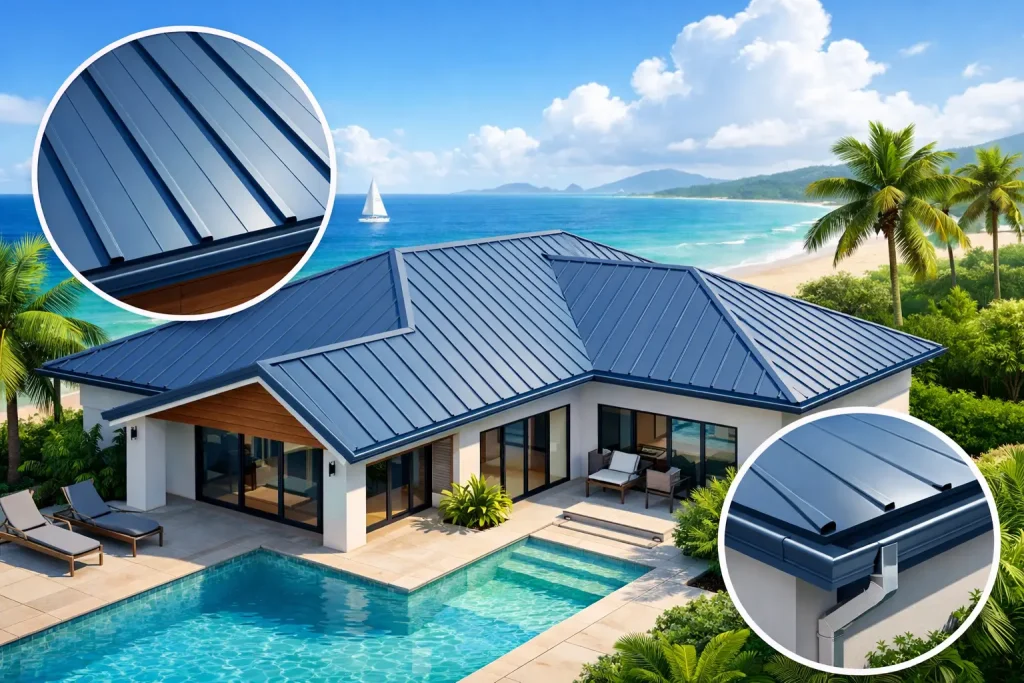
A standing seam metal roof review should start with the problem Gulf Coast property owners know too well: a roof can look fine on a calm morning and become the weak point of the building after driving rain, high wind, or a named storm. Standing seam metal is one of the strongest long-term roofing choices available, but it is not a one-size-fits-all answer. The material, panel design, roof deck condition, and installation quality all matter.
For homeowners and commercial owners in South Mississippi, standing seam roofing can deliver serious waterproofing value, cleaner curb appeal, and a much longer service life than many conventional roof systems. It also carries a higher upfront price. The right decision comes down to your building, your budget, and whether you want to solve roofing problems for the next decade or for much longer.
What Is a Standing Seam Metal Roof?
Standing seam is a metal roofing system made of long panels that run from the ridge of the roof down to the eaves. The panels lock together at raised vertical seams, which is where the name comes from. Most systems use concealed clips or fasteners beneath the panels rather than exposed screws through the face of the roof.
That design is a major advantage in a wet, storm-prone climate. Exposed fasteners can loosen, back out, or allow water intrusion as roofing materials expand and contract. A properly installed standing seam system keeps most fastening points protected under the panels and moves water down the roof in clean channels.
The panels are commonly made from painted steel or aluminum. Galvalume steel is a popular choice because it offers strength and corrosion resistance at a more accessible price point. Aluminum costs more, but it is often worth considering close to saltwater because it does not rust like steel can if the coating is damaged.
Standing Seam Metal Roof Review: The Biggest Benefits
The biggest reason property owners choose standing seam metal is durability. A quality system installed over a sound roof structure can often last 40 to 60 years, and sometimes longer with proper maintenance. That is a major step up from a typical asphalt shingle roof, which may need replacement much sooner under Gulf Coast sun, rain, wind, and debris.
Water management is another strong point. The raised seams and continuous panel design give rain fewer places to work its way into the roof. This does not mean standing seam roofs are leak-proof. Flashings, penetrations, valleys, transitions, and edge details still need expert attention. But when the system is properly designed, it provides excellent protection against wind-driven rain.
Standing seam metal also performs well in high winds when it is engineered and installed correctly. Panel width, clip spacing, decking, fastening patterns, and perimeter details all affect wind resistance. A low-cost installer who cuts corners can turn a premium material into an expensive disappointment. The roof needs to be matched to the building and local weather exposure, not simply ordered by color.
Energy performance can be another benefit. Light-colored or reflective metal finishes can reduce heat absorption and help lower attic temperatures. That can ease the load on air conditioning during Mississippi summers, especially when the roof assembly also includes proper attic insulation and ventilation. The savings vary by home, insulation level, roof color, and HVAC efficiency, so it is better to view energy savings as a valuable bonus rather than the only reason to buy metal.
There is also the appearance factor. Standing seam has clean lines that work well on coastal homes, modern builds, farm-style homes, churches, offices, and retail properties. It can give an aging property a sharp, upgraded look without relying on a heavily textured roofing surface.
The Trade-Offs Homeowners Should Know
A fair review needs to address the downsides. The first is cost. Standing seam metal roofing usually costs more upfront than architectural shingles. The difference can be substantial depending on roof size, pitch, panel material, tear-off needs, access, trim details, and the condition of the existing deck.
That higher starting price makes the most sense when you plan to stay in the property, want a long-term roofing solution, or own a commercial building where disruption from recurring replacements is costly. If you are selling soon or need the lowest immediate cost, a quality shingle roof may be the more practical choice.
Metal roofs can also be noisier during heavy rain if installed over an open framing arrangement without the right underlayment and insulation. On a typical residential reroof installed over solid decking with appropriate materials, the sound difference indoors is usually modest. Still, it is worth discussing if noise is a concern for a porch roof, metal building, or commercial space with exposed structure.
Oil canning is another issue to understand. This is a visible waviness in flat metal panels that can happen because of expansion, handling, deck variations, or the nature of wide metal sheets. It is usually cosmetic, not a failure. Selecting the right panel profile, material thickness, and installer can reduce its appearance, but no contractor should promise perfectly flat metal in every lighting condition.
Finally, repairs require a contractor familiar with metal systems. A standing seam roof is not something to patch with random sealant and hope for the best. Improper repairs can trap water, damage coatings, or interfere with panel movement.
Why Gulf Coast Installation Details Matter
On the Gulf Coast, the details around the panels are as important as the panels themselves. Salt air, intense UV exposure, humid conditions, tropical downpours, and hurricane-season winds create demands that a basic installation may not handle well.
A qualified contractor should inspect the roof deck for rot or soft spots before installation. Metal panels need a stable, properly prepared surface. Underlayment selection matters as well. The right high-temperature underlayment helps protect the deck and supports long-term performance beneath the metal.
Roof penetrations deserve special attention. Pipe boots, chimneys, skylights, HVAC curbs, and vent assemblies are common leak points on every roof type. Standing seam systems need purpose-built flashing details that allow water to shed correctly while accounting for the natural movement of metal as temperatures change.
Coastal properties should also discuss material selection. Aluminum may be a smart investment for buildings with frequent salt exposure, while quality coated steel can be an excellent value farther inland. The finish matters, too. A premium painted finish helps protect the roof and keeps its color looking better over time.
Is Standing Seam Right for Every Roof?
No. Roof geometry can affect the value of a standing seam system. Simple gable roofs are usually efficient for long metal panels and produce less waste. Roofs with many valleys, dormers, dead valleys, chimneys, and complicated transitions require more cutting, flashing, labor, and material. Metal can still work beautifully on these roofs, but the price rises and installation expertise becomes even more critical.
For a low-slope commercial roof, standing seam may be appropriate in certain designs, but it is not automatically the best choice. A commercial flat or low-slope building may benefit more from a professionally installed roof coating, single-ply system, or another waterproofing solution. The goal is not to sell the same roof to every customer. The goal is to stop leaks and protect the property with the system that fits its structure.
If your existing roof has isolated issues rather than widespread failure, repair or restoration may make more financial sense. If the roof is deteriorated, leaking in multiple areas, or nearing the end of its useful life, a full replacement can prevent repeated repair bills and interior damage.
What to Ask Before You Sign a Contract
Before choosing a standing seam roof, ask what panel material and thickness will be used, how the panels will be attached, and what underlayment is included. Ask how the contractor handles valleys, wall flashing, penetrations, ridge ventilation, and areas exposed to strong wind.
You should also ask about manufacturer coverage and workmanship warranty terms. Warranties are valuable, but they do not replace correct installation. Read what is covered, how long coverage lasts, and what maintenance is expected from the property owner.
A detailed estimate should explain whether old roofing will be removed, whether decking repairs are included if needed, and how landscaping, siding, gutters, and surrounding areas will be protected during the project. Clear scope prevents surprises once work begins.
A Smart Long-Term Roofing Investment
Standing seam metal is a premium roof system, not just a different-looking roof. When it is installed with the right materials and waterproofing details, it can provide decades of dependable service, strong storm performance, and a cleaner look for your home or commercial property.
For South Mississippi property owners weighing the cost against the long-term return, an on-site inspection is the best next step. Expert Roofing can evaluate your roof condition, explain whether standing seam, shingles, coatings, or targeted repair makes the most sense, and provide a free estimate with financing options. A good roof decision starts with an honest look at what your building needs before the next hard rain tests it.