
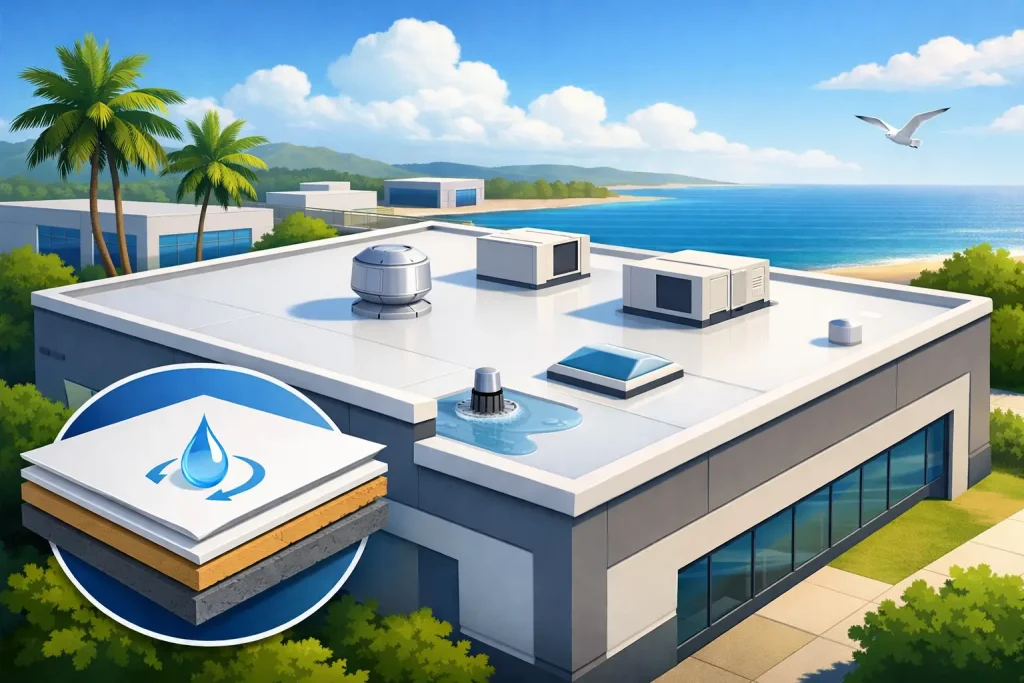
A flat roof that looks fine from the ground can still be one hard rain away from a costly interior leak. This TPO roofing system review gives South Mississippi property owners a straight answer on where TPO performs well, where it can fall short, and what has to happen during installation for the system to protect your building.
TPO is one of the most common single-ply membranes used on commercial low-slope roofs. It is also used on certain residential additions, patio covers, multifamily buildings, and other structures with flat or nearly flat roof sections. When the membrane is properly specified, attached, and detailed around drains, walls, penetrations, and edges, it can provide dependable waterproofing and help control summer heat gain.
What a TPO Roofing System Is
TPO stands for thermoplastic polyolefin. In practical terms, it is a flexible roofing membrane, usually white, that is installed in wide sheets across a low-slope roof. The seams are heat-welded together rather than simply glued or taped. A trained crew uses hot-air equipment to fuse adjacent sheets into a continuous, watertight surface.
That welded seam is a major reason TPO is popular. On a large roof, there will always be seams. Heat welding creates a strong connection that, when completed correctly, can hold up well against wind-driven rain and standing water better than many older seam methods.
A complete TPO system is more than the white membrane. Depending on the roof deck and building needs, it may include insulation, a cover board, fasteners or adhesive, edge metal, flashing, drains, and termination details. The membrane gets the attention, but those details often decide whether a roof remains dry during a Gulf Coast storm.
TPO Roofing System Review: The Main Benefits
For many commercial owners and facility managers, the biggest benefit is heat reflection. White TPO reflects a large amount of sunlight, which can reduce roof-surface temperatures compared with dark built-up roofing or aged modified bitumen. That does not guarantee a specific utility-bill reduction, but it can lessen heat transfer into the building when insulation and the rest of the roof assembly are in good shape.
TPO also offers a clean, modern roof surface with fewer seams than many traditional flat-roof systems. Its flexibility helps it accommodate normal building movement, while welded seams provide a reliable defense against water intrusion. The material resists ultraviolet exposure and is designed for the temperature swings that can punish exposed roof surfaces.
Installation can be efficient on wide-open roof areas. Mechanically attached systems are often a practical choice for commercial buildings, while fully adhered assemblies may be selected where wind design, appearance, or building conditions call for them. A professional contractor should recommend the attachment method based on the roof deck, insulation plan, local code requirements, and expected wind loads, not simply on what is fastest.
TPO can also be a strong choice for a roof restoration or replacement plan because it works well with tapered insulation. If a roof has recurring ponding water because it lacks proper slope, adding a tapered insulation design beneath the membrane can direct water toward drains or scuppers. That correction costs more up front, but it may prevent years of avoidable trouble.
Where TPO Has Limits
No roofing material fixes a bad roof design or poor workmanship. TPO is not a magic cover for wet insulation, rotted decking, weak roof edges, clogged drains, or flashing that has already failed. Before installing a new membrane, the contractor needs to determine what is below the existing roof and whether a tear-off, repair, or recover is appropriate.
Ponding water deserves special attention. A quality TPO membrane can tolerate temporary water exposure, but water that remains on the roof for days or weeks points to a drainage issue. Ponding can collect debris, increase the chance of surface damage, stress roof details, and make it harder to spot developing leaks. The practical answer is to improve drainage where possible, then maintain it.
TPO quality and formulation can vary by manufacturer and product line. Thickness matters as well. Common options include 45-mil, 60-mil, and 80-mil membranes. A thinner membrane may fit a tight budget on a low-risk application, but a thicker system usually provides more puncture resistance and a better margin for roofs with regular foot traffic, rooftop equipment, or demanding weather exposure.
The roof also needs protection from careless service work. HVAC technicians, electricians, and other trades can damage a membrane by dropping tools, dragging equipment, or walking repeatedly in the same path. Walk pads near units and designated service routes are a smart investment on buildings that require frequent rooftop access.
What Matters Most on the Mississippi Coast
Along the Gulf Coast, a flat roof must do more than handle heat. It has to stand up to driving rain, humid conditions, hurricane-season wind, and sudden storm damage. That makes the perimeter and penetration details just as important as the field membrane.
A proper TPO installation should include secure edge metal, correctly designed fastening patterns, carefully welded seams, and flashing around every pipe, curb, wall, drain, and transition. Wind can get underneath a poorly secured edge and turn a small detail failure into major membrane loss. There is no shortcut around wind-uplift requirements.
Building owners should also ask how the roof will transition around HVAC curbs, skylights, parapet walls, and drainage points. These are common leak locations because they involve changes in direction, height, or material. A proposal that only describes the membrane thickness without explaining the full system leaves out the work that protects the building.
For older commercial roofs, moisture testing may be worthwhile before deciding between a recover and a complete replacement. Installing new TPO over saturated insulation can trap a problem under the new roof. In other cases, a roof may be dry enough and structurally sound enough for a recover system, saving time and disposal costs. The right answer depends on conditions, not a one-size-fits-all sales pitch.
Cost, Warranty, and Long-Term Value
TPO roofing costs vary widely based on square footage, membrane thickness, insulation needs, tear-off requirements, deck repairs, roof access, drainage corrections, and flashing complexity. A simple open roof is not priced like a hotel roof crowded with equipment and penetrations.
The lowest bid can become expensive if it leaves out necessary repairs, uses a lighter system than the building needs, or skips the details required by the manufacturer. Compare proposals line by line. Confirm whether insulation is included, whether wet materials will be removed, how the edges will be secured, and what warranty is being offered.
A manufacturer warranty can be valuable, but only if the system is installed according to that manufacturer’s requirements. Workmanship coverage matters too. Ask who will inspect the roof, who handles a service issue, and whether the contractor has experience with commercial waterproofing rather than only residential shingles.
Expert Roofing helps property owners across South Mississippi evaluate flat-roof problems with practical options, including TPO replacement, repairs, coatings, and waterproofing solutions. Sometimes a full membrane replacement is the right call. Other times, a repair or coating system may extend the life of a roof that is still structurally sound. An honest inspection should tell you which path makes financial sense.
Maintenance Keeps a TPO Roof Working
TPO is low-maintenance, not no-maintenance. Schedule inspections at least twice a year and after significant storms. The goal is to catch loose edge metal, punctures, open flashings, debris buildup, and drainage problems before water reaches insulation or the building interior.
Keep drains, scuppers, gutters, and downspouts clear. Trim back branches that rub against the roof or drop heavy debris. If a leak appears, do not wait for the next maintenance cycle. Water can travel beneath a membrane and show up far from the actual entry point, so prompt leak investigation protects the roof assembly and the rooms below.
A TPO roof is a strong choice when it is designed for the building, installed by an experienced crew, and maintained with the same attention given to any major property asset. If your low-slope roof is leaking, ponding water, or nearing the end of its service life, a professional inspection and free estimate can give you a clear plan before the next Gulf Coast storm tests it.