
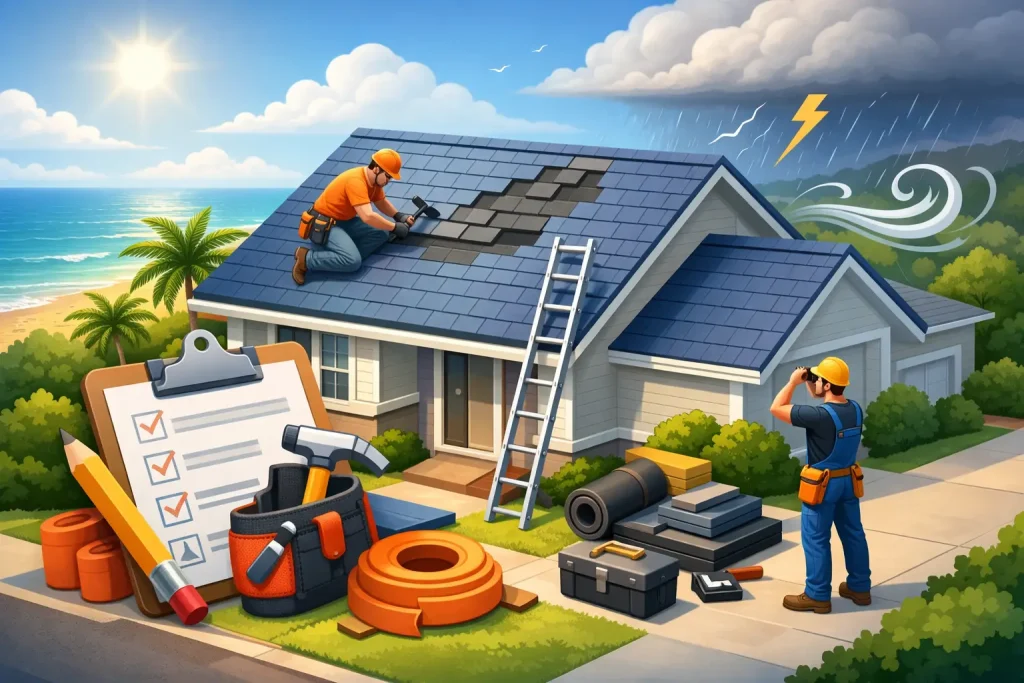
A ceiling stain after a hard Biloxi downpour is not just a paint problem. By the time water shows up inside, it may have already traveled beneath shingles, through decking, or around a vent pipe. This residential roof repair checklist helps Gulf Coast homeowners identify what deserves attention now, what can be monitored, and when it is time to call a qualified roofing contractor.
South Mississippi roofs take a beating from heavy rain, wind, humidity, salt air near the coast, and long stretches of heat. A small defect can turn into wet insulation, rotted wood, mold growth, and a much larger repair bill if it is left alone. The goal is not to diagnose every issue from the ground. It is to recognize warning signs early and make a clear plan.
Start With a Safe Ground-Level Inspection
Do not climb onto a roof because you see one suspicious shingle. Wet surfaces, steep slopes, soft decking, and loose granules create real fall hazards. Start from the ground with binoculars, then check accessible areas such as the attic, gutters, and the exterior walls.
Walk around the home and look at the roof from more than one angle. You are watching for changes in shape, missing material, or anything that looks out of line. A roof should look flat and consistent where it is designed to be flat, with straight ridges and clean edges.
Look for these visible conditions:
- Missing, cracked, curled, lifted, or blown-off shingles
- Dark patches, exposed nail heads, or bare spots where granules are gone
- Sagging areas along the roofline or between rafters
- Damaged ridge caps, roof edges, drip edge, or flashing
- Tree limbs rubbing the roof or hanging directly over it
- Loose, bent, or separated gutters and downspouts
A few loose granules after a new roof installation can be normal. Heavy granule buildup in gutters or at downspout exits is different. On an older shingle roof, it often signals that the protective surface is wearing away. That does not always mean full replacement is required, but it does mean the roof needs a professional evaluation.
Check the Attic Before the Ceiling Shows Damage
The attic often reveals a leak before the living space does. Bring a flashlight and inspect during daylight hours, preferably soon after a strong rain. Never step between the ceiling joists, and do not disturb insulation if you are unsure where you are walking.
Look for water stains on rafters, roof decking, or insulation. Fresh moisture may look darker than old staining, and it can feel damp or leave a musty smell. Also watch for daylight coming through roof penetrations, loose fasteners, or gaps around vents and chimneys.
Condensation can look similar to a roof leak, especially in poorly ventilated attics. If moisture is widespread rather than concentrated beneath one area of the roof, the problem may involve attic ventilation or insulation. Gulf Coast humidity makes this distinction especially important. A contractor should inspect both the roofing system and the ventilation setup before recommending a repair.
Your Residential Roof Repair Checklist After a Storm
Storm checks should happen as soon as conditions are safe, even if you do not see water indoors. Wind damage can break seals beneath shingles without tearing them completely off. Hail can bruise shingles, dent metal components, and shorten a roof’s service life in ways that are easy to miss from the yard.
After severe weather, inspect the property for fallen branches, damaged soffit or fascia, displaced gutter sections, and debris piled in valleys. Take clear photos from the ground of any visible damage and note the date of the storm. This documentation can be useful if you need to discuss a claim with your insurance carrier.
Inside, check upper-floor ceilings, around skylights, and near exterior walls. Pay attention to bubbling paint, soft drywall, new stains, or drips around light fixtures. If water is close to electrical wiring or a fixture, turn off power to that area if it can be done safely and call for help right away.
An emergency tarp may be necessary when a storm leaves an opening in the roof. Tarping is a temporary measure that limits further water intrusion. It is not a substitute for correcting damaged decking, flashing, shingles, or underlayment underneath.
Inspect the Places Where Roof Leaks Usually Begin
Most leaks do not start in the middle of a shingle field. They start where materials meet, turn, or penetrate the roof. Flashing around chimneys, plumbing vents, wall transitions, skylights, dormers, and valleys needs close attention because these areas direct water away from vulnerable openings.
From the ground, look for rusted metal, lifted flashing edges, cracked sealant, or loose boots around plumbing vents. A rubber vent boot may fail years before the surrounding shingles reach the end of their life. Replacing that component early can prevent damage to the deck and interior.
Valleys are another high-priority area. They carry a large volume of water during a Gulf Coast rainstorm, and leaves or pine needles can trap moisture there. Do not scrape a valley with a shovel or pressure wash the roof. Both can remove protective granules and create more damage. A careful cleaning and inspection is safer when handled by a roofing professional.
Do Not Forget Gutters, Fascia, and Drainage
A roof repair plan is incomplete if rainwater has nowhere to go. Clogged gutters can force water beneath roof edges, stain siding, rot fascia boards, and create overflow near the foundation. Downspouts should carry water away from the home, not dump it against the wall.
Check gutters for standing water, visible plant growth, loose hangers, and seams that drip. Look at the fascia behind the gutters for peeling paint, soft wood, or dark rot. These conditions may be caused by failed gutters, but they can also point to water getting behind the roof edge.
If your home has frequent overflow during heavy rain, bigger gutters or improved downspout placement may be part of the solution. It depends on roof size, roof pitch, tree cover, and how water moves across the property. Repairing shingles without fixing the drainage issue may only delay the next problem.
Decide Whether Repair, Restoration, or Replacement Fits
Not every aging roof needs to be torn off. A targeted repair can be the smart, affordable choice when damage is limited to a small area and the rest of the roof is in good condition. Common repairs include replacing wind-damaged shingles, sealing or replacing flashing, correcting vent pipe boots, repairing decking, and fixing roof-edge details.
A restoration option may make sense for certain low-slope or flat roof systems that are weathered but still structurally sound. Modern roof coatings and waterproofing systems can help seal vulnerable surfaces, reflect heat, and extend service life when the existing roof qualifies. Coatings are not a cure for saturated insulation, major structural decay, or a roof that has failed across large areas. The roof must be inspected first.
Replacement becomes more practical when repairs are piling up, shingles are broadly brittle or losing granules, leaks appear in several locations, or the roof is near the end of its expected life. A good contractor should explain the condition plainly and show you why a repair is sufficient or why a larger project is justified.
Questions to Ask Before Approving a Roof Repair
A low price is not always a low-cost repair. If the contractor only addresses the visible symptom and skips the source of the leak, you may pay twice. Ask what caused the problem, what materials will be used, whether damaged decking will be checked, and how the work is warranted.
You should also ask whether the estimate includes flashing, underlayment, cleanup, and protection for landscaping and gutters. If storm damage is involved, ask for photo documentation and a written scope of work. Clear answers matter more than vague promises.
Expert Roofing helps homeowners across South Mississippi with leak repairs, emergency tarping, shingle work, roof replacement, and waterproofing solutions for problem roofs. Free estimates and financing options can make it easier to act before a minor issue becomes interior damage.
A roof does not need to be leaking through the ceiling to need attention. If your checklist turns up missing shingles, attic moisture, failing flashing, or storm damage, schedule an inspection while the repair is still manageable. Acting early protects your home, your budget, and the people living under your roof.