
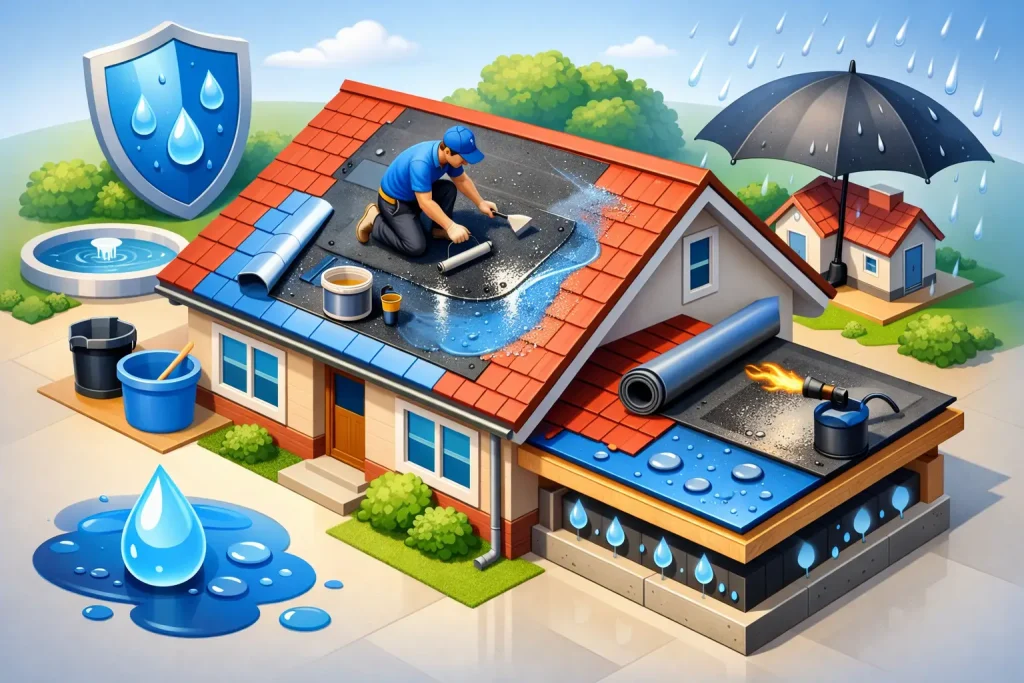
A roof usually starts talking before it starts leaking into a bucket. You may see a dark ceiling spot after a hard rain, find granules in the gutter, notice lifted shingles, or smell damp attic air that was not there last season. This homeowner guide to roof waterproofing is built for people who want clear answers before a small problem turns into interior damage, mold, or a full roof replacement.
Along the Mississippi Gulf Coast, waterproofing matters more than most homeowners realize. Heat, wind-driven rain, salt air, humidity, and storm season all work against your roof year after year. A roof can still look decent from the driveway and already be vulnerable at the seams, around flashing, or under aging materials. That is why waterproofing is not just about stopping active leaks. It is about protecting the whole system before the next storm tests it.
What roof waterproofing really means
Roof waterproofing is not one single product and it is not a magic coating you roll on every roof. It is the process of keeping water out by strengthening the materials, seams, penetrations, and drainage points that are most likely to fail. Sometimes that means repairing problem areas. Sometimes it means applying a professional roof coating system. In other cases, the right answer is replacement because the existing roof has reached the end of its useful life.
That distinction matters. Homeowners are often sold quick fixes when they really need a full assessment. A coating applied over wet decking, rotten trim, failing flashing, or badly damaged shingles will not solve the real problem. It may hide it for a short time. Good waterproofing starts with diagnosis, not guesswork.
A homeowner guide to roof waterproofing starts with the weak spots
Most leaks do not begin in the middle of a wide-open roof field. They usually start where materials meet, move, or age at different rates. Chimneys, pipe boots, skylights, wall transitions, roof valleys, exposed fasteners, ridge caps, and low-slope sections are common trouble areas. So are gutters that back up and push water where it does not belong.
On older homes, flashing is often the first point of failure. On newer roofs, storm damage and installation shortcuts can show up sooner than expected. If your roof has already been patched several times, those repair areas deserve a close look too. Layered fixes can create new paths for water if they are not done correctly.
For Gulf Coast homes, wind-driven rain changes the equation. Water does not always move straight down. During storms, it can be pushed sideways and upward into vulnerable edges and joints. That is one reason a roof may leak only during certain storms even if it seems fine during lighter rain.
When repair is enough and when it is not
A lot depends on the roof type, age, and condition. If the issue is isolated, such as damaged flashing or a small section of storm-torn shingles, a targeted repair may be the smart and affordable move. If your roof is structurally sound and most of the materials still have life left, repair and waterproofing upgrades can buy valuable time.
If the roof is broadly worn out, repair becomes a repeating expense. Curling shingles, widespread granule loss, chronic leaks, soft decking, and multiple prior patches usually point to a bigger problem. The same goes for flat or low-slope roofs with ponding water, seam separation, or failing membranes. In those cases, coating or patchwork may not be the best value.
This is where homeowners need straight talk. The cheapest option today is not always the lowest-cost option over the next five years. Spending money on repeated leak calls can easily catch up to the cost of doing the job right.
Roof coatings can be a strong waterproofing solution
For the right roof, coatings can be one of the best waterproofing tools available. They are especially useful on certain low-slope and commercial-style roof systems, but some residential applications benefit too. A quality coating can seal small vulnerabilities, improve weather resistance, reflect heat, and extend the service life of the existing roof.
The key phrase is for the right roof. Coatings work best when the underlying roof is still a good candidate for restoration. The surface has to be properly cleaned, prepped, and repaired first. Seams, penetrations, flashing details, and damaged sections need attention before the coating goes down. If that prep work is rushed, the coating will not perform the way homeowners expect.
There are trade-offs. A coating is not a cure for structural rot or major moisture trapped below the surface. It also requires the right product for the roof type and climate. On the Gulf Coast, waterproofing systems need to handle heat, heavy rain, and long periods of humidity. Product selection matters, and so does installation quality.
Shingle roofs need waterproofing too
Homeowners often hear waterproofing discussed with flat roofs, but shingle systems need it just as much. On a sloped roof, waterproofing depends on the full assembly working together. Shingles shed water, but underlayment, flashing, starter strips, ridge ventilation, pipe boots, and edge details all help keep water out.
If a shingle roof is aging, you may need more than a visible patch. Missing tabs, brittle shingles, exposed nail heads, and deteriorated seal strips can let water work underneath the surface. In some cases, replacing flashing and damaged sections is enough. In others, the better move is a full replacement with upgraded water barriers in the most leak-prone areas.
That is especially true after storm events. Wind damage is not always dramatic. A shingle can lift, lose its seal, and then lie back down. From the ground, it may not look like much. Over time, though, that area becomes vulnerable to infiltration.
Signs your roof waterproofing is failing
Some warning signs are obvious, and some are easy to dismiss. Interior stains, peeling paint near ceilings, wet insulation, mildew smells, and visible drips are all late-stage signs. Earlier clues include algae streaking tied to moisture retention, sagging gutter lines, cracked sealant around roof penetrations, and recurring leaks in the same area.
Pay attention to your attic after heavy rain. Damp rafters, condensation that seems excessive, or daylight showing near penetrations can point to waterproofing failure. Also watch your energy bills. A roof that is letting in moisture often affects insulation performance, which can make cooling costs rise during South Mississippi summers.
What to expect from a professional inspection
A real roof waterproofing inspection should go beyond a quick glance from the yard. The contractor should examine the roof surface, flashing, penetrations, drainage, visible storm damage, and any signs of moisture intrusion below. For leak-prone roofs, the inspection should connect the interior symptoms to likely exterior causes instead of guessing based on one stain.
You should also expect plain language. A good contractor will tell you whether the issue calls for repair, restoration, coating, or replacement, and why. They should explain what is urgent, what can wait, and where spending more now may save money later. Free estimates help, but the real value is getting a plan that fits the roof you actually have.
Choosing the right waterproofing approach for Gulf Coast homes
On the Gulf Coast, roofs take a beating. That means waterproofing choices should be based on local conditions, not generic advice from colder or drier climates. Materials need to stand up to UV exposure, driving rain, high humidity, and storm pressure. Drainage details matter. So do fasteners, flashing methods, and the quality of sealants used at roof penetrations.
Homeowners should also think about timing. Waiting until the middle of storm season usually limits your options and raises stress. If your roof is already showing signs of wear, getting it inspected before the next round of severe weather gives you more room to make a smart decision.
In Biloxi and across South Mississippi, many homeowners are looking for affordable ways to extend roof life without gambling on shortcuts. That is where an experienced contractor with repair, replacement, and coating knowledge brings real value. If one company only sells replacement, or only sells coatings, you may not get the full picture.
Cost matters, but so does long-term value
Every homeowner has a budget. That is real life. The goal is not to buy the most expensive option. It is to invest in the option that solves the problem and holds up. A cheap patch on a failing roof is frustrating. So is replacing a roof that could have been restored with the right waterproofing system.
Ask about warranty coverage, expected lifespan, maintenance needs, and whether financing is available if the right fix is larger than expected. Those details matter just as much as the initial number on the estimate. Reliable waterproofing should reduce emergency calls, protect insulation and drywall, and help preserve the value of the home.
If your roof has been leaking, aging, or taking storm damage, the best next step is not another temporary fix from the hardware store. It is getting a clear inspection and a straight answer. Waterproofing works best when it is done early, done right, and matched to the roof in front of you.