
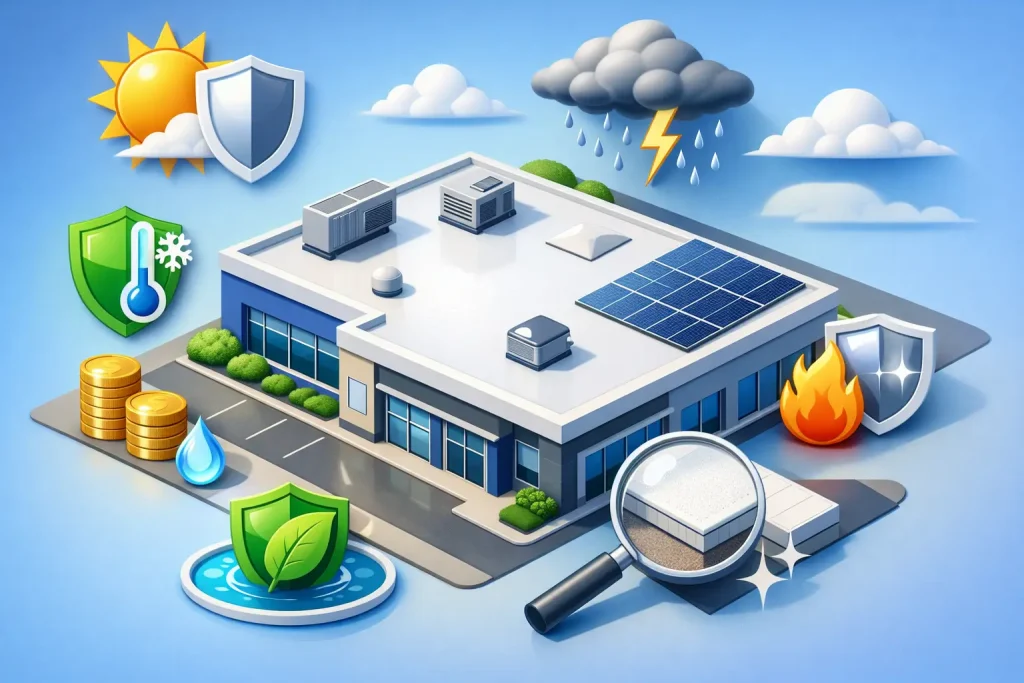
A leaking flat roof can shut down tenants, damage inventory, and turn a manageable maintenance issue into a budget problem fast. That is why property owners looking at the best commercial roof coating benefits are usually not shopping for bells and whistles. They want a practical fix that controls leaks, protects the building, and avoids an expensive tear-off if the roof is still a good candidate for restoration.
For many commercial buildings, a coating system does exactly that. It is not the right answer for every roof, and any contractor telling you otherwise is selling too hard. But when the existing roof has enough structural life left, a commercial roof coating can buy valuable years, lower operating costs, and make future maintenance easier.
Why the best commercial roof coating benefits matter
On the Gulf Coast, commercial roofs take a beating. Heat, UV exposure, heavy rain, standing water, humidity, and storm seasons all work against roofing materials. If you manage a hotel, warehouse, retail center, school, or apartment property in South Mississippi, you already know roof problems rarely stay small for long.
The best commercial roof coating benefits matter because they address the real costs behind roofing trouble. Not just the visible leak, but the lost energy, repeated patch jobs, interior damage, tenant complaints, and shortened roof lifespan that come with an aging system. A properly selected coating helps create a renewed weatherproof surface without the disruption and cost of full replacement.
1. You can extend roof life without a full tear-off
This is the biggest reason many owners consider coatings in the first place. If the roof deck and insulation are still in serviceable condition, a restoration coating can add years of protection to an existing roof system.
That matters because full replacement is expensive, disruptive, and often unnecessary when deterioration is mostly happening at the surface. A coating gives the roof a new top layer that shields it from sun, water, and daily wear. For many commercial properties, that means the owner can delay replacement and put capital toward other needs.
The trade-off is simple. A coating is not a shortcut around major structural problems. If the roof is saturated, badly deteriorated, or failing underneath, coating over it will not fix the real issue. A proper inspection is what determines whether restoration makes financial sense.
2. A quality coating can help stop recurring leaks
Commercial leaks often come from seams, penetrations, flashing details, and worn areas around drains and rooftop equipment. Coating systems are designed to reinforce vulnerable sections and create a more continuous barrier against water intrusion.
This is one of the best commercial roof coating benefits for facilities dealing with repeat service calls. Instead of chasing one leak after another, a coating approach can address the broader weatherproofing surface. That can reduce emergency repairs and the constant cycle of patching the same trouble spots.
It depends on the roof type and the coating used. Some roofs need prep work, seam reinforcement, crack treatment, or ponding-area repairs before coating. Skipping that step is where bad results usually start.
3. Reflective coatings can lower cooling costs
In South Mississippi, heat load is a real operating expense. A dark, aging roof absorbs more solar heat, which puts extra strain on HVAC systems and can raise indoor temperatures in top-floor spaces.
Reflective roof coatings help bounce sunlight away instead of absorbing it. That can reduce roof surface temperatures and improve energy performance, especially on large commercial buildings with broad flat or low-slope roof areas.
Savings vary from building to building. Insulation levels, occupancy patterns, HVAC condition, and roof design all affect the result. Still, for many owners, lower cooling demand is one of the most immediate benefits they notice after a reflective coating is installed.
4. Coatings usually cost less than replacement
Budget pressure is real for commercial owners and managers. Whether you operate one building or a portfolio, every major project competes with something else that needs funding.
A roof coating system often comes in at a lower cost than a full tear-off and replacement, especially when the existing roof can be restored rather than removed. That lower entry cost can make it easier to act before roof issues get worse.
It also helps with planning. Instead of waiting for a roof to fail hard enough to justify a major capital project, owners can use coatings as part of a phased asset strategy. That approach can be especially useful for apartment complexes, schools, office buildings, and retail properties trying to spread costs over time.
Lower upfront cost does not mean lower standards. Surface prep, repair work, material selection, and installation quality all still matter. A cheap coating job can end up costing more if it fails early.
5. Installation is often faster and less disruptive
One reason coatings are attractive for occupied commercial buildings is that they are usually less invasive than replacement. There is less tear-off debris, less noise, and less interruption to day-to-day operations.
That can be a major advantage for hotels, medical offices, schools, restaurants, and retail properties where shutdowns create immediate problems. In many cases, coating work can move forward while the building remains in use, with less impact on tenants, staff, and customers.
Weather still matters, of course. Rain, humidity, and temperature can affect timing and cure conditions. But compared to a full replacement, coatings often provide a smoother path with fewer operational headaches.
6. They can improve waterproofing around problem areas
Commercial roofs rarely fail evenly. Trouble usually shows up around penetrations, transitions, edge details, skylights, drains, and mechanical units. These areas expand, contract, and take more abuse than wide-open field sections.
A well-built coating system can strengthen those details and improve waterproofing performance where the roof needs it most. That is a big deal on older low-slope roofs that have developed weak points but are not yet ready for full replacement.
For Gulf Coast properties, this added moisture defense matters. Wind-driven rain and prolonged humidity can expose every weak detail in a roof system. Better waterproofing helps protect interiors, insulation, and the building envelope from the kind of hidden moisture damage that gets expensive fast.
7. Ongoing maintenance gets easier
An aging commercial roof tends to become a guessing game. One repair gets made, then another leak appears twenty feet away. Maintenance becomes reactive instead of controlled.
A restored coating surface can simplify that picture. It gives contractors and property managers a more uniform roof surface to inspect, maintain, and repair over time. That makes scheduled maintenance more effective and can reduce surprise problems.
This is especially useful for owners managing multiple properties. A roof that is easier to evaluate and maintain is easier to budget for. Instead of waiting for damage reports from tenants, you can build a more predictable maintenance plan around regular inspections and touch-ups.
8. Some coating systems support warranty value and long-term planning
Commercial roofing decisions are not just about today’s leak. They are about lifecycle cost, warranty protection, and how long the roof can stay in service before replacement becomes unavoidable.
Many coating systems can be installed with manufacturer-backed warranty options when the roof qualifies and the system is installed correctly. That adds value for owners who want documented protection and a clearer maintenance path.
It also supports long-term planning. A coated roof can help bridge the gap between immediate repair needs and eventual replacement, giving owners more flexibility in how they time future capital decisions.
When roof coating is the right fit and when it is not
The best commercial roof coating benefits show up when the roof is a good restoration candidate. That usually means the underlying system is still sound, moisture issues are limited or repairable, and the coating is matched to the roof type and building conditions.
It may not be the right fit if the roof has severe trapped moisture, major structural damage, widespread membrane failure, or drainage issues that have gone too far. In those cases, replacement or a larger renovation may be the smarter investment.
That is why inspection comes first. A serious contractor should be looking at the roof’s condition, existing materials, drainage, seams, penetrations, and moisture risk before recommending any coating system. The right answer is not always the cheapest one, but it should make sense for the building and the budget.
Choosing a contractor matters as much as choosing a coating
The coating itself is only part of the result. Surface preparation, repair detail, application rate, and product compatibility have everything to do with how the system performs.
Commercial owners should look for a contractor who understands restoration, not just replacement. That means someone who can explain whether the roof is a candidate, what prep work is needed, how problem areas will be handled, and what kind of warranty or maintenance path makes sense. In South Mississippi, local weather knowledge matters too. Heat, rain, and storm exposure are not side notes here. They shape how a roofing system needs to perform.
If your building has leaks, rising cooling costs, or a roof that looks worn out but may still have life left, a coating system is worth a serious look. The right solution can protect your property, stretch your budget, and give you time to plan wisely instead of reacting under pressure. A free roof inspection is usually the fastest way to find out where your roof stands and what makes the most sense next.