
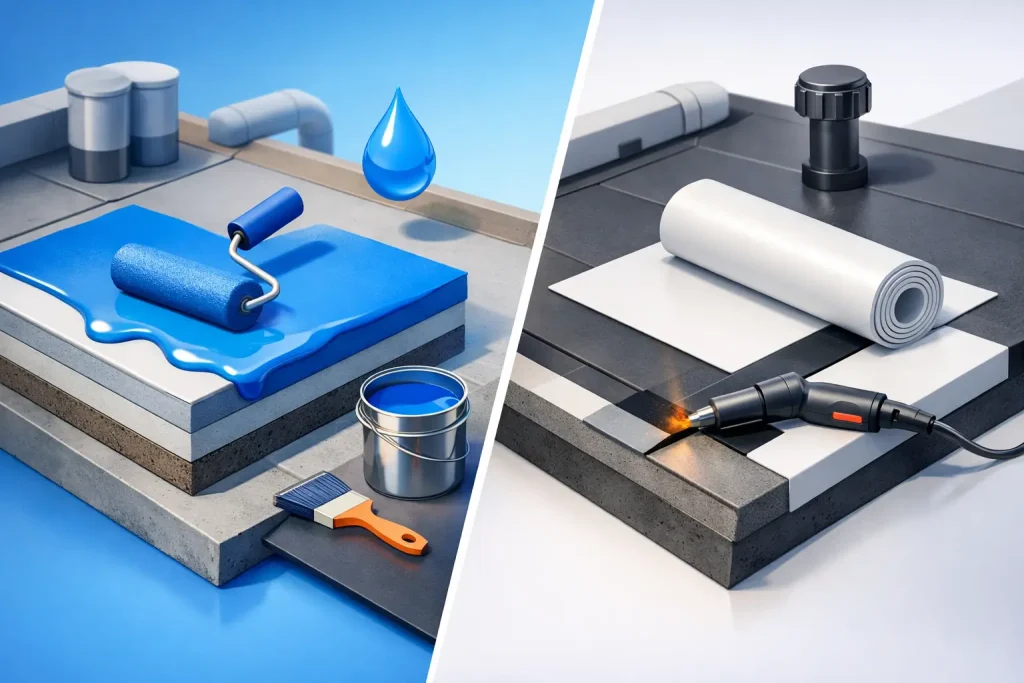
A flat roof that starts leaking after a hard Gulf Coast rain does not always need to be torn off. But it does need the right fix. When comparing coating systems versus membranes, the best choice comes down to the roof’s condition, drainage, existing materials, budget, and how long you need the solution to perform.
For a sound but aging roof, a quality coating can restore waterproofing without the cost and disruption of a full replacement. For a roof with wet insulation, failed seams throughout, or serious structural concerns, a new membrane may be the smarter investment. The wrong answer is applying a quick patch to a roof that has already reached the end of its service life.
What Is a Roof Coating System?
A roof coating system is a liquid-applied waterproofing material installed over an existing roof surface. Once cured, it forms a continuous, flexible barrier across the field of the roof, around penetrations, and over many problem areas where leaks commonly begin.
Common commercial roof coatings include silicone, acrylic, polyurethane, and specialty elastomeric products. They are not all interchangeable. Silicone is often a strong option for roofs exposed to standing water and intense sunlight. Acrylic coatings can provide excellent reflectivity and value when drainage is good. Polyurethane may be selected where the roof sees heavier foot traffic or requires added impact resistance.
The real value is not just the product in the bucket. A coating system depends on surface preparation, repairs, seam treatment, reinforcement where needed, the correct application rate, and dry conditions during installation. If the roof is not cleaned and prepared correctly, even premium material can fail early.
For property owners in South Mississippi, coatings can be especially appealing because they create a bright, reflective surface that reduces heat absorption. That can help lower roof temperatures and ease the workload on air-conditioning equipment during long, humid summers.
What Is a Roofing Membrane?
A roofing membrane is a separate sheet material installed as the primary waterproofing layer. On low-slope commercial roofs, common options include TPO, PVC, EPDM, and modified bitumen. The membrane may be mechanically attached, fully adhered, ballasted, or heat-welded, depending on the system and building design.
Membranes are a proven choice for new construction and full roof replacement. They provide a defined, engineered roofing assembly and can be installed over compatible cover boards or insulation when the roof deck and existing conditions allow it. Seams, flashing details, drains, edges, and penetrations are all part of the system.
A membrane roof is not automatically better than a coating. It is a different approach. It is generally more invasive and more expensive upfront, but it may be necessary when existing roofing materials are saturated, badly deteriorated, improperly attached, or too far gone for restoration.
Coating Systems Versus Membranes: The Major Differences
The most noticeable difference is how each system handles the existing roof. Coatings are restoration-focused. They use the existing roof as a base, provided that base is dry, stable, and repairable. Membranes are replacement-focused. They create a new primary roof surface, often after removing failed materials or rebuilding portions of the assembly.
Cost is another major difference. A properly specified roof coating system often costs less than a full tear-off because it can reduce demolition, disposal, and installation time. It can also minimize disruptions for businesses, tenants, guests, and employees. That matters for hotels, apartment complexes, retail centers, schools, and facilities that cannot afford a long shutdown.
Membranes often carry a higher initial cost because there is more labor and material involved, especially if the project requires tear-off, wet insulation removal, deck repair, new insulation, or extensive perimeter work. Yet that higher cost may be justified if the roof is no longer a suitable candidate for restoration.
Seams are another practical consideration. A liquid-applied coating cures into a monolithic surface across the roof field. There are still transitions, flashing details, and penetrations that require careful work, but there are fewer broad field seams than with sheet roofing. Membranes rely on properly installed seams. Welded seams on TPO or PVC can perform very well, but installation quality remains critical.
When a Coating System Makes Sense
A coating system is often a strong fit when the current roof is aging but structurally sound. It can extend service life while addressing minor leaks, surface wear, small cracks, weathered flashing, and UV damage. It is also useful when a property owner wants a reflective roof surface without the expense of a full replacement.
A commercial roof may be a good coating candidate if inspections show that insulation is dry, the deck is solid, the existing membrane remains attached, and repairs can correct localized defects. The roof should also have workable drainage. While some silicone systems are designed to tolerate ponding water better than other coatings, no roof benefits from chronic drainage problems. Standing water should always prompt a closer look at drains, slope, and structural conditions.
Coatings also make sense when speed matters. An occupied building with active operations may benefit from restoration work that creates less noise, less debris, and less exposure than a full tear-off. For many owners, that translates into a more manageable project and a better lifecycle cost.
That said, coating is not a cover-up. Applying material over trapped moisture, loose roofing, widespread blistering, or failing insulation only hides the problem for a while. A professional inspection should include moisture checks and close evaluation of seams, flashings, drains, edges, and the roof deck before restoration is recommended.
When a New Membrane Is the Better Call
A membrane replacement is usually the better option when roof failure is widespread. If there are numerous leaks, saturated insulation, major seam separation, deteriorated decking, deep ponding, or multiple existing roof layers, restoration may not solve the underlying problem.
Replacement also gives owners a chance to correct issues that coatings cannot fix on their own. That may include adding insulation for energy performance, improving drainage design, replacing damaged deck sections, upgrading edge metal, or rebuilding problem flashing details around rooftop equipment.
For a building that needs a long-term reset, a new membrane system can be the responsible choice. It allows the contractor to inspect what is beneath the old roof rather than guessing. This is particularly important after years of storm exposure, wind-driven rain, and repeated emergency repairs.
The key is to avoid choosing membrane replacement simply because the roof looks old. Age alone does not tell the full story. Some older roofs remain excellent restoration candidates. Others look acceptable from the ground but have hidden moisture and failure below the surface.
Gulf Coast Weather Changes the Decision
Along the Mississippi Gulf Coast, roofs deal with more than normal sun exposure. They face hurricane-season winds, wind-driven rain, high humidity, sudden downpours, salt-laden air near the coast, and long periods of summer heat. Every one of those conditions puts pressure on roof seams, flashing details, drainage areas, and rooftop penetrations.
That is why product selection and installation details matter more than a generic recommendation. A coating system should be selected for the existing roof type, drainage conditions, and expected exposure. A membrane system should be chosen and installed with wind resistance, perimeter securement, flashing, and drainage in mind.
Building use matters too. A small retail building, apartment complex, warehouse, church, or beachfront hotel may have very different priorities. One owner may need the lowest practical upfront cost. Another may need to protect operations, meet facility planning goals, or coordinate work around tenants and customers.
Do Not Decide by Price Alone
The cheapest quote can become the most expensive roof decision if it skips preparation, ignores moisture, uses incompatible materials, or provides no clear scope for repairs. Compare proposals based on what will actually be done: cleaning, repairs, seam work, reinforcement, coating thickness or membrane type, flashing details, drainage corrections, warranty options, and expected maintenance.
Ask whether the contractor has inspected the roof beyond a quick visual walk. A dependable recommendation should explain why your roof can be restored or why replacement is necessary. You deserve a straight answer, not a one-size-fits-all sales pitch.
Expert Roofing helps Gulf Coast property owners evaluate leak-prone and deteriorating roofs with practical options, from targeted repairs and high-tech coating restorations to full membrane replacement. If your roof is showing its age, schedule a free estimate before the next storm turns a manageable issue into interior damage.