
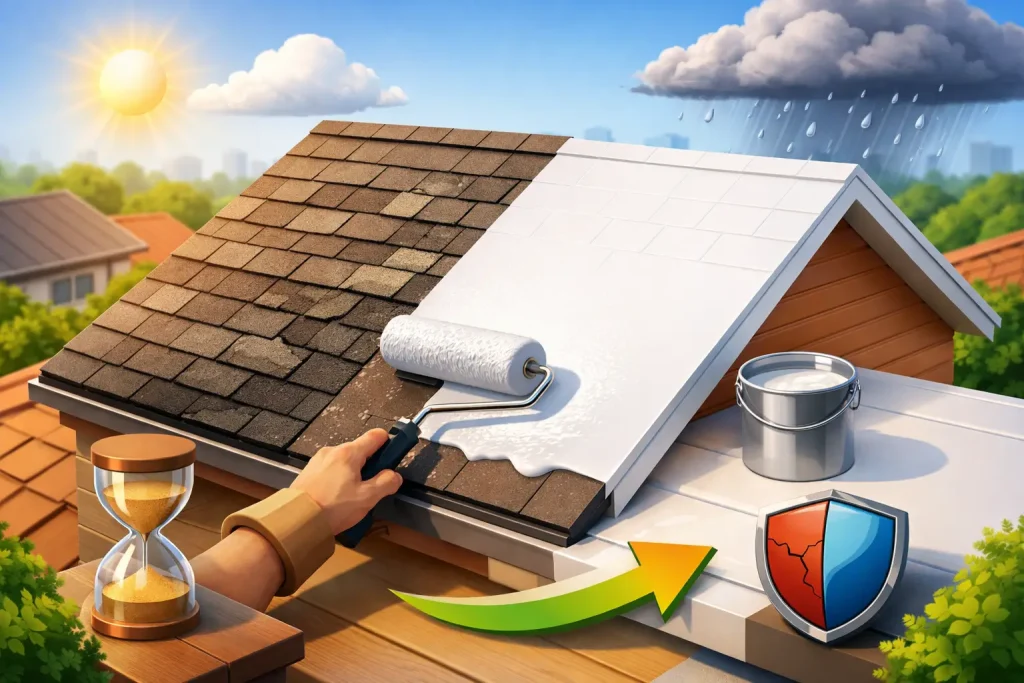
A roof that is leaking around a seam or baking under the Biloxi sun does not always need to be torn off immediately. That is why property owners ask, does roof coating extend lifespan? When the existing roof system is still structurally sound, the right coating can add years of service, improve waterproofing, and put off the cost and disruption of a full replacement.
The key word is right. A roof coating is a restoration system, not a shortcut for a roof that has failed beyond repair. A qualified inspection determines whether coating is the smart investment or whether repairs or replacement should come first.
Does Roof Coating Extend Lifespan on Every Roof?
No. Roof coatings extend the life of roofs that still have a solid deck, manageable moisture issues, and a surface that can be properly prepared. They are especially useful on aging commercial flat roofs, metal roofs with surface rust, modified bitumen systems, and certain low-slope roofing systems that have begun to weather but have not reached the end of their service life.
A professionally installed coating creates a continuous protective membrane across the roof surface. It seals small openings, reinforces vulnerable details, and reduces the daily punishment caused by sun, rain, standing water, and temperature swings. On the Mississippi Gulf Coast, that protection matters. High humidity, driving rain, tropical storms, salt air near the coast, and intense UV exposure can wear down a roof faster than property owners expect.
A coating cannot correct major deck rot, widespread saturated insulation, extensive membrane failure, or structural problems. If water has been trapped below the existing roof for a long time, coating over it may only hide a bigger issue. That is why an honest roofing contractor starts with the condition of the roof, not with a one-size-fits-all sales pitch.
How a Roof Coating Adds Years of Protection
Roof systems age for predictable reasons. UV rays dry and crack surfaces. Water works its way into seams, penetrations, fasteners, and flashing. Heat causes materials to expand, while cooler temperatures make them contract. Over years, that movement can open pathways for leaks.
A quality roof coating helps interrupt that cycle. It provides a new protective layer that shields the existing roof from direct exposure. Elastomeric coatings can flex with normal building movement, helping protect seams and details that would otherwise become weak points. On metal roofs, coating systems can also encapsulate properly treated rust and help seal around fasteners and panel laps.
Reflective white coatings can lower roof surface temperatures substantially on sunny days. That reduces thermal stress on the roof assembly and may help lower cooling demand inside the building. Energy savings vary with insulation levels, building use, HVAC equipment, and the type of roof, so they should not be promised as a fixed number. Still, reducing heat buildup is a real advantage for many Gulf Coast homes, warehouses, offices, retail buildings, and apartment properties.
Most importantly, a coating turns maintenance into an active plan. Instead of waiting for a small leak to become interior damage, owners can restore a serviceable roof and monitor it over time.
When Coating Is a Better Choice Than Replacement
Full replacement is sometimes the only responsible answer. But replacement is not automatically the best answer just because a roof is old. If the roof is dry, stable, and repairable, coating can offer a practical way to extend service life at a lower upfront cost.
Coating is often worth considering when a roof has recurring minor leaks at seams or penetrations, faded or weathered surfaces, early-stage rust on a metal roof, aging flat-roof membranes, or a need for better reflectivity. It can also be a strong option when a business needs to avoid the noise, debris, and interruption that come with a tear-off.
For commercial owners and facility managers, the biggest benefit may be budget control. A coating system can help defer a major capital expense while protecting the building now. For homeowners, it may be a way to restore a low-slope porch roof, metal roof, or other compatible roof area before damage spreads into ceilings, framing, or insulation.
The trade-off is that coating systems require correct preparation and maintenance. They are not maintenance-free. A roof should be inspected after major storms and on a regular schedule, especially in areas exposed to wind-driven rain and hurricane conditions.
Preparation Determines Whether a Coating Lasts
The coating material matters, but surface preparation often determines the result. A roof must be cleaned, dried, repaired, and primed where required before a new coating is applied. Skipping those steps can lead to poor adhesion, peeling, and water finding its way beneath the new surface.
Before coating begins, a professional crew should identify active leaks, damaged flashing, loose fasteners, failed seams, ponding-water areas, and deteriorated substrate. Repairs come first. On metal roofs, rusted areas need to be properly addressed. On flat roofs, seams, penetrations, drains, and transitions need careful attention because those areas see the most movement and water exposure.
Application conditions matter as well. Moisture on the roof, rain in the forecast, excessive dirt, or applying material at the wrong thickness can compromise the system. The best coating job is not simply a bucket of product rolled across the roof. It is a complete process built around the roof type, its current condition, and the manufacturer’s requirements.
What Kind of Lifespan Can You Expect?
There is no honest single number for every roof. The added lifespan depends on the roof’s starting condition, the coating system selected, how well the surface was prepared, local weather exposure, drainage, and continued maintenance.
A properly specified and installed coating system can commonly add many useful years to an existing compatible roof. Some systems can be renewed later with another restoration coating, allowing owners to extend the roof’s service life again without immediately removing the existing assembly. Warranty options may also be available depending on the material, installation method, and project requirements.
What matters most is avoiding the false economy of coating a roof that should be replaced. A lower price is not a savings if the roof is wet underneath or structurally compromised. On the other hand, tearing off a roof that could be restored may cost far more than necessary. An inspection gives you the information to choose with confidence.
Signs It Is Time to Schedule a Roof Inspection
Do not wait until water is dripping from a ceiling. Call for an inspection when you see recurring stains, bubbling or peeling roof surfaces, loose flashing, rust around metal fasteners, cracked seams, pooling water that remains after rain, or rising concern about an aging roof’s ability to handle another storm season.
For commercial properties, inspect roof conditions before budgeting season and again after significant weather events. For homeowners, an inspection is especially useful after wind damage, heavy rainfall, or when a roof starts showing visible wear. Catching problems while they are limited can make the difference between a targeted repair and a larger replacement project.
A roof coating is not magic, but it can be one of the most cost-effective tools available when the roof is a good candidate. Expert Roofing helps South Mississippi property owners evaluate repairs, coating restoration, waterproofing, and replacement options with straightforward recommendations, free estimates, and practical solutions. The best next step is simple: have the roof evaluated while there is still time to protect what you already own.