
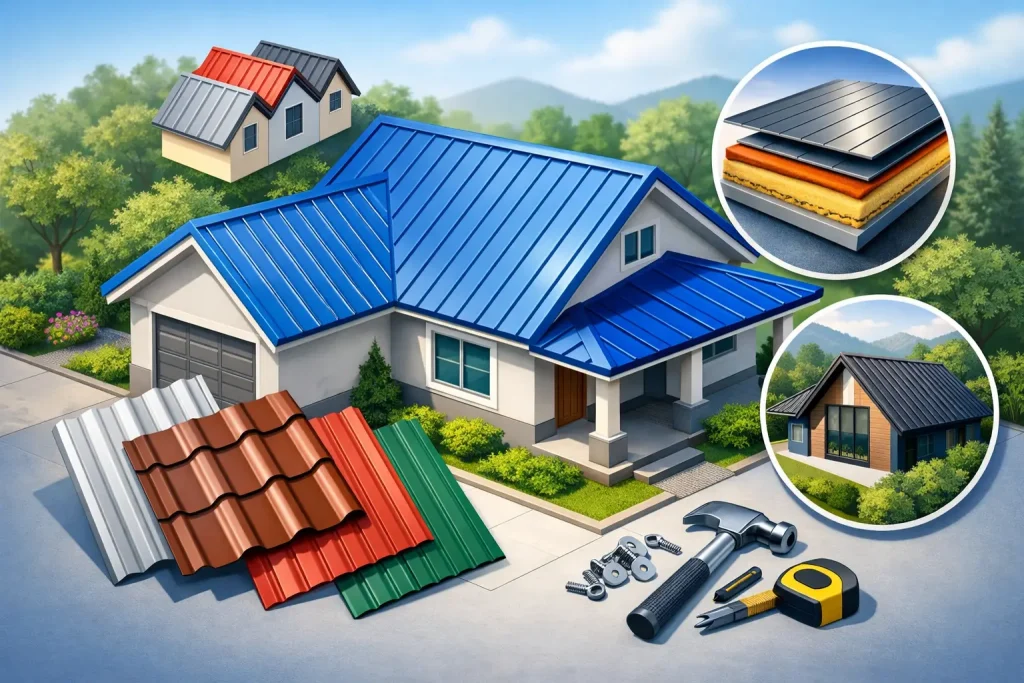
A metal roof can look like a simple upgrade on paper until you start comparing gauges, panel profiles, paint systems, fasteners, warranties, and prices that do not all mean the same thing. If you are trying to figure out how to choose metal roofing, the right answer usually comes down to one thing – matching the system to your building, your budget, and the weather it has to survive year after year.
On the Gulf Coast, that matters more than most places. Heat, salt air, heavy rain, humidity, and storm season put every roofing material to work. A metal roof can be a smart long-term investment, but only if you choose the right type and have it installed correctly.
How to choose metal roofing starts with the building
The first decision is not color or style. It is whether the roof system fits the structure itself. A small home with a steep slope has different needs than a retail center, workshop, church, apartment building, or warehouse. Roof pitch, deck condition, drainage, nearby trees, attic ventilation, and exposure to wind all affect what metal system makes sense.
For many homes, the choice comes down to exposed fastener panels versus standing seam. Exposed fastener metal roofing usually costs less upfront and can be a practical option when budget is a major concern. Standing seam generally costs more, but it gives you a cleaner look, concealed fasteners, and stronger long-term performance in many applications.
For commercial properties, the conversation gets broader. Sometimes metal roofing is the right replacement option. Other times, especially on aging low-slope buildings, a restoration coating or waterproofing system may deliver better value than a full tear-off. That is why the best roofing decision is not always the most expensive system. It is the one that solves the problem you actually have.
Pick the right metal panel, not just the cheapest quote
A low quote can look good until you see what was left out. Metal roofing prices vary because the materials vary. Panel thickness, panel type, finish quality, trim details, underlayment, and labor all affect how the roof performs.
Gauge matters, but it should not be viewed in isolation. Thicker metal can offer better strength, but the panel design, substrate, and installation quality matter too. Two roofs can both be sold as metal roofing while delivering very different wind resistance and lifespan.
Panel profile also matters more than many property owners realize. Standing seam roofs are popular for a reason. They are engineered to handle expansion and contraction better, and the concealed fastener design reduces one common leak point. Exposed fastener systems remain common and can be a solid value, especially on agricultural, utility, or budget-sensitive projects, but they generally require closer attention over time as fasteners and washers age.
If your property is in a storm-prone area, ask direct questions about wind ratings and attachment methods. In South Mississippi, this is not a minor detail. It is one of the main reasons one metal roof holds up better than another.
The finish and coating system matter on the Gulf Coast
When people compare metal roofing, they often focus on the panel and forget the finish. That is a mistake. The paint system and protective coating play a major role in how well the roof resists fading, chalking, corrosion, and sun exposure.
This is especially important near the coast, where salt air and high humidity can shorten the life of lower-grade materials. A roof that looks fine in a brochure may not age the same way in Biloxi, Ocean Springs, or Bay Saint Louis.
Ask what finish is being used and what kind of warranty backs it. A stronger finish may cost more upfront, but it can help the roof keep its appearance and performance longer. If energy efficiency is part of your goal, lighter reflective colors can also help reduce heat gain, which matters during long Mississippi summers.
For some commercial buildings, coatings become part of the selection process even when metal is involved. If you already have an aging metal roof, restoration may be possible depending on its condition. In some cases, a roof coating system can extend service life and address leaks without the cost of a full replacement. That option is often overlooked by owners who assume replacement is the only answer.
Underlayment, trim, and flashing separate good work from problem work
A metal roof is not just panels. It is a full system. Valleys, eaves, ridges, flashing, penetrations, pipe boots, curbs, sealants, and underlayment are where many failures start.
That is why choosing metal roofing also means choosing a contractor who pays attention to details you may never see from the ground. A roof can have premium panels and still leak if the flashing around penetrations is poorly handled or if water movement was not considered properly.
This is one reason cookie-cutter pricing can be risky. Roof geometry matters. Skylights, chimneys, HVAC penetrations, transitions, and low-slope sections all add complexity. The more complicated the roofline, the more important experience becomes.
If a contractor only talks about panel color and square-foot price, you are not getting the full picture. You want to know how the valleys will be built, what underlayment is going under the metal, how penetrations will be flashed, and whether the installation method fits local weather demands.
Warranties are only as good as the installer behind them
A metal roof warranty sounds reassuring, but it needs to be read carefully. Some warranties cover paint finish. Some cover weathertightness under specific conditions. Some are limited in ways most owners do not notice until there is a problem.
The biggest practical question is simple: who is standing behind the work? A strong manufacturer warranty helps, but it does not replace a dependable local contractor with a track record of follow-through. Installation errors are one of the main causes of roofing issues, and those are not always covered the way customers assume.
Ask what warranty applies to labor and workmanship, not just materials. Ask how service calls are handled. Ask whether the contractor is insured and experienced with both residential and commercial projects if your property has special requirements.
That local accountability matters. A contractor who understands Gulf Coast weather, storm exposure, and moisture issues is more likely to recommend a system that performs in the real world, not just on a sales sheet.
Budget matters, but so does lifecycle cost
Everyone wants a fair price. That is reasonable. But the best value in metal roofing is not always the lowest bid.
If one quote is significantly cheaper, there is usually a reason. It may involve thinner panels, a lower-grade finish, less underlayment, fewer trim details, weaker warranty coverage, or shortcuts in labor. Sometimes the cheaper roof is still the right choice for a storage building or a lower-priority structure. Sometimes it is not the right choice for your primary home or income-producing property.
A better way to compare pricing is to ask what you are getting for the money. How long is the roof expected to last? What maintenance should you expect? Is the system better suited for high winds? Will it help with energy savings? Does it improve insurability or curb appeal? For commercial owners, the better question is often cost over time, not cost on day one.
Financing can also change the decision. If a stronger roof system fits the property better and financing is available, it may make more sense than settling for the cheapest option and dealing with avoidable repairs later.
How to choose metal roofing without getting overwhelmed
The easiest way to narrow the field is to focus on five practical questions. What type of building do you have? How much storm exposure does it face? Are you prioritizing lowest upfront cost or best long-term value? Do you want architectural appearance or basic function? And is your current roof a candidate for restoration instead of replacement?
Those answers usually point you toward the right system faster than comparing every product on the market. Homeowners often benefit from a straightforward conversation about appearance, durability, and budget. Commercial owners and facility managers often need to think more about maintenance planning, waterproofing, tenant disruption, and lifecycle cost.
That is where an experienced contractor earns their keep. A good roofing company should be able to explain why one system fits better than another, where a lower-cost option makes sense, and where it creates future headaches.
At Expert Roofing, that is how we approach metal roofing across South Mississippi – with practical recommendations, fair pricing, and options that match the property instead of forcing every customer into the same sale.
If you are considering metal roofing, do not rush to pick a panel from a sample board and call it done. Take the time to choose a full system that fits your building, your weather exposure, and your long-term plans. The right roof should do more than look good on install day. It should keep working when the next hard rain, high wind, and summer heat show up.