
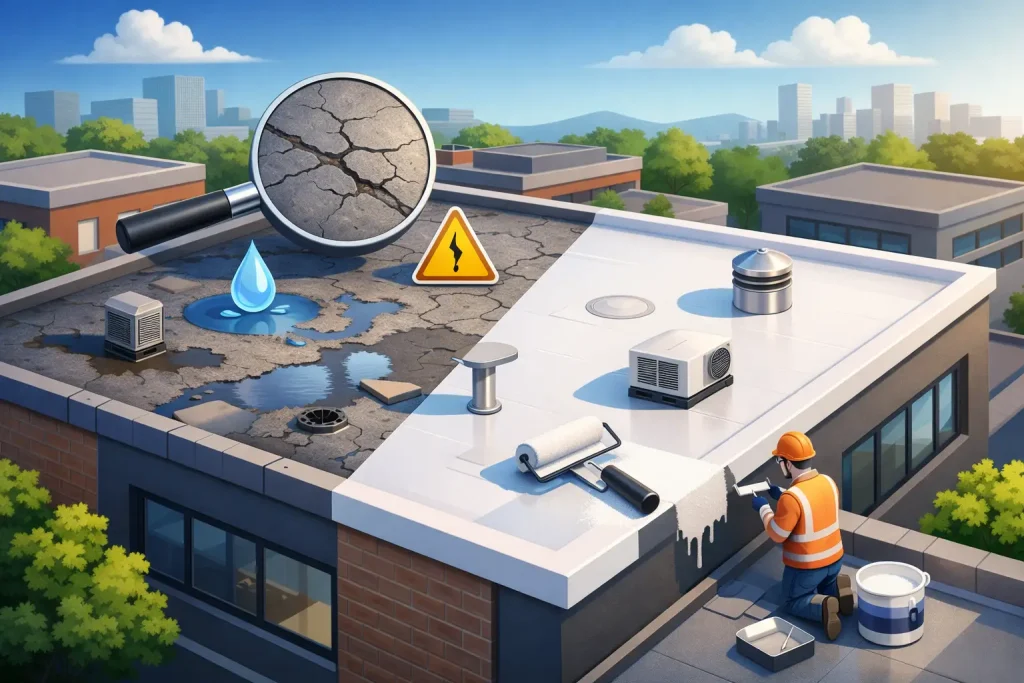
A flat roof rarely fails without giving you a warning first. Ponding water that lingers after rain, new ceiling stains, cracked seams, and a surface that looks chalky or worn are all signs that the roof’s protective layer is losing ground. Property owners often ask, “when should flat roofs be recoated?” The right answer depends on the roof’s condition, its existing system, and how much Gulf Coast weather it has taken.
A quality roof coating can restore waterproofing, improve reflectivity, and delay the cost of full replacement. But coating is not a shortcut for a roof that is saturated, structurally damaged, or already at the end of its usable life. The best time to recoat is before small surface problems become active leaks and expensive interior repairs.
When Should Flat Roofs Be Recoated?
Most commercial flat roofs benefit from a professional inspection every year and after major storms. In South Mississippi, heat, humidity, heavy rain, wind-driven storms, and hurricane exposure can speed up deterioration. A roof that might go several years between maintenance in a mild climate may need attention sooner along the Gulf Coast.
As a general planning rule, many coating systems should be evaluated for recoating every 5 to 10 years. That is not a guaranteed schedule. The proper interval changes based on the coating material, the thickness applied, drainage conditions, rooftop traffic, the type of roof underneath, and whether routine maintenance has been performed.
The key is to recoat while the existing roof membrane is still sound enough to restore. Waiting until water has worked under the membrane, insulation is wet, or seams have failed across large areas can turn a restoration project into a replacement project.
The Warning Signs That It Is Time to Act
A roof does not need to be actively leaking before it needs attention. In fact, the most cost-effective time to schedule a coating evaluation is when the warning signs are visible but localized.
Look for these conditions on a flat roof:
- Cracking, splitting, peeling, or flaking coating across exposed areas
- A chalky surface that rubs off easily or has lost its protective color
- Blisters, bubbles, soft spots, or visible separation in the membrane
- Standing water that remains for more than 48 hours after normal rainfall
- Open seams, failed flashing, damaged penetrations, or loose edge details
- Small interior stains, musty odors, or leaks near rooftop equipment and drains
Some of these issues can be repaired before recoating. For example, a damaged seam around a vent stack may only need localized repair and reinforcement. Widespread cracking or coating loss, however, usually means the roof needs a more complete restoration plan.
Do not assume a white roof is still doing its job just because it looks white from the ground. Coatings gradually wear thinner under sun, rain, and foot traffic. A trained inspection can identify weak areas before they become visible from inside the building.
Why Gulf Coast Roofs Need Closer Attention
Biloxi-area roofs face conditions that are tough on any flat roofing system. Intense sun can break down exposed surfaces. Summer heat causes materials to expand, while heavy rain and humidity test every seam, drain, penetration, and flashing detail. Tropical storms can leave debris, punctures, and drainage problems behind even when there is no obvious major damage.
Ponding water deserves special attention. Flat roofs are built with low slope, not zero slope, so they should move water toward drains or scuppers. When water consistently stays in the same area, it puts extra stress on coatings and membranes. It can also hide deterioration until a leak reaches the building interior.
A recoat may be part of the solution, but drainage must be addressed too. Cleaning drains, correcting blocked scuppers, repairing low spots where practical, and sealing vulnerable details can make a coating system perform far better over time.
Is Recoating Better Than Replacing a Flat Roof?
Sometimes, yes. If the roof is dry, stable, and free of widespread membrane failure, a professionally installed coating system can be a smart way to extend its service life. It can create a continuous waterproof barrier over the roof surface and around critical details, often with less disruption than a tear-off replacement.
Coating restoration can also improve energy performance. Reflective coatings reduce heat absorbed by the roof surface, which may help lower cooling demand in hot weather. That benefit varies by building design, insulation levels, HVAC use, and the condition of the existing roof, but it is a meaningful consideration for many commercial properties.
Replacement is the better call when there is extensive trapped moisture, major storm damage, failing insulation, severe deterioration, or structural concerns. A coating should never be applied over a wet or unstable roof just to postpone a necessary repair. That can trap problems below the surface and lead to larger costs later.
A thorough roof inspection should include more than a quick walk-around. The contractor should assess the membrane, seams, penetrations, flashing, drainage, rooftop equipment areas, and any signs of moisture intrusion. If needed, further testing can help determine whether the roof is a real candidate for restoration.
The Best Season to Recoat a Flat Roof
The best time is when the roof is dry, repairs are complete, and weather conditions allow the coating to cure properly. Many coatings have specific temperature, humidity, and moisture requirements. Applying a product just before a heavy rain or onto a damp surface can compromise adhesion and shorten the life of the work.
Spring and fall often offer workable installation windows, but South Mississippi weather does not always follow a simple calendar. A professional roofing crew plans around the forecast and the product requirements rather than rushing a job because it is a certain month.
Emergency repairs should not wait for ideal weather. If a roof is leaking after a storm, temporary protection and targeted repairs may be needed immediately. Once the roof is secure and dry, a coating assessment can determine the next long-term step.
What Happens Before a Roof Is Recoated?
A lasting coating job begins with preparation. The roof must be cleaned so dirt, oxidation, loose material, and biological growth do not interfere with adhesion. Damaged seams, flashing, penetrations, and previous patches need to be repaired. Areas with cracks or movement may need reinforcing fabric or additional material before the full coating is applied.
The coating itself should be selected for the roof system and the building’s needs. Acrylic, silicone, polyurethane, and other systems each have strengths and limits. Silicone, for example, is often considered where ponding water is a concern, while other systems may be selected for their particular performance characteristics, application needs, or budget. There is no one coating that is right for every roof.
Thickness matters as well. A thin, rushed application may look better for a short time but fail to provide the protection the building needs. A proper scope should define repairs, preparation, material type, coverage, reinforcement areas, and warranty options so the owner knows what is being installed.
Do Not Wait for the First Major Leak
A flat roof leak can travel. Water may enter at one seam, move beneath the membrane or through insulation, and show up in a ceiling far from the original entry point. By the time buckets are needed indoors, the repair may involve more than the roof surface.
That is why proactive inspections are worth the effort for office buildings, retail centers, apartments, hotels, schools, warehouses, and other commercial properties. Homeowners with low-slope additions, patio covers, or flat roof sections should take the same approach. A small maintenance project today can protect finishes, equipment, inventory, and occupied space tomorrow.
If your roof is showing wear, has endured recent storm exposure, or has not been inspected in several years, schedule a professional evaluation before the next leak makes the decision for you. Expert Roofing can assess whether targeted repair, a high-performance coating system, or replacement is the practical solution for your property and budget.