
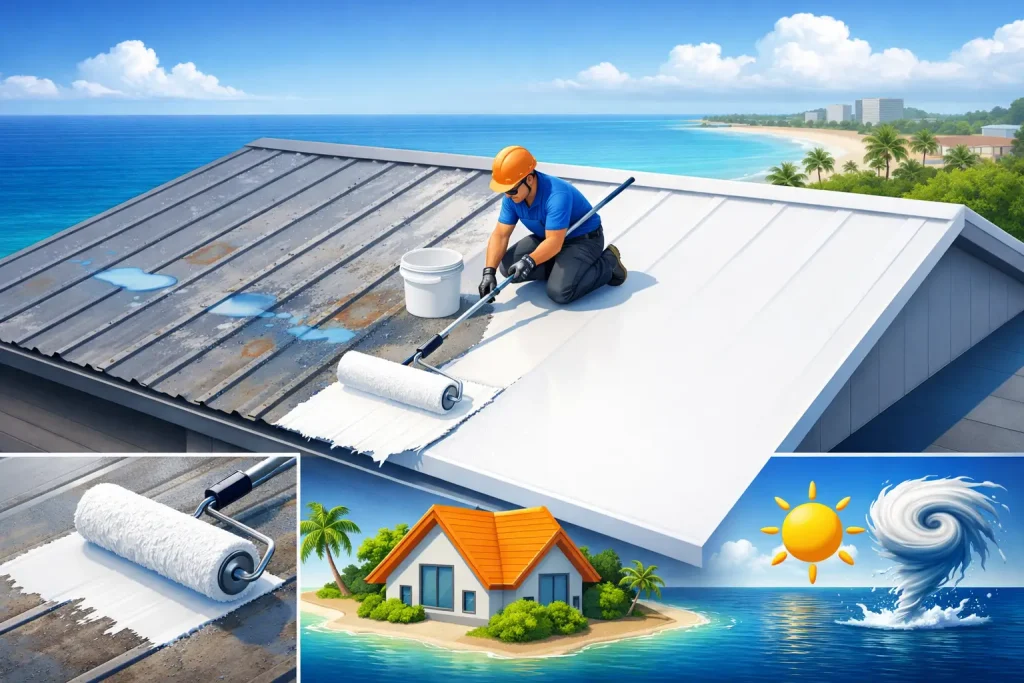
A roof does not have to be completely worn out to cause expensive trouble. On the Gulf Coast, a flat or low-slope roof can look acceptable from the ground while small cracks, failed seams, ponding water, and sun damage are already allowing moisture into the building. This silicone roof coating review gives property owners a straight answer: silicone can be an excellent restoration option, but only when the existing roof is still a sound base for it.
For the right roof, a professionally installed silicone system can stop leaks, reflect heat, and delay the major expense and disruption of a full tear-off. For the wrong roof, coating over saturated insulation, loose materials, or structural damage only hides a problem that will keep growing. The inspection and preparation work matter as much as the coating itself.
What a Silicone Roof Coating Actually Does
Silicone roof coating is a fluid-applied waterproofing membrane. It is rolled or sprayed over a properly prepared low-slope roof, then cures into a continuous, flexible surface. Unlike a roof with many seams and fasteners, a coated roof has a monolithic layer designed to protect the existing system from water intrusion and ultraviolet exposure.
This is not paint. A quality roof coating system includes cleaning, repairs, detail work at penetrations and seams, primer when required, and a specified thickness of coating. The finished surface must be thick enough to perform as designed. Skipping those steps to save money is how a coating job turns into a short-term patch.
Silicone is especially popular on commercial roofs because it remains flexible and handles standing water better than many acrylic coating products. That makes it worth considering for roofs with drainage challenges, a common issue on older shopping centers, apartment buildings, warehouses, hotels, and other large properties across South Mississippi.
Silicone Roof Coating Review: The Real Benefits
The biggest benefit is restoration without immediate replacement. If your roof membrane is aging but still structurally sound, coating may allow you to avoid a disruptive tear-off, reduce landfill waste, and keep the building operating during the work. That can be a major advantage for businesses that cannot afford to close down for roofing work.
Water resistance is another strong point. Silicone forms a durable barrier over properly repaired seams, flashings, and surface cracks. It also performs well under harsh sun exposure, which is no small matter in Biloxi, Ocean Springs, Pascagoula, and other coastal communities where roofs take a beating from heat, humidity, heavy rain, and storm seasons.
A bright white silicone coating can also reflect a significant amount of solar heat. The actual energy savings depend on insulation levels, building use, HVAC equipment, roof color, and local utility costs. Still, reducing heat absorbed through the roof can make upper floors and large open commercial spaces easier and less expensive to cool.
Silicone also provides useful flexibility. Roof materials expand in heat and contract as temperatures change. A properly selected coating system moves with normal roof movement better than brittle patch materials. That helps protect vulnerable areas around drains, curbs, vents, pipes, and equipment supports.
Where Silicone Coating Has Limits
A coating is not a cure for every failing roof. It cannot repair rotten decking, major storm damage, wet insulation throughout the roof system, severe membrane separation, or a roof that has reached the end of its workable life. If water is trapped below the membrane, coating the top may seal in a much bigger problem.
Silicone also gets dirty over time. Its surface can attract dust and airborne grime, which may reduce its bright white appearance and solar reflectivity. That does not automatically mean the coating has failed, but it does mean the roof should be inspected and cleaned as part of a maintenance plan.
Another trade-off is future recoating. Silicone is very difficult for some other materials to adhere to without the right preparation and primer. That is not a reason to avoid silicone, but it is a reason to use a contractor who understands the full system and documents what was installed. Building owners should know the product type, coverage rate, warranty terms, and recommended maintenance schedule before work begins.
Finally, a coating will not fix poor drainage by itself. Silicone tolerates ponding water well, but water that sits on a roof for days can still reveal slope issues, clogged drains, damaged scuppers, and other conditions that deserve correction. The best projects address those problems instead of simply coating around them.
When a Coating Is a Smart Choice
Silicone roof coating is often a practical choice when the roof is leaking in limited areas, the existing membrane remains attached and stable, insulation is mostly dry, and the owner wants to extend service life without taking on a full replacement immediately. It is particularly useful for large low-slope roofs where replacement would interrupt tenants, customers, residents, or daily operations.
It may also be a good fit after a thorough repair scope. A roof with open seams, small punctures, failing flashing, and weathered surfaces can often be restored if each defect is repaired before the coating goes down. The coating should be the final protective layer, not the first response to obvious damage.
For homeowners, silicone coatings are most commonly considered on low-slope additions, porch roofs, patio covers, certain metal roofs, and other areas where water tends to collect. A steep shingle roof is usually not the standard application. In those cases, repair or replacement with the appropriate roofing material is often the better answer.
What Determines the Cost
There is no honest one-price answer for silicone roof coating. Cost depends on roof size, access, roof height, surface condition, number of penetrations, amount of repair work, cleaning requirements, primer needs, drainage problems, and the coating thickness required for the selected warranty.
A clean, accessible roof with minor detail repairs will cost less per square foot than a roof covered in old patching, grease, loose gravel, rust, or multiple layers of failing material. Commercial roofs also need careful planning around HVAC units, skylights, drains, parapet walls, and tenant operations.
The cheapest quote is not always the best value. Ask what preparation is included, how seams and penetrations will be reinforced, whether primer is needed, what dry-film thickness the contractor will install, and what is excluded. A vague coating proposal can leave the owner paying extra later for work that should have been identified at inspection.
The Installation Details That Protect Your Investment
Successful silicone work starts with a close roof inspection. A contractor should identify active leaks, test suspicious areas for trapped moisture when appropriate, inspect drains and flashings, and determine whether the existing roof material is compatible with the proposed coating system.
Next comes preparation. The roof needs to be cleaned thoroughly so the coating can bond. Loose material must be removed, weak areas repaired, and penetrations properly detailed. Depending on the roof surface, a compatible primer may be required to improve adhesion and prevent bleed-through.
Only after those steps should the coating be applied at the manufacturer-required rate. Weather conditions matter. Rain, surface moisture, extreme contamination, and poor curing conditions can compromise the job. A professional crew plans around Gulf Coast weather instead of rushing a coating onto a roof that is not ready.
How Long Does a Silicone-Coated Roof Last?
Service life depends on the roof’s starting condition, coating thickness, foot traffic, maintenance, weather exposure, and installation quality. A coating system is not a forever solution, but it can provide meaningful additional life when maintained correctly. Periodic inspections help catch punctures, storm debris, drainage issues, and damage around mechanical equipment before they become interior leaks.
Owners should also understand the warranty. Manufacturer warranties and contractor workmanship warranties are different. Read what each covers, what maintenance is required, and whether unauthorized roof work can affect coverage. If an HVAC contractor adds equipment or someone cuts through the roof later, the repair needs to be handled correctly to protect the system.
Get a Roof Assessment Before You Decide
The best silicone roof coating review is not based on a bucket label or a low online price. It is based on whether your specific roof is dry, stable, repairable, and a good candidate for restoration. For some Gulf Coast buildings, coating is the affordable, high-performance answer. For others, replacement is the safer long-term investment.
Expert Roofing can inspect low-slope and leak-prone roofs, explain the condition in plain language, and provide a practical recommendation with a free estimate. If a coating can protect your property and save you from an unnecessary tear-off, it should be done right. If the roof needs more than a coating, you deserve to know that before spending a dollar.