
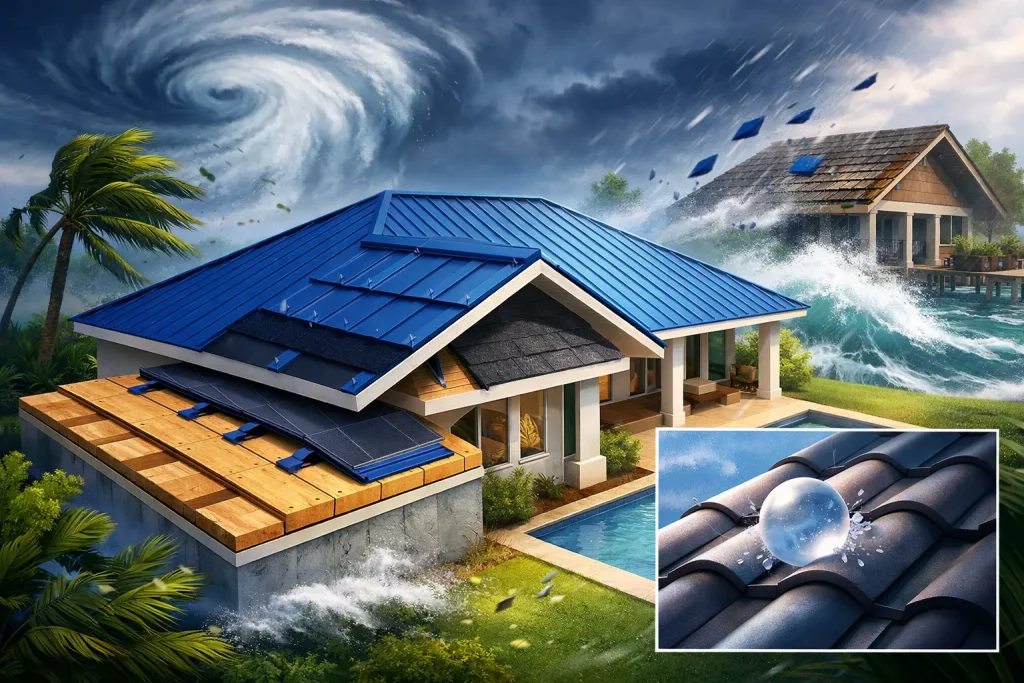
A Gulf Coast roof does not get tested only when a named hurricane makes the news. It takes punishment from wind-driven rain, heat, humidity, sudden thunderstorms, flying debris, and long periods of intense sun. That is why hurricane resistant roofing trends matter to homeowners and commercial property managers across South Mississippi. The goal is not simply to install a roof that looks good on day one. It is to build a roof system that stays attached, sheds water, and can be repaired or maintained when rough weather hits.
The strongest trend is also the most practical: property owners are looking beyond the surface material. A roof is no longer just shingles, metal panels, or a flat membrane. It is a complete assembly of decking, underlayment, fasteners, flashing, ventilation, drainage, and waterproofing details. One weak area can turn a manageable storm into a damaging interior leak.
Hurricane Resistant Roofing Trends That Matter
Storm resistance begins with how every component works together. Better materials help, but a premium roof can still fail early if it is installed with the wrong fastening pattern, poor flashing, or inadequate edge protection. For Gulf Coast properties, workmanship and system design are just as important as the product name on the package.
Wind-rated shingles with upgraded installation
Architectural shingles remain a common choice because they are familiar, attractive, and generally more affordable than metal. The shift is toward shingles with higher wind ratings, stronger adhesive strips, and installation methods designed for local wind exposure. This often means using the manufacturer-approved nail type, nail placement, and number of fasteners per shingle rather than cutting corners to save time.
A high-wind shingle is not a guarantee against every storm. Wind can still lift shingles when decking is soft, nails miss the wood, or the roof edge is exposed. Before replacement, a qualified roofer should inspect the roof deck, replace damaged sections, and address fascia or drip-edge problems that can let wind get underneath the roofing material.
Metal roofing built for long-term exposure
Metal roofing continues to gain ground along the Coast, especially for homeowners who plan to stay in their homes and owners of commercial or agricultural buildings. Properly installed metal panels resist wind well, shed rain quickly, and can provide a long service life. Standing seam systems are particularly popular because their concealed fasteners reduce the number of exposed penetrations in the roof surface.
The trade-off is upfront cost. Metal typically costs more than a standard shingle replacement, and its performance depends heavily on panel attachment, trim details, and flashings around penetrations. A low bid that skips needed decking repairs, uses undersized fasteners, or leaves weak transitions is not a hurricane-ready solution. Metal also needs careful planning around gutters, skylights, chimneys, and additions where roof lines meet.
Better underlayment and secondary water protection
When wind damages the outer roofing layer, the underlayment becomes the backup barrier standing between rain and the building interior. That is why synthetic underlayments and self-adhering waterproofing membranes are becoming more common. These products can offer better tear resistance and water protection than older felt-paper approaches when used correctly.
The right underlayment depends on the roof design and material. A steep-slope shingle roof, a metal roof, and a low-slope commercial roof have different requirements. In vulnerable areas such as eaves, valleys, wall transitions, and around penetrations, extra waterproofing protection can make a real difference. It does not replace the primary roof covering, but it can buy valuable time if a storm causes damage.
Roof coatings for restoration and waterproofing
For flat and low-slope commercial roofs, coatings are one of the most useful hurricane resistant roofing trends. A quality roof coating system can restore a weathered roof surface, seal minor trouble areas, reduce heat absorption, and extend service life without the cost and disruption of a full tear-off in every situation.
Coatings are especially valuable on aging metal roofs and many commercial roof systems with widespread surface wear but no major structural failure. The key is honest evaluation first. A coating is not a cover-up for saturated insulation, severe ponding water, rusted-through metal, loose seams, or widespread membrane failure. Those conditions may require repairs, drainage improvements, or replacement before restoration makes sense.
For the right roof, a coating system can be a cost-conscious way to strengthen waterproofing and build a maintenance plan around the building. This is a major advantage for hotels, apartment communities, schools, retail centers, and industrial facilities that cannot easily shut down operations for a full roof replacement.
The Details That Keep Wind and Water Out
Storm performance is often decided at the edges and openings, not in the middle of the roof field. Wind pressure is strongest around eaves, rakes, ridges, corners, and transitions. These areas need proper metal edging, secure flashing, and fastening that matches the roof system and local conditions.
Flashing around chimneys, pipe boots, vents, skylights, walls, and valleys deserves close attention. A roof can look nearly new from the ground yet leak badly because a pipe boot has cracked or a wall flashing was never properly integrated. On commercial roofs, seams, drains, curbs, scuppers, and rooftop equipment are equally critical. Preventive repairs in these locations are usually far less expensive than repairing wet insulation, damaged ceilings, or mold after a storm.
Attic ventilation also belongs in the conversation. Good ventilation helps manage heat and moisture, which can protect shingles and reduce strain on the building. But ventilation openings must be selected and installed to resist wind-driven rain. More openings are not automatically better. The roof needs a balanced, properly detailed ventilation plan.
What Property Owners Should Ask Before Signing
A hurricane-resistant roof should come with clear answers, not vague promises. Before hiring a contractor, ask what wind-rated system is being installed, how the decking will be inspected, and which underlayment and flashing details are included. Ask whether damaged fascia, rotten wood, or weak roof edges will be identified before the new material goes on.
Commercial owners should also ask about drainage, ponding water, seam repairs, coating compatibility, and planned maintenance after the project is complete. A flat roof is not a set-it-and-forget-it asset. Regular inspections can catch open seams, clogged drains, punctures, and coating wear before the next major weather event finds them.
Price matters, especially when a storm has already strained a household or property budget. Still, comparing estimates only by the total number can be misleading. One proposal may include upgraded underlayment, improved flashing, deck repairs, and warranty-backed materials, while another may leave those items out. Financing can help make a stronger roofing system more manageable without settling for a temporary fix.
Plan Before Hurricane Season, Not After
Waiting until a leak appears during a heavy storm limits the available options. Emergency tarping can protect a damaged property, but it is a short-term measure. A pre-season inspection gives you time to correct loose shingles, deteriorated sealant, rusted flashings, failing pipe boots, clogged gutters, and drainage issues before wind-driven rain gets inside.
For an older roof, ask for a direct assessment of whether repair, restoration, coating, or replacement offers the best value. The answer depends on roof age, material condition, building use, budget, drainage, and future ownership plans. A good contractor should explain the options plainly rather than push every property into the same solution.
Expert Roofing helps Gulf Coast property owners address storm damage, roof leaks, coating restoration, and full replacements with free estimates, practical recommendations, and financing options. Before the next round of severe weather, have your roof inspected and make decisions while you still have time to choose the right fix.