
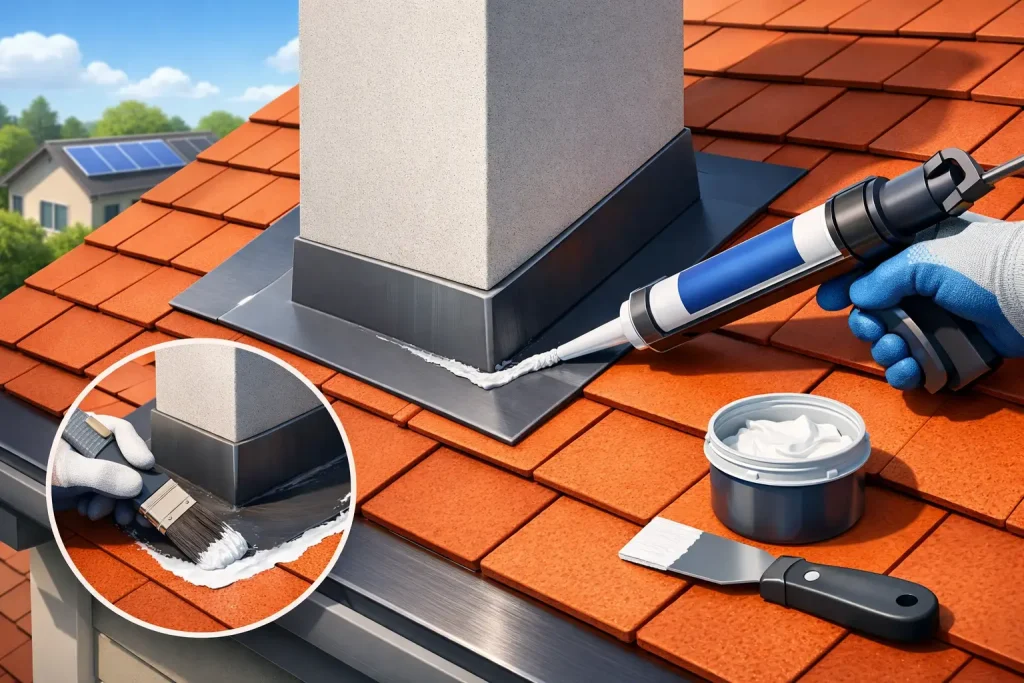
A leak around a chimney, wall, vent pipe, or skylight is rarely just a missing dab of caulk. On the Mississippi Gulf Coast, driving rain can force water beneath failing metal edges and into decking, insulation, ceilings, and walls. Knowing how to seal flashing leaks starts with finding the actual entry point, then repairing the flashing system instead of covering up the visible stain.
Flashing is the metal or membrane material that directs water away from vulnerable roof transitions. When it loosens, rusts, cracks, separates from masonry, or gets buried under failing roof cement, water finds a path inside. A proper repair can be straightforward when the damage is minor. If the surrounding roof is worn out or the flashing is incorrectly installed, a surface seal alone will not hold for long.
Find the Leak Before You Seal the Flashing
Water does not always appear inside directly below the roof leak. It can run along rafters, roof decking, or wall framing before it reaches a ceiling. That means the brown spot in a bedroom may be several feet away from the failed flashing.
Start from the roof whenever conditions are dry and safe. Look for lifted shingles near roof-to-wall areas, gaps at chimney flashing, cracked sealant around vent stacks, exposed fasteners, rusted metal, and loose counterflashing. Check valleys and roof penetrations closely, because these areas handle concentrated runoff during heavy rain.
Inside the building, inspect the attic for damp insulation, darkened wood, mold growth, or water tracks. A moisture meter can help identify wet materials before visible damage spreads. For commercial flat roofs, look for ponding water, open seams, membrane blisters, and flashing that has pulled away from parapet walls or equipment curbs.
Do not assume that every wet area needs caulk. If water is entering through damaged shingles, a punctured membrane, cracked masonry, or a clogged gutter overflowing behind the fascia, sealing flashing will not solve the root problem.
How to Seal Flashing Leaks the Right Way
The right repair depends on the flashing type, its condition, and the roof material. Aluminum, galvanized steel, copper, lead, rubber boots, modified bitumen, TPO, and other roofing materials require compatible repair products. Using the wrong sealant can cause adhesion failure, corrosion, or a repair that peels away after one hot Gulf Coast summer.
Clean and dry the repair area
Sealant needs a clean, dry surface. Remove leaves, dirt, loose roof cement, flaking coatings, and deteriorated old caulk with a stiff brush or scraper. If the flashing is oily, heavily oxidized, or covered in algae, clean it with a roof-safe product and allow it to dry completely.
Never apply sealant to a wet roof or during active rain. Trapped moisture can weaken the bond and keep the leak active beneath the repair. If storms are moving in and water is entering the property, emergency tarping may be the safer temporary option until permanent repairs can be completed.
Refasten loose flashing first
Flashing that has lifted or pulled away from a wall must be secured before it is sealed. Otherwise, wind and thermal movement will break the new sealant quickly. Use appropriate corrosion-resistant fasteners where the roofing system allows them, and avoid driving fasteners where they create a new water path.
At chimneys and brick walls, the upper edge is often protected by counterflashing. If that metal is loose, bent, or missing, the best repair may involve resetting or replacing it rather than applying more caulk across the surface. Caulk is a seal, not a substitute for correctly layered flashing.
Apply the correct roofing sealant
For small cracks, exposed fasteners, or separated edges, use a high-quality roofing sealant rated for the specific material. Polyurethane, butyl, silicone, and asphalt-based products each have different uses. A professional-grade product should remain flexible as the roof expands and contracts.
Apply sealant in a continuous bead where the flashing meets the roof or wall. Press it into small gaps, then tool the surface so water sheds away rather than collecting along the edge. Cover fastener heads when appropriate, but do not smear sealant over weep holes, drainage channels, or areas designed to release water.
For larger splits or holes, reinforce the repair with compatible flashing tape or patch fabric embedded in roof cement or coating. This is common on certain low-slope and flat roof systems. The patch must extend beyond the damaged area on all sides and be fully bonded at the edges.
Replace damaged flashing when sealing is no longer enough
A corroded flashing section, cracked vent boot, missing step flashing, or improperly installed chimney transition usually needs replacement. Replacing a small section now is often more affordable than repairing stained drywall, wet insulation, rotten decking, or interior mold later.
Step flashing is especially easy to get wrong. Each individual piece must overlap correctly with the shingles so water moves down and out. A long strip of metal nailed over the sidewall may look sealed on day one, but it can trap water or leak at fasteners over time.
Common Flashing Leak Areas
Chimneys are a frequent trouble spot because they interrupt the roof surface on multiple sides. The rear cricket, side step flashing, front apron, and counterflashing all have to work together. Cracked mortar or failed chimney crown material can also allow water behind otherwise sound roof flashing.
Plumbing vent pipes often leak when the rubber collar around the pipe cracks from heat and sun exposure. Sealant may extend the life of a minor crack, but a brittle boot should be replaced. Skylights can leak from failed flashing, worn gaskets, cracked lenses, or improper installation, so inspect the whole assembly before treating the perimeter.
Roof-to-wall transitions deserve close attention in windy, rain-heavy weather. Kickout flashing at the bottom of a wall is small but critical. It directs runoff into the gutter instead of behind siding and trim. When it is missing, water can cause expensive hidden damage to exterior walls.
On commercial properties, flashing around HVAC curbs, drains, pipe penetrations, parapet walls, and edge metal needs regular inspection. A roof coating system can restore and waterproof eligible low-slope roofs, but loose flashing and open seams should be repaired before coating is applied.
When a DIY Seal Is Reasonable and When to Call a Roofer
A homeowner may be able to address a small, accessible sealant crack on a low roof with the right materials and safe conditions. The trade-off is that roofing work carries fall risks, and an incorrect repair can push water farther into the roof system. Avoid walking on brittle shingles, wet surfaces, steep slopes, or aging roof areas that may not support weight safely.
Call a roofing professional when flashing is rusted through, missing, bent, pulling away from masonry, or tied into multiple roof layers. The same applies when you see interior water damage, recurring leaks, soft roof decking, mold, or damaged shingles around the flashing. Commercial roof leaks should be assessed quickly because wet insulation and trapped moisture can spread well beyond the visible opening.
Expert Roofing helps South Mississippi property owners pinpoint leak sources, repair failed flashing, and recommend practical options ranging from targeted repairs to restoration coatings and roof replacement. A free inspection can clarify whether the issue is a simple repair or a warning that the roof system is reaching the end of its service life.
Protect Flashing Before the Next Storm
Flashing lasts longer when the roof can drain properly. Keep gutters and valleys clear, trim back branches that scrape the roof, and have the roof inspected after major wind events. Look at sealant joints at least once a year, particularly around chimneys, vents, skylights, and wall transitions.
The goal is not to put the most sealant on the roof. The goal is to restore the water-shedding layers so rain has nowhere to enter. A clean, compatible, properly secured flashing repair can stop a small leak before it becomes a much larger property problem.